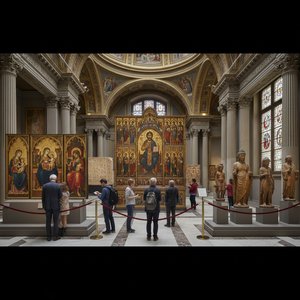
A Vision of Divine Benediction: Exploring El Greco’s “Christ Blessing”
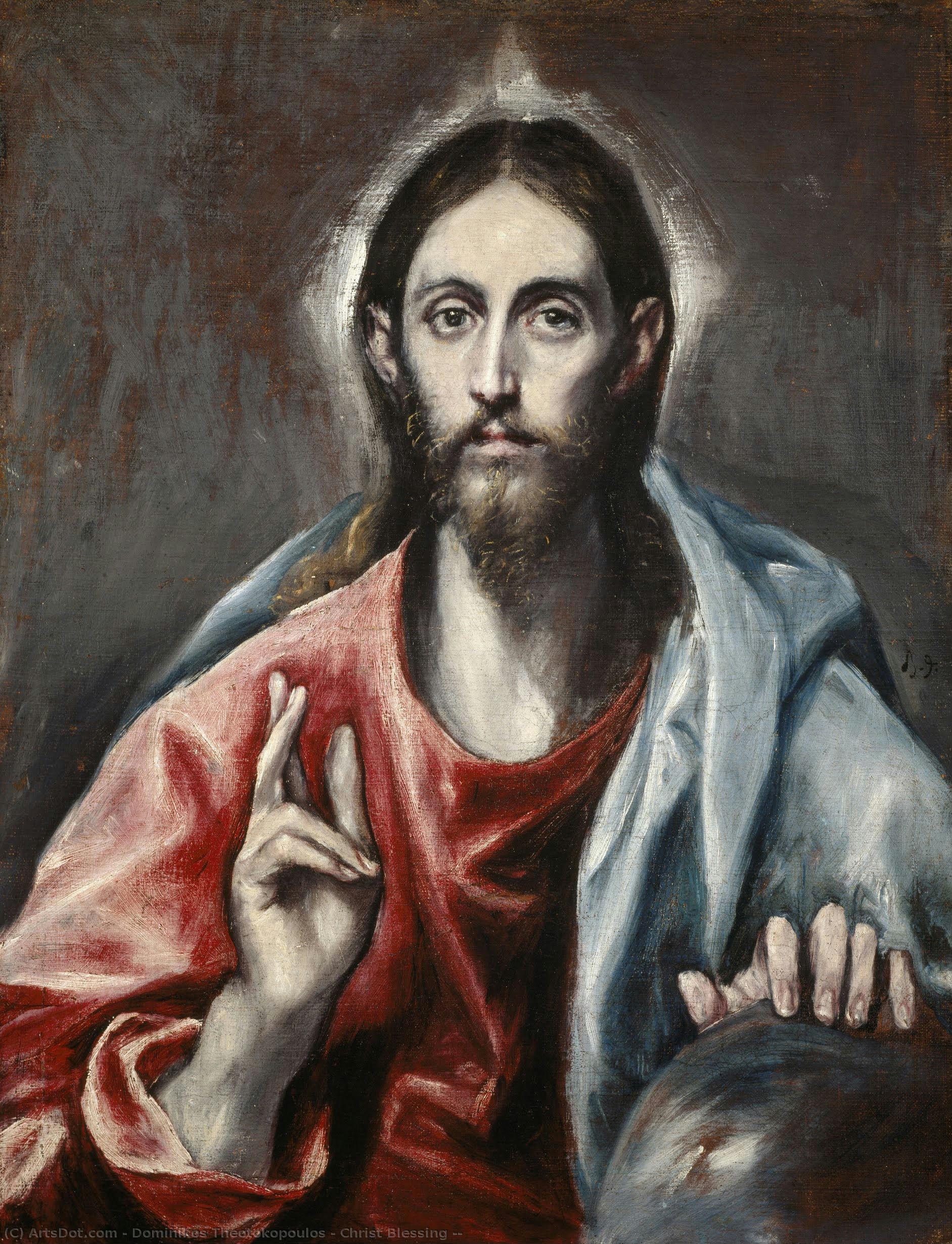
The painting "Christ Blessing," attributed to Domenikos Theotokópoulos – universally known as El Greco – stands as a testament to the artist's singular ability to fuse Byzantine tradition with Renaissance fervor, resulting in an image that transcends mere representation and delves into profound spiritual contemplation. Executed around 1600, this monumental portrait captures Jesus Christ not as a regal king or triumphant warrior, but as a youthful figure radiating compassion and offering a gesture of blessing – a gesture laden with theological significance.
- Subject Matter & Composition: El Greco’s depiction prioritizes the human element within divine iconography. The central figure dominates the canvas, positioned prominently against a dark backdrop that amplifies the luminosity of Christ's robe and face. This deliberate contrast underscores the importance of the moment depicted – an act of grace bestowed upon humanity.
- Style & Technique: El Greco’s distinctive style is instantly recognizable for its elongated figures, ethereal drapery, and dramatic use of color. He employed a technique known as “tenebrism,” characterized by stark contrasts between light and shadow, creating an atmosphere of solemn grandeur and intensifying the emotional impact of the scene. The artist skillfully manipulated pigment to achieve unprecedented levels of expressive realism.
The painting’s historical context is inextricably linked to Toledo, Spain – a city undergoing significant religious upheaval during El Greco's lifetime. Following the Spanish Inquisition, Catholicism reigned supreme, and artists like El Greco were tasked with conveying spiritual truths in ways that resonated deeply with the populace. “Christ Blessing” embodies this spirit of piety and serves as a poignant reminder of faith’s enduring power.
Symbolism: The outstretched hand represents divine benediction – an offering of blessing and goodwill to all who gaze upon it. The robe, bathed in radiant light, symbolizes purity and holiness, mirroring Christ's role as savior and mediator between God and humankind. Furthermore, the youthful appearance of Jesus speaks to his incarnation—a pivotal moment in Christian theology representing God’s embrace of humanity.
- Emotional Impact: “Christ Blessing” evokes a palpable sense of serenity and reverence. The painting's masterful use of light and color compels viewers to contemplate themes of compassion, humility, and divine grace. It is precisely this emotive quality that distinguishes El Greco’s work from its contemporaries—a characteristic that continues to captivate audiences centuries later.
Ultimately, “Christ Blessing” transcends the boundaries of mere artistic achievement; it stands as a profound meditation on faith and humanity's relationship with divinity. Its enduring appeal lies in its ability to communicate universal truths through exquisitely crafted visual language—a legacy that secures El Greco’s place among the greatest painters of all time.



 Αγοράστε την αναπαραγωγή
 Αποστολή
 Κοινοποίηση
 Λεπτομέρειες

 Λήψη
Λήψη
 Παρόμοια έργα
 Ακτινογραφία
 Παρουσίαση


 Περισσότερα λεπτομέρεια






































 Η επιλογή με γυαλί είναι διαθέσιμη μόνο για μεγέθη κάτω από 110 εκ.