Αγοράστε μια ψηφιακή εικόνα υψηλής ανάλυσης και βελτιωμένης ποιότητας, πολύ ανώτερης από την προεπισκόπηση στο διαδίκτυο.
Κάθε αρχείο προετοιμάζεται σχολαστικά από τους εξειδικευμένους συνεργάτες μας, με τη χρήση προηγμένων εργαλείων και χειροκίνητου ρετουσαρίσματος υψηλής ακρίβειας. Εξασφαλίζουμε ότι κάθε εικόνα προσφέρει εξαιρετική ευκρίνεια, απόλυτη πιστότητα στο χρώμα και λεπτομερή ανάδραση των λεπτομερειών.
Το τελικό αρχείο παραδίδεται μέσω email εντός 72 ωρών, βελτιστοποιημένο για άμεση χρήση σε επαγγελματικά, εκδοτικά και έντυπα περιβάλλοντα. Πρόκειται για την ίδια ποιότητα που εμπιστεύονται κορυφαία studios σχεδιασμού, εκδότες και γκαλερί.
Κατεβάστε ένα αρχείο υψηλής ανάλυσης για προσωπική χρήση, εκτύπωση και δημιουργικά έργα. ( Αγορά εκτύπωσης Αγορά χειροποίητου πίνακα)
Όταν επιλέγετε το WahooArt.com, δεν αποκτάτε απλώς μια εικόνα – λαμβάνετε ένα επαγγελματικά αναβαθμισμένο ψηφιακό έργο τέχνης, δημιουργημένο με ακρίβεια και με εγγύηση ικανοποίησης. Δείτε όλα όσα περιλαμβάνονται στην παραγγελία σας, αυτόματα:

Το ψηφιακό σας αρχείο εικόνας υψηλής ανάλυσης θα σας σταλεί μέσω email εντός 72 ωρών από την παραγγελία σας — έτοιμο για άμεση χρήση.

Το έργο σας βελτιστοποιείται επαγγελματικά με τη χρήση προηγμένων εργαλείων Τεχνητής Νοημοσύνης και χειροκίνητης επεξεργασίας, εξασφαλίζοντας μέγιστη λεπτομέρεια, ευκρίνεια και ακρίβεια χρωμάτων.

Απώλησες ή διαγράψατε κατά λάθος το αρχείο σας; Μην ανησυχείτε — θα σας το ξαναστείλομε οποιαδήποτε στιγμή, δωρεάν.

Απολαύστε αμέσως τα έργα τέχνης σας χωρίς δασμούς, φόρους ή έξοδα αποστολής - οι ψηφιακές λήψεις είναι πάντα αφορεশিপτεία.

Εξασφαλίζουμε ότι η ψηφιακή σας εικόνα αποτυπώνει τα αυθεντικά χρώματα όσο το δυνατόν πιστότερα, χρησιμοποιώντας επαγγελματικά εργαλεία και διαχείριση χρωμάτων.

Εάν δεν είστε ικανοποιημένοι με την ψηφιακή σας εικόνα, θα την τροποποιήσουμε ή θα σας επιστρέψουμε το 100% εντός 100 ημερών - χωρίς κανένα ερώτημα.

Δεν είστε ικανοποιημένοι; Λάβετε πλήρη επιστροφή των χρημάτων σας εντός 100 ημερών από τη λήψη του ψηφιακού σας αρχείου - χωρίς κανένα ερώτημα.

Αγοράστε 3 εικόνες, κάντε εξοικονόμηση 10% - Αγοράστε 5, κάντε εξοικονόμηση 15% - Αγοράστε 10+, κάντε εξοικονόμηση 20%. Ιδανικό για δημιουργικά έργα, γκαλερί και agencies.
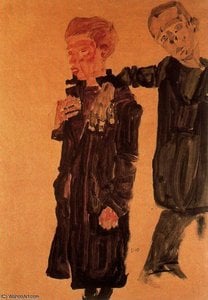
Egon Schiele's “Child in Black,” painted in 1911, isn’t merely a portrait; it’s a distilled essence of anxiety and nascent sexuality, a haunting glimpse into the artist’s intensely personal world. Created during a period of profound upheaval – both personally and within European art – this watercolor captures a young figure, likely a girl, rendered with an unsettling directness that speaks volumes about Schiele's fascination with vulnerability and the darker aspects of human experience. The painting immediately draws the viewer in with its muted palette—a symphony of grays, blacks, and subtle blues—creating an atmosphere of quiet contemplation tinged with unease. It’s a visual embodiment of Expressionism’s core tenets: prioritizing emotional impact over realistic representation.
To truly appreciate “Child in Black,” one must understand the turbulent backdrop against which it was created. Born in 1890 in Tulln an der Donau, Austria, Egon Schiele’s life was tragically shaped by illness and loss from a young age. The death of his father, a railway station master, due to syphilis at just fourteen profoundly impacted him, fueling a lifelong preoccupation with mortality and the fragility of existence. This early trauma, coupled with the subsequent loss of his sister Elvira, instilled in Schiele a deep-seated sense of melancholy and an unflinching gaze upon the human condition. His uncle’s guardianship, marked by control and disapproval of his artistic pursuits, further contributed to his independent spirit and rebellious nature – qualities that would become hallmarks of his work. The painting can be seen as a direct reflection of this internal struggle, a visual manifestation of grief and uncertainty.
Schiele’s mastery lies in his distinctive technique—a raw, almost violent application of watercolor. Notice the loose, gestural lines that define the child's form; they aren’t precise or idealized but rather convey a sense of immediacy and emotional intensity. The figure is rendered with an unsettling lack of detail, emphasizing its vulnerability and drawing attention to the subtle shifts in expression—a slight tilt of the head, a downward gaze – that hint at inner turmoil. The use of color is equally deliberate: the dominant blacks and grays create a somber mood, while small touches of blue suggest a melancholic longing. The background, with its indistinct wall and cryptic writing (likely a title or description), further isolates the child, intensifying the sense of loneliness and introspection. It’s a technique that prioritizes feeling over form, echoing the core principles of Expressionism.
“Child in Black” is rich with symbolic potential. The child herself represents innocence—a fleeting, vulnerable state threatened by the encroaching realities of life and death. The black clothing could symbolize mourning or a sense of impending doom, while the hat adds an element of defiance, suggesting a quiet resistance to the forces that seek to diminish her spirit. The painting’s overall atmosphere evokes a sense of unease, prompting viewers to contemplate themes of mortality, loss, and the complexities of human emotion. It's not a cheerful portrait; it’s a poignant meditation on the darker aspects of existence—a subject Schiele explored relentlessly throughout his tragically short career. The ambiguity surrounding the child’s identity further enhances the painting’s power, inviting viewers to project their own anxieties and interpretations onto the scene.
WahooArt offers meticulously crafted hand-painted reproductions of “Child in Black,” allowing you to bring this powerful work of art into your home or office. Each reproduction is created by skilled artists using archival-quality materials, ensuring that it captures the essence and emotional depth of Schiele’s original masterpiece. Explore our collection today and experience the haunting beauty of “Child in Black” firsthand.


1890 - 1918 , Αυστρία

 Δείτε σε πραγματικό χώρο
 Αποστολή
 Κοινοποίηση
 Λεπτομέρειες

 Λήψη
Λήψη
 Παρόμοια αντικείμενα συλλογής
 Ακτινογραφία
 Παρουσίαση

 Διαβάστε περισσότερα