Προεπισκόπηση Προεπισκόπηση σε AR Μετάβαση σε Εκτυπώσεις Μετάβαση σε Ψηφιακή Εικόνα Αποστολή
Λεπτομέρειες Οδηγός Προσθήκη στα αγαπημένα Λήψη Παρόμοια αντικείμενα συλλογής Ακτινογραφία Παρουσίαση Στατιστικά

Swnage

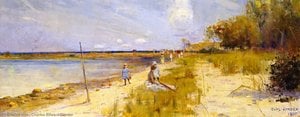
Charles Conder's 'Swnage' captures a vibrant beach scene with figures enjoying the coastal landscape. A stunning example of Heidelberg School art, showcasing warm hues and relaxed atmosphere.

Ο Κάρλος Έντουαρδος Κόντερ (1868-1909) ήταν ζωγράφος της Αυστραλίας, σημαντικός εκπρόσωπος της Heidelberg School με εντυπωσιακά έργα λιθόγραφων και σχεδίων. Ανακαλύψτε τα τοπία και τις εμπνευσμένες εικονογραφήσεις του στην WahooArt!

Χειροποίητη Αναπαραγωγή σε Έλαιο

Χειροποίητη ελαιογραφία σε καμβά στο δικό σας μέγεθος και πλαίσιο, κατά παραγγελία από τους καλλιτέχνες μας. ( Μετάβαση σε Εκτυπώσεις Μετάβαση σε Ψηφιακή Εικόνα)

P118B $10
P118H $10
P118W $10
P438Z $10
P508JH $12
P508YH $12
P805H $10
P805Z $10
P919BZ $10
P919G $10
P919XJ $10
P959ZH $10
P968JZ $12
W106C $8
W218G $10
W218JH $8
W218Y $10
W307PJ $10
W316G $10
W316PJ $8
W316Y $10
W398PJ $8
W4111J $10
W500HY $15
W500JH $15
W692G $12
W849H $8
W940BG $15
W953PJ $8

Πρότυπο
κατόπιν παραγγελίας
CM
INCH

Επιλέξτε από τις προκαθορισμένες διαστάσεις μας που διατηρούν τις αρχικές αναλογίες του έργου τέχνης.

πλάτος
ύψος

Μπορείτε να ορίσετε δικές σας διαστάσεις ώστε το έργο να ταιριάζει σε ένα συγκεκριμένο πλαίσιο ή χώρο. Εάν το επιλεγμένο μέγεθος δεν συμπίπτει με τις αναλογίες της αρχικής εικόνας, θα περικοψούμε το έργο ή θα επεκτείνουμε τη ζωγραφιά με πρόσθετα χειρόγραφα στοιχεία. Ένα ψηφιακό προσχέδιο θα σας αποσταλεί για έγκριση πριν την έναρξη της παραγωγής.
Παρακαλούμε σημειώστε ότι η προεπισκόπηση στην οθόνη δεν αντικατοπτρίζει την πραγματική περικοπή ή επέκταση. Μόνο το προσχέδιο θα δείξει με ακρίβεια την τελική σύνθεση.
Παρόλο που είναι διαθέσιμα προσαρμοσμένα μεγέθη, συνιστούμε να επιλέξετε μια διάσταση από τη λίστα των προκαθορισμένων μεγεθών για τη διατήρηση των αρχικών αναλογιών.

Παραδείγματα αλλαγών: Αντικατάσταση προσώπου με φωτογραφία του πελάτη· Προσθήκη κατοικίδιου (π.χ., αντικατάσταση γάτας με σκύλο)· Ενσωμάτωση κρυφού μηνύματος στο φόντο· Αλλαγή τοπίου ή στοιχείων του φόντου.
Μετά την παραγγελία, η ομάδα του WahooArt.com θα στείλει email στον πελάτη με οδηγίες και θα παρέχει μια προεπισκόπηση προσχεδίου

Παγκόσμια Αποστολή () σε 3-4 εβδομάδες αντί για τις συνήθεις 5 εβδομάδες. (22 Σεπτέμβριος). Χωρίς συμβιβασμούς στην ποιότητα.

why_choose_icon
Δωρεάν γρήγορη διεθνής αποστολή
why_choose_icon
Κάμβας από Λινό Υψηλής Ποιότητας
why_choose_icon
Πλήρης ασφάλιση μεταφοράς
why_choose_icon
Εγγύηση επιστροφής δασμών και φόρων εισαγωγής
why_choose_icon
Εγγύηση Απόλυτης Ομοιότητας Χρωμάτων
why_choose_icon
Πολιτική Επιστροφής 100 Ημερών (Μόνο σε περίπτωση ελαττωμάτων)
why_choose_icon
Εγγύηση επιστροφής 100% των χρημάτων
why_choose_icon
Έκπτωση για πολλαπλές παραγγελίες

Συνολική Τιμή

$ 272

reproduction

Swnage

Τεχνική Αναπαραγωγής

Διαστάσεις Αναπαραγωγής

-

Συνολικό Κόστος

$ 272

Βασικά στοιχεία

  • Notable elements: Beach scene, figures
  • Title: Swnage
  • Location: Tate Britain
  • Artist: Charles Conder
  • Medium: Oil on canvas
  • Subject or theme: Coastal landscape
  • Influences:
    • Roberts
    • Streeton

ΚВИΖ Τέχνης

Για κάθε ερώτηση υπάρχει μόνο μία σωστή απάντηση.

Ερώτηση 1:
What is the primary subject depicted in Charles Edward Conder’s ‘Swnage’?
Ερώτηση 2:
In what artistic movement is Charles Edward Conder primarily associated?
Ερώτηση 3:
Approximately when was ‘Swnage’ painted by Charles Edward Conder?
Ερώτηση 4:
Which of the following best describes Charles Edward Conder’s artistic style?
Ερώτηση 5:
What is the significance of the figures in ‘Swnage’?

Charles Edward Conder’s “Swnage”: A Coastal Symphony of Light and Leisure

“Swnage,” painted by Charles Edward Conder in approximately 1901, isn't merely a depiction of a beach scene; it’s an immersive experience of the Australian coastline captured with Impressionistic fervor. This captivating work, now housed within the Tate Britain collection, transports the viewer to a moment of serene leisure amidst the rugged beauty of South Wales – specifically, Swnage Bay. Conder, a pivotal figure in Australia's Heidelberg School movement, masterfully employed light and color to evoke not just a visual representation but also a palpable sense of atmosphere and emotion.

Conder’s artistic journey began in England, yet it was his relocation to Sydney in 1884 that truly ignited his creative spirit. He quickly abandoned surveying for the more immediate allure of landscape painting, finding inspiration in the vibrant hues and dramatic light of the Australian bush. “Swnage” reflects this newfound passion, showcasing a deliberate shift away from rigid realism towards a looser, more expressive style. The brushstrokes are visible, creating a textured surface that seems to shimmer with reflected sunlight. Notice how Conder doesn’t meticulously render every detail; instead, he focuses on capturing the essence of the scene – the play of light on water and sand, the suggestion of figures enjoying the day.

Impressionistic Techniques and Color Palette

The painting's strength lies in its masterful use of Impressionistic techniques. Conder’s approach mirrors that of his contemporaries like Monet and Renoir, prioritizing the fleeting effects of light and atmosphere over precise detail. He employed broken color – applying small dabs of paint side-by-side rather than blending them seamlessly – to create a vibrant, luminous quality. The dominant colors are warm ochres, yellows, and blues, reflecting the intense sunlight bathing the beach. These hues aren’t applied uniformly; Conder strategically uses darker tones in the shadows to heighten the sense of depth and volume, particularly in the foreground dunes. The subtle gradations of color create a dynamic visual experience, as if the scene is constantly shifting with the movement of light.

Furthermore, Conder’s use of atmospheric perspective—a technique where distant objects appear paler and less distinct—effectively conveys the vastness of the coastline. The figures in the painting are small and indistinct, emphasizing their insignificance against the grandeur of nature. This compositional choice invites the viewer to become part of the scene, sharing in the feeling of peaceful contemplation.

Symbolism and Context

“Swnage” is more than just a pretty beach scene; it’s imbued with symbolic meaning rooted in Conder's personal experiences and artistic philosophy. As an expatriate Englishman living in Australia, Conder often explored themes of displacement and the search for belonging. The painting can be interpreted as a yearning for a simpler life, a retreat from the complexities of urban existence. The figures on the beach represent leisure, friendship, and connection with nature – values that were particularly appealing to artists of the Heidelberg School.

Considering Conder’s background, it's also important to note the painting’s context within the broader artistic landscape. The Heidelberg School, which emerged in Melbourne during the late 19th century, challenged traditional academic art by embracing a more informal and subjective approach. Conder’s work exemplifies this shift, prioritizing personal observation and emotional expression over strict adherence to classical conventions. The influence of Impressionism is undeniable, but Conder infused it with his own unique Australian sensibility.

A Legacy of Light and Landscape

“Swnage” remains a powerful testament to Charles Edward Conder’s artistic vision. It's a painting that invites viewers to slow down, breathe deeply, and appreciate the beauty of the natural world. Reproductions of this evocative work capture not only its visual splendor but also the spirit of leisure and connection with nature that defined the Heidelberg School. Whether displayed in a contemporary home or a prestigious gallery, “Swnage” continues to resonate with audiences today, reminding us of the enduring power of art to transport us to another time and place.


Βιογραφικό Καλλιτέχνη

Early Life and Artistic Journey

Charles Edward Conder (1868 – 1909) was an English-born painter, lithographer and designer who emigrated to Australia and became a pivotal figure in the Heidelberg School*, arguably marking the genesis of a distinctive Australian tradition within Western art. Born in Tottenham, Middlesex, the second son of six children, James Conder, civil engineer and Mary Ann Ayres, possessed a lineage steeped in artistic heritage – his father was Louis-François Roubiliac, renowned sculptor.

From a young age, Conder experienced profound influence from India, where he resided until his mother’s untimely passing in May 1873 at the tender age of 31. Subsequently, he returned to England and attended several schools including Eastbourne School, fostering an early inclination towards formal education.

Despite his father's preference for a career in engineering—a path antithetical to Conder’s innate artistic sensibilities—he pursued his passion relentlessly, recognizing it as a fundamental aspect of his identity.

Australia and the Heidelberg School

In 1884, at the age of 16, Conder embarked on a transformative journey to Sydney, Australia, where he joined his uncle’s firm as a land surveyor. However, this profession proved unfulfilling compared to his burgeoning fascination with landscape painting—a pursuit that swiftly superseded his surveyor's duties.

By 1886, Conder secured employment at *Illustrated Sydney News*, collaborating alongside fellow artists such as Albert Henry Fullwood and Frank Mahony. He enrolled in painting classes under Alfred James Daplyn and quickly established connections with Julian Ashton, immersing himself in the vibrant artistic milieu of Melbourne.

Crucially, Conder’s association with G. P. Nerli—an itinerant Italian painter—significantly broadened his artistic horizons, introducing him to European stylistic innovations. This encounter profoundly shaped his creative trajectory.

Together with Tom Roberts and Arthur Streeton, Conder participated in the Heidelberg School exhibition of 1888, cementing his position as a cornerstone of this groundbreaking movement. The exhibition showcased a bold departure from academic conventions, prioritizing spontaneity and capturing the ephemeral beauty of the Australian bush.

Notable Works and Artistic Style

Conder’s magnum opus, *Departure of the Orient – Circular Quay* (1888), exemplifies his mastery of form and brushwork. This evocative depiction of Sydney Harbour at dusk—the moment when the *has cast off for her voyage to England*—immediately garnered acclaim from the Art Gallery of New South Wales, securing its place as Conder’s inaugural work within a public collection.

Alongside Roberts, Conder captured the idyllic charm of Mentone (1888), portraying a serene seaside scene replete with leisurely figures enjoying the warmth of the Australian sun. The painting's composition—borrowed from Whistler’s celebrated bridge motif—underscores Conder’s sensitivity to artistic precedent.

Conder’s oeuvre encompasses a diverse range of subjects, including portraits and lithographs, reflecting his versatility as an artist. His paintings are characterized by luminous color palettes, textured brushstrokes, and a masterful rendering of light—elements that imbue his artworks with palpable emotion and immediacy.

Legacy and Later Life

Despite facing debilitating health challenges—including paralysis and delirium tremens—Conder persevered in his artistic endeavors until his untimely demise in 1909. His art gained considerable recognition upon returning to England, surpassing the acclaim he received during his Australian years.

Henri de Toulouse-Lautrec immortalized Conder’s likeness in a portrait completed in 1892—a testament to Conder's enduring presence within the artistic landscape of his time.

Χάρλς Έντουαρδος Κόντερ

Χάρλς Έντουαρδος Κόντερ

1868 - 1909 , Ηνωμένο Βασίλειο

Στοιχεία καλλιτέχνη

  • Artistic Movement Or Style: Heidelberg School
  • Artists Who Influenced This Artist:
    • Alfred Daplyn
    • Victor Mann
    • Julian Ashton
  • Date Of Birth: October 24, 1868
  • Date Of Death: February 9, 1909
  • Full Name: Charles Edward Conder
  • Nationality: British
  • Notable Artworks:
    • Departure of the Orient – Circular Quay
    • A holiday at Mentone
    • Under The Southern Sun
  • Place Of Birth: Tottenham, United Kingdom
Εξερευνήστε έργα τέχνης ταξινομημένα ανά θέμα, στυλ και χαρακτηριστικά.