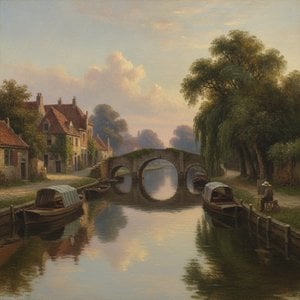
A Moment of Quietude: Berthe Morisot's "Study, The Water’s Edge"
Berthe Morisot’s “Study, The Water’s Edge,” painted in 1864, is more than just a depiction of a serene lakeside scene; it’s an intimate glimpse into the heart of Impressionism. This small canvas – measuring 60 x 73 cm – vibrates with a delicate energy, capturing not just what Morisot saw but also the fleeting emotions and sensations of that particular moment. The painting immediately draws the viewer in with its soft palette and loose brushstrokes, hallmarks of the movement’s revolutionary approach to light and color. It's a testament to Morisot’s ability to transform everyday observations into profound statements about beauty and perception.
- Subject Matter: The composition centers around a woman reclining gracefully on the grass beside a tranquil body of water, likely a pond or small river. This wasn’t simply a portrait; it was an exploration of the female form within a natural setting – a theme central to Morisot's artistic concerns.
- Technique: Morisot employs a characteristic Impressionist technique, utilizing short, broken brushstrokes to build up color and texture. The paint isn’t blended smoothly; instead, it retains its individual marks, creating a shimmering effect that mimics the play of light on water and foliage. Notice how she captures the reflections, subtly distorting the landscape with each ripple.
- Color Palette: The dominant colors – muted greens, blues, and browns – evoke a sense of tranquility and harmony. Morisot’s masterful use of color creates an atmosphere of warmth and serenity, inviting the viewer to step into the scene.
Impressionism's Embrace of Light and Atmosphere
“Study, The Water’s Edge” exists within a pivotal moment in art history – the rise of Impressionism. Emerging in late 19th-century France, this movement challenged the established academic traditions that prioritized detailed realism and historical or mythological subjects. Instead, Impressionists like Morisot sought to capture the immediate sensory experience of the world, focusing on the effects of light and atmosphere at a specific moment in time. This painting exemplifies this approach perfectly; it’s not about rendering an accurate representation of the scene but rather conveying the *impression* of it – the feeling of warmth, stillness, and beauty.
Morisot's contemporaries, including Claude Monet and Pierre-Auguste Renoir, were equally invested in exploring these new artistic possibilities. Their shared interest in outdoor settings and their innovative techniques helped to shape the course of modern art. Studying Morisot’s work alongside theirs provides a deeper understanding of the movement’s core principles and its lasting impact.
Symbolism and Narrative
Beyond its technical brilliance, “Study, The Water’s Edge” possesses subtle layers of meaning. The woman's pose – reclining on the grass, seemingly lost in thought – invites contemplation about her inner life. The bird soaring above adds a touch of dynamism to the scene, suggesting freedom and escape. Even the inclusion of the hat with its feather hints at elegance and perhaps a connection to nature’s beauty. Morisot was interested in capturing not just appearances but also the emotional resonance of her subjects.
The setting itself – a quiet lakeside – has symbolic weight. Water is often associated with reflection, transformation, and the subconscious mind. The scene evokes a sense of peace and solitude, inviting the viewer to share in the artist’s contemplative mood.
A Timeless Masterpiece
"Study, The Water's Edge" remains a beloved work within the Impressionist canon, celebrated for its serene beauty and Morisot’s exceptional skill. It is a powerful reminder of the importance of capturing fleeting moments and appreciating the simple pleasures of nature. Its availability as a handmade oil painting reproduction ensures that this exquisite artwork can be enjoyed in any setting, bringing a touch of Impressionistic elegance to your home or office.



 Προεπισκόπηση
 Αγορά χειροποίητου πίνακα
 Αποστολή
 Κοινοποίηση
 Λεπτομέρειες
 Οδηγός

 Λήψη
Λήψη
 Παρόμοια αντικείμενα συλλογής
 Ακτινογραφία
 Παρουσίαση
 Στατιστικά


 Περισσότερα λεπτομέρεια






































 Η επιλογή με γυαλί είναι διαθέσιμη μόνο για μεγέθη κάτω από 110 εκ.