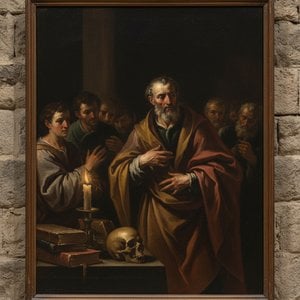
Βιογραφικό Καλλιτέχνη
A Life Bathed in Andalusian Light
Bartolomé Esteban Murillo, ένα όνομα συνυφασμένο με την χρυσή εποχή της ισπανικής μπαρόκ ζωγραφικής, γεννήθηκε στη Σεβίλλη το 1618. Η ζωή του, αν και σημαδεμένη από προσωπική τραγωδία και κοινωνικές μεταβολές, άνθησε σε μια καλλιτεχνική πορεία που συνέλαβε την ψυχή της εποχής του – μια περίοδο θρησκευτικού ζήλους, κοινωνικών αλλαγών και αναδυόμενης καλλιτεχνικής καινοτομίας. Γεννήθηκε στην οικογένεια Esteban, με τον πατέρα Gaspar Esteban, έναν ικανό barber-surgeon, και τη μητέρα María Pérez Murillo, μέσα σε μια μεγάλη οικογένεια δέκατετράκις παιδιών. Ο νεαρός Βαρθολομεύς βίωσε νωρίς απώλειες με το θάνατο και των δύο γονιών του σε σύντομο χρονικό διάστημα κατά την παιδική του ηλικία. Αυτή η δυσκολία τον οδήγησε στην κηδεμονία του αδελφού του, Juan Agustín Lagares, ενός καθοριστικού ανθρώπου που έδωσε έμμεσα καλλιτεχνική καθοδήγηση στο ταλέντο του. Η αρχική εκπαίδευσή του ξεκίνησε υπό τον Juan del Castillo, έναν τοπικό καλλιτέχνη και συγγενή μέσω της μητέρας του, θέτοντας τις βάσεις για ένα στυλ που θα γινόταν μοναδικό του αργότερα. Τα πρώτα χρόνια ήταν βαθιά ριζωμένα στις ρεαλιστικές παραδόσεις που επικρατούσαν στη Σεβίλλη, απορροφώντας επιρροές από μάστερς όπως ο Zurbarán, ο Ribera και ο Cano – καλλιτέχνες που έδιναν προτεραιότητα στην σκληρή ρεαλιστική απεικόνιση και τη δραματική ένταση. Ωστόσο, το ταλέντο του Murillo δεν ήταν απλώς μίμηση, αλλά μεταμόρφωση αυτών των θεμελιωδών αρχών σε κάτι πιο μαλακό, φωτεινό και βαθιά ανθρώπινο.
Από Ρεαλισμό στη Φωτεινή Γρατιά
Η καλλιτεχνική πορεία του Murillo δεν ήταν μια απότομη μεταμόρφωση στην φήμη, αλλά μάλλον μια εξέλιξη που χαρακτηριζόταν από διακριτές φάσεις. Τα πρώτα έργα του, έντονα επηρεασμένα από τις σκληρές ρεαλιστικές πρακτικές των συνομηλίκων του, παρουσίασαν προσοχή στη λεπτομέρεια και μια μελαγχολική παλέτα. Το *Νεαρός με Κωπάδι Φρούτων (Εικόνα του Καλοκαιριού)*, δημιουργήθηκε περίπου μεταξύ 1640-50, αποτελεί παράδειγμα αυτής της περιόδου – μια θεμελιώδης απεικόνιση καθημερινής ζωής που απεικονίζεται με εκπληκτική ακρίβεια. Ωστόσο, ακόμη και σε αυτά τα πρώτα κομμάτια, αρχίζουν να αναδύονται οι απαλές και συναισθηματικές βάσεις που θα ορίζουν το ώριμο στυλ του. Ο *Νεαρός Χωρίς Κωπάδι Φρούτων*, ζωγραφισμένος περίπου το 1645, παρουσιάζει αυξανόμενη ευαισθησία προς την ανθρώπινη δυστυχία, αντικατοπτρίζοντας τις επιρροές του Velázquez στην αριστοτεχνική απεικόνιση των απλών ανθρώπων. Καθώς ο Murillo ωριμάζανε, το στυλ του υποβλήθηκε σε μια εντυπωσιακή μεταμόρφωση. Απέφυγε τη σκληρή ρεαλιστική προσέγγιση των προκατόχων του, υιοθετώντας ένα πιο κομψό και εξευγενισμένο αισθητικό στυλ που απηχούσε τις γεύσεις της αναπτυσσόμενης αστικής και ευγενικής τάξης στη Σεβίλλη. Αυτή η μεταβολή ήταν ιδιαίτερα εμφανής στα θρησκευτικά του έργα, όπου ενέπνευσε την παραδοσιακή εικονογραφία με μια απροσδόκητη αίσθηση ζεστασιάς, χάριτος και συναισθηματικής προσβασιμότητας. Τα *Εικόνες της Αρχονίδας* (1652), ένα από τα πιο διάσημα έργα του, αποτελεί παράδειγμα αυτής της ώριμης μορφής – μια απαλή απεικόνιση που ακτινοβολεί ειρήνη και φόρτιση.
Μέγιστος Καλλιτέχνης στη Θρησκευτική Αίσθηση και τις Γενικές Σκηνές
Η καλλιτεχνική παραγωγή του Murillo ήταν εξαιρετικά ποικίλη, καλύπτοντας θρησκευτικές ζωγραφιές, γενικές σκηνές, πορτρέτα και μυθολογικά θέματα. Ωστόσο, είναι περισσότερο γνωστός για τις απεικονίσεις του Ακέρβου Εμμανουέλα – ένα θέμα που τον γοήτευε καθ' όλη τη διάρκεια της καριέρας του και είχε ως αποτέλεσμα μια σειρά από παραλλαγές, καθεμία με μια μοναδική αίσθηση αιθέριας ομορφιάς. Αυτά τα έργα, χαρακτηρίζονται από λεπτομερή ακρίβεια, φωτεινές χρωματικές παλέτες και κομψές συνθέσεις, έγιναν εξαιρετικά δημοφιλή και καθιέρωσαν τον Murillo ως τον κυρίαρχο ζωγράφο θρησκευτικών εικόνων στην Ισπανία. Εκτός από τα ιερά θέματα, ο Murillo άριστα επίσης απεικονίστηκε καθημερινή ζωή απλών ανθρώπων. Οι γενικές σκηνές του – απεικονίσεις νεαρών κοριτσιών με λουλούδια, άστεγων παιδιών και ζητιάνων – προσφέρουν μια πολύτιμη εικόνα των κοινωνικών πραγματικοτήτων της Σεβίλλη τον 17ο αιώνα. Αυτά τα έργα δεν είναι απλώς παρατηρητικές μελέτες, αλλά είναι γεμάτα βαθιά ενσυναίσθηση και συμπόνια, αναβαθμίζοντας τους συνηθισμένους ανθρώπους σε ένα επίπεδο αξιοπρέπειας και χάριτος. Είχε μια εξαιρετική ικανότητα να αποτυπώνει την αθωότητα της παιδικής ηλικίας, απεικονίζοντας τα μικρά παιδιά με εκπληκτικό ρεαλισμό και ευγένεια.
Κληρονομιά και Διαρκής Επιρροή
Η επιρροή του Bartolomé Esteban Murillo στην πορεία της ισπανικής τέχνης – και στην πραγματικότητα, της ευρωπαϊκής ζωγραφικής – είναι αναμφισβήτητη. Καθιέρωσε ένα μοναδικό στυλ που συνδύαζε θρησκευτική φόρτιση με ανθρωπιστική αίσθηση, δημιουργώντας έργα που απηχούσαν βαθιά στους θεατές σε όλα τα κοινωνικά στρώματα. Η επιρροή του επεκτάθηκε πέρα από την πατρίδα του, Ισπανία, εμπνέοντας γενιές καλλιτεχνών σε όλη την Ευρώπη. Οι Gainsborough και ο Greuze, μεταξύ άλλων, αναγνώρισαν το χρέος τους στον φωτεινό στυλ του Murillo και τις ευαισθησίες του στην ανθρώπινη συναισθηματική απεικόνιση. Εκπαιδεύτηκε πολλούς μαθητές στο εργαστήριό του στη Σεβίλλη, διασφαλίζοντας τη συνέχιση της καλλιτεχνικής κληρονομιάς του. Τα έργα του βρίσκονται σε διάσημα μουσεία παγκοσμίως, όπως το Prado Museum στη Μαδρίτη, το Hermitage Museum στην Αγία Πετρούπολη, η Wallace Collection στη Λονδίνα και το Timken Museum of Art στη Σάν Ντιέγο – μαρτυρίες της διαρκούς ελκυστικότητας και ιστορικής σημασίας του. Η τέχνη του Murillo συνεχίζει να γοητεύει τους θεατές με την ομορφιά,



 Προεπισκόπηση
 Μετάβαση σε Εκτυπώσεις
 Αποστολή
 Κοινοποίηση
 Λεπτομέρειες
 Οδηγός

 Λήψη
Λήψη
 Παρόμοια αντικείμενα συλλογής
 Ακτινογραφία
 Παρουσίαση
 Στατιστικά


 Περισσότερα λεπτομέρεια






































 Η επιλογή με γυαλί είναι διαθέσιμη μόνο για μεγέθη κάτω από 110 εκ.