x
Αγορά χειροποίητου πίνακα Αγορά χειροποίητου πίνακαΑγορά ψηφιακής εικόνας Αγορά ψηφιακής εικόνας ΑποστολήΑποστολή
ΛεπτομέρειεςΛεπτομέρειες Προσθήκη στα αγαπημένα Προσθήκη στα αγαπημένα ΛήψηΛήψη Παρόμοια αντικείμενα συλλογήςΠαρόμοια αντικείμενα συλλογής ΠαρουσίασηΠαρουσίαση

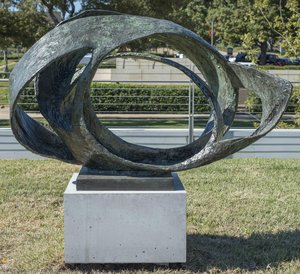
Cone and Sphere

Explore Barbara Hepworth's minimalist sculptures like 'Cone and Sphere,' crafted from marble and characterized by balanced geometric forms—a testament to modernism’s elegance and exploration of natural shapes.

Εξερευνήστε τις σύγχρονες γλυπτικές της Μπάρμπαρα Χέπγουορθ (1903-1975). Πρώιμη πρωτοπορία στην αφηρημένη τέχνη, η Χέπγουορθ ήταν μια από τις λίγες κοπέλες καλλιτέχνιδες που πέτυχαν διεθνή αναγνώριση.

Giclée / Εκτυπώσεις Τέχνης

Εκτύπωση giclée ή σε καμβά ποιότητας μουσείου με γρήγορη παραγωγή και ευέλικτες επιλογές φινιρίσματος. (Αγορά χειροποίητου πίνακα Αγορά χειροποίητου πίνακαΑγορά ψηφιακής εικόνας Αγορά ψηφιακής εικόνας)

Πρότυπο μέγεθος
κατόπιν παραγγελίας
CM
INCH

Επιλέξτε από τις προκαθορισμένες διαστάσεις μας που διατηρούν τις αρχικές αναλογίες του έργου τέχνης.

πλάτος
ύψος

Μπορείτε να εισαγάγετε δικές σας διαστάσεις ώστε να ταιριάξουν με ένα συγκεκριμένο πλαίσιο ή χώρο. Εάν το επιλεγμένο μέγεθος δεν συμπίπτει με τις αναλογίες της πρωτότυπης εικόνας, θα κόψουμε το έργο τέχνης ή θα επεκτείνουμε την εικόνα με καθρεφτισμένη ή μονόχρωμη ατέλεια. Θα σας αποσταλεί ένα ψηφιακό mockup για έγκρισή σας πριν από την έναρξη της παραγωγής.
Παρακαλούμε σημειώστε ότι η προεπισκόπηση στην οθόνη δεν αντικατοπτρίζει την πραγματική κοπή ή επέκταση. Μόνο το mockup θα δείξει με ακρίβεια την τελική σύνθεση.
Παρόλο που είναι διαθέσιμες προσαρμοσμένες διαστάσεις, προτείνουμε την επιλογή μιας διάστασης από τη προκαθορισμένη λίστα για τη διατήρηση των αρχικών αναλογιών.

Παγκόσμια Αποστολή () σε 2 εβδομάδες αντί για τις συνήθεις 4/5 εβδομάδες. (30 Αύγουστος)

why_choose_icon
Δωρεάν γρήγορη διεθνής αποστολή
why_choose_icon
Κάμβας από Λινό Υψηλής Ποιότητας
why_choose_icon
Πλήρης ασφάλιση μεταφοράς
why_choose_icon
Εγγύηση Επιστροφής Δασμών και Φόρων
why_choose_icon
Εγγύηση Απόλυτης Ομοιότητας Χρωμάτων
why_choose_icon
Πολιτική Επιστροφής 60 Ημερών (Μόνο σε περίπτωση ελαττωμάτων)
why_choose_icon
Εγγύηση επιστροφής 100% των χρημάτων
why_choose_icon
Προσφορά για μαζικές παραγγελίες

Συνολική Τιμή

$ 68

reproduction

Cone and Sphere

Giclée / Εκτυπώσεις Τέχνης

Διαστάσεις Αναπαραγωγής

-

Συνολική Τιμή

$ 68

Γρήγορα στοιχεία

  • Artist: Barbara Hepworth
  • Notable elements or techniques: Minimalist abstract form; Geometric shapes (cone, sphere)
  • Title: Cone and Sphere
  • Artistic style: Elegant simplicity; Exploration of natural forms
  • Year: 1973
  • Influences: Henry Moore

ΚВИΖ Τέχνης

Για κάθε ερώτηση υπάρχει μόνο μία σωστή απάντηση.

Ερώτηση 1:
What is the primary material used in Barbara Hepworth’s sculpture ‘Cone and Sphere’?
Ερώτηση 2:
In what year was ‘Cone and Sphere’ created?
Ερώτηση 3:
The sculpture's composition is characterized by a vertical axis, with the cone and sphere aligned directly above one another. What effect does this create?
Ερώτηση 4:
What artistic movement is Hepworth associated with, and how is it reflected in her style?
Ερώτηση 5:
Describe the texture of the marble surface. How does Hepworth achieve this effect?

Cone and Sphere

Barbara Hepworth’s “Cone and Sphere,” created in 1973, stands as a testament to her unwavering commitment to exploring the fundamental principles of modern sculpture—simplicity, elegance, and an engagement with natural forms rendered in meticulous detail. This piece embodies Hepworth's signature style: a masterful fusion of geometric abstraction and organic inspiration, achieved through painstaking marble carving.
  • Subject Matter & Style: The sculpture delves into abstract geometric forms, specifically the interplay between a cone-shaped base and a sphere resting atop it. Hepworth’s approach transcends mere representation; instead, she seeks to distill essence—to capture the spirit of natural shapes like mountains or seashells—within rigorously defined geometries.
  • Composition: The sculpture's central axis reinforces stability and balance, mirroring the harmonious relationships found in nature. The placement of the cone and sphere is deliberately symmetrical, creating a visual equilibrium that invites contemplation.
  • Color Palette: Primarily white marble dominates the surface, punctuated by subtle veining patterns that introduce shades of gray and cream—a deliberate choice reflecting Hepworth’s fascination with materiality and texture.
  • Use of Lines & Shapes: The cone shape utilizes straight lines converging towards a point, symbolizing strength and upward movement, while the sphere embodies perfection and continuity. These contrasting forms are not merely decorative; they represent fundamental concepts within geometric abstraction.
  • Texture: The marble surface possesses an astonishing smoothness—a result of meticulous polishing—that reflects light softly, highlighting the sculpture’s form and revealing the delicate intricacies of its veining patterns.

Technique & Material Considerations

Hepworth's technique involved transforming raw Cumberland stone into a refined sculptural masterpiece through a process of controlled chiseling and polishing. This painstaking labor ensured that the final product achieved exceptional surface quality—a characteristic hallmark of Hepworth’s oeuvre. Marble was chosen for its responsiveness to light and its ability to convey both solidity and luminosity, aligning perfectly with Hepworth's artistic vision. The artist meticulously considered every aspect of material selection and processing to maximize aesthetic impact.

Historical Context & Artistic Influences

“Cone and Sphere” emerged during Hepworth’s prolific period in St Ives, Cornwall—a location that fostered a vibrant community of artists experimenting with new approaches to sculpture. Her work aligns closely with the broader trends of Modernism, particularly Constructivism, which championed geometric abstraction as a means of expressing universal truths. The influence of Henry Moore is palpable, reflecting Hepworth’s shared exploration of organic forms and their relationship to spatial perception—a dialogue that continues to resonate within contemporary art discourse.

Symbolic Significance & Emotional Resonance

Ultimately, “Cone and Sphere” evokes feelings of serenity, balance, and harmony—qualities deeply rooted in Hepworth’s belief that sculpture could communicate profound emotional truths. The sculpture's simplicity speaks to a desire for clarity and contemplation, mirroring the contemplative spirit of Zen Buddhism, which Hepworth admired greatly. It represents an enduring celebration of natural beauty rendered with uncompromising precision—a timeless masterpiece that invites viewers to engage in a dialogue with form, texture, and light.

Βιογραφία Καλλιτέχνη

Early Life and Artistic Influences

Barbara Hepworth (1903–1975) was born Jocelyn Barbara Hepworth on January 10, 1903, in Wakefield, Yorkshire—the eldest child of Herbert and Gertrude Johnson Hepworth. Her father, a civil engineer for the West Riding County Council, instilled in her a fascination with geometric forms and spatial relationships from an early age. Growing up in rural Yorkshire profoundly shaped her artistic sensibilities, fostering a deep connection to the landscape and its rhythms. Hepworth’s formative years were marked by exposure to influential figures and ideas. Her father's profession exposed her to precision and engineering principles—concepts that would later inform her sculptural explorations. Equally significant was her friendship with Henry Moore, whom she met at Leeds School of Art in 1920. Together they embarked on a shared artistic journey, recognizing the power of abstraction as a means of conveying emotion and exploring fundamental questions about form and materiality. The influence of Surrealism—particularly its emphasis on dreamlike imagery and subconscious exploration—became palpable during her time studying at the Royal College of Art in London (1921–24), where she honed her skills alongside fellow artists like Moore and Nicholson.

Career Development: From Abstraction to Monumental Sculpture

Hepworth’s artistic trajectory began with a commitment to direct carving—a technique championed by Skeaping that prioritized working directly on the material, bypassing preliminary sketches or models. This approach allowed her to respond intuitively to the inherent qualities of stone and wood, capturing their textures and contours in ways that defied conventional representation. Her early sculptures—characterized by simplified geometric shapes—reflected the prevailing modernist aesthetic of the period, aligning with the broader movement’s rejection of academic conventions. The collaboration with Ben Nicholson proved pivotal in shaping Hepworth's artistic vision. Their shared exploration of abstraction extended beyond mere stylistic considerations; it encompassed a deeper engagement with philosophical ideas about perception and experience. As Hepworth herself eloquently expressed, “All my early memories are of forms and shapes and textures. Moving through and over the West Riding landscape with my father in his car, the hills were sculptures; the roads defined the forms.” This profound connection to the natural world—expressed through her art—became a recurring motif throughout her oeuvre.

Notable Works and Exhibitions

Hepworth’s artistic reputation soared during the Second World War when she relocated to St Ives, Cornwall, alongside Nicholson. The tranquility of the Cornish coast provided inspiration for her sculptures, which increasingly incorporated elements of organic form—particularly strings and wires—to create dynamic tensions between mass and space. Her monumental sculpture *Winged Figure* (1961–3), commissioned by John Lewis for their Oxford Street flagship store, stands as a testament to her ambition and technical prowess. It exemplifies Hepworth’s masterful manipulation of material—aluminum—to achieve an ethereal lightness that defies its considerable size. Her sculptures were showcased in prestigious international exhibitions, cementing her status as one of the foremost artists of her generation. The Hepworth Wakefield houses a comprehensive collection of Hepworth's works, offering visitors a unique opportunity to immerse themselves in her artistic legacy. Furthermore, her lithographs—produced during her later years—demonstrate her continued exploration of printmaking techniques and her unwavering dedication to conveying profound emotional resonance through visual imagery.

Legacy and Recognition

Barbara Hepworth’s influence extends far beyond the realm of sculpture itself. Her pioneering approach to abstraction challenged prevailing artistic conventions, paving the way for subsequent generations of artists to embrace experimental forms and techniques. She was awarded the Dame Commander Order of the British Empire in 1958—a recognition of her contribution to British art and culture—and continued to produce groundbreaking works until her untimely death in a fire at her studio in Hampstead in 1975. Hepworth’s sculptures remain revered for their elegance, simplicity, and ability to evoke contemplation—serving as enduring symbols of modernist artistic innovation and humanist sensitivity.
Μπάρμπαρα Χέπγουορθ

Μπάρμπαρα Χέπγουορθ

1903 - 1975 , Ηνωμένο Βασίλειο

Γρήγορα στοιχεία

  • Artistic Movement Or Style: Μοντερνισμός
  • Artists Or Movements Influenced By This Artist: ['Αβστρακτική Τέχνη']
  • Artists Who Influenced This Artist: ['Χένρι Μουρ']
  • Date Of Birth: 10 Ιανουαρίου 1903
  • Full Name: Jocelyn Barbara Hepworth
  • Nationality: Αγγλική
  • Notable Artworks:
    • Περικυκλωμένη Σχήμα Ι
    • Δύο Σχήματα
  • Place Of Birth: Wakefield, Αγγλία
Εξερευνήστε έργα τέχνης ταξινομημένα ανά θέμα, στυλ και χαρακτηριστικά.