Προεπισκόπηση Προεπισκόπηση σε AR Μετάβαση σε Εκτυπώσεις Μετάβαση σε Ψηφιακή Εικόνα Αποστολή
Λεπτομέρειες Οδηγός Προσθήκη στα αγαπημένα Λήψη Παρόμοια αντικείμενα συλλογής Ακτινογραφία Παρουσίαση Στατιστικά

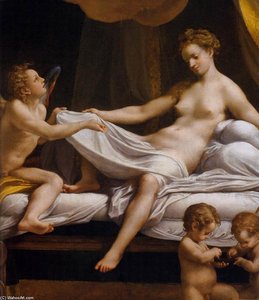
Danaë

Antonio Bellucci’s ‘Danaë,’ painted in 1700-1705, captures the mythic tale of Zeus’s irresistible allure to Danaë. This opulent Venetian Baroque artwork portrays Zeus as golden rain showering upon Danaë's bed, symbolizing divine love and transcendence. Featuring angels and rich textures, it exemplifies Bellucci’s skill in conveying emotion and grandeur.

Antonio Bellucci (1654-1726) was an Italian Rococo painter renowned for grand-manner frescoes in England, Germany & Austria. Explore his mythological scenes, portraits, and religious works – a key figure of the Venetian artistic tradition.

Χειροποίητη Αναπαραγωγή σε Έλαιο

Χειροποίητη ελαιογραφία σε καμβά στο δικό σας μέγεθος και πλαίσιο, κατά παραγγελία από τους καλλιτέχνες μας. ( Μετάβαση σε Εκτυπώσεις Μετάβαση σε Ψηφιακή Εικόνα)

P118B $10
P118H $10
P118W $10
P438Z $10
P508JH $12
P508YH $12
P805H $10
P805Z $10
P919BZ $10
P919G $10
P919XJ $10
P959ZH $10
P968JZ $12
W106C $8
W218G $10
W218JH $8
W218Y $10
W307PJ $10
W316G $10
W316PJ $8
W316Y $10
W398PJ $8
W4111J $10
W500HY $15
W500JH $15
W692G $12
W849H $8
W940BG $15
W953PJ $8

Πρότυπο
κατόπιν παραγγελίας
CM
INCH

Επιλέξτε από τις προκαθορισμένες διαστάσεις μας που διατηρούν τις αρχικές αναλογίες του έργου τέχνης.

πλάτος
ύψος

Μπορείτε να ορίσετε δικές σας διαστάσεις ώστε το έργο να ταιριάζει σε ένα συγκεκριμένο πλαίσιο ή χώρο. Εάν το επιλεγμένο μέγεθος δεν συμπίπτει με τις αναλογίες της αρχικής εικόνας, θα περικοψούμε το έργο ή θα επεκτείνουμε τη ζωγραφιά με πρόσθετα χειρόγραφα στοιχεία. Ένα ψηφιακό προσχέδιο θα σας αποσταλεί για έγκριση πριν την έναρξη της παραγωγής.
Παρακαλούμε σημειώστε ότι η προεπισκόπηση στην οθόνη δεν αντικατοπτρίζει την πραγματική περικοπή ή επέκταση. Μόνο το προσχέδιο θα δείξει με ακρίβεια την τελική σύνθεση.
Παρόλο που είναι διαθέσιμα προσαρμοσμένα μεγέθη, συνιστούμε να επιλέξετε μια διάσταση από τη λίστα των προκαθορισμένων μεγεθών για τη διατήρηση των αρχικών αναλογιών.

Παραδείγματα αλλαγών: Αντικατάσταση προσώπου με φωτογραφία του πελάτη· Προσθήκη κατοικίδιου (π.χ., αντικατάσταση γάτας με σκύλο)· Ενσωμάτωση κρυφού μηνύματος στο φόντο· Αλλαγή τοπίου ή στοιχείων του φόντου.
Μετά την παραγγελία, η ομάδα του WahooArt.com θα στείλει email στον πελάτη με οδηγίες και θα παρέχει μια προεπισκόπηση προσχεδίου

Παγκόσμια Αποστολή () σε 3-4 εβδομάδες αντί για τις συνήθεις 5 εβδομάδες. (21 Σεπτέμβριος). Χωρίς συμβιβασμούς στην ποιότητα.

why_choose_icon
Δωρεάν γρήγορη διεθνής αποστολή
why_choose_icon
Κάμβας από Λινό Υψηλής Ποιότητας
why_choose_icon
Πλήρης ασφάλιση μεταφοράς
why_choose_icon
Εγγύηση επιστροφής δασμών και φόρων εισαγωγής
why_choose_icon
Εγγύηση Απόλυτης Ομοιότητας Χρωμάτων
why_choose_icon
Πολιτική Επιστροφής 100 Ημερών (Μόνο σε περίπτωση ελαττωμάτων)
why_choose_icon
Εγγύηση επιστροφής 100% των χρημάτων
why_choose_icon
Έκπτωση για πολλαπλές παραγγελίες

Συνολική Τιμή

$ 272

reproduction

Danaë

Τεχνική Αναπαραγωγής

Διαστάσεις Αναπαραγωγής

-

Συνολικό Κόστος

$ 272

Βασικά στοιχεία

  • Movement: Rococo
  • Notable elements or techniques: Dramatic emotion, Religious fervor
  • Dimensions: 149 x 159 cm
  • Influences: Classical principles
  • Year: 1700
  • Artistic style: Grand Manner
  • Location: Private Collection

ΚВИΖ Τέχνης

Για κάθε ερώτηση υπάρχει μόνο μία σωστή απάντηση.

Ερώτηση 1:
What mythological figure is depicted in Antonio Bellucci’s painting ‘Danaë’?
Ερώτηση 2:
In what century was the painting ‘Danaë’ created?
Ερώτηση 3:
What artistic movement is Antonio Bellucci's 'Danaë' associated with?
Ερώτηση 4:
The painting portrays Danaë and her son, Perseus. What is Perseus known for accomplishing in Greek mythology?
Ερώτηση 5:
What material was used to create ‘Danaë’?

A Celestial Encounter in Gold and Crimson

In the grand tradition of Venetian Baroque, Antonio Bellucci’s Danaë emerges as a breathtaking spectacle of divine intervention and mythic intimacy. Painted around 1700, this monumental canvas captures the precise moment when the boundaries between the mortal and the divine dissolve. The scene depicts the legendary Danaë, Queen of Argos, ensconced within her tower, receiving the clandestine visit of Zeus. Rather than a thunderous storm, the god descends as a shimmering, ethereal golden rain, a celestial element that permeates the composition with a sense of miraculous fertility. This is not merely a mythological retelling; it is a profound meditation on the intersection of earthly vulnerability and heavenly grace, rendered with a theatricality that defines the height of the Venetian spirit.

The painting’s emotional resonance lies in its delicate balance between the regal and the tender. As Danaë reclines upon a bed draped in sumptuous, heavy fabrics, she is not alone in her solitude. The presence of celestial beings—angels hovering with protective intent—softens the erotic tension of the myth with a layer of spiritual sanctity. One angel leans inward, offering a silent reassurance, while another gazes toward the heavens, bridging the gap between the terrestrial chamber and the infinite sky. For the discerning collector or interior designer, this work offers more than just visual splendor; it provides a narrative depth that invites contemplation, making it a commanding centerpiece for any space dedicated to classical elegance.

Mastery of Light, Texture, and Venetian Color

Bellucci’s technical prowess is on full display through his sophisticated use of color and light, characteristic of the transition from the dramatic Baroque to the more luminous Rococo. The palette is dominated by a rich, royal symphony of deep crimsons and radiant golds. These hues are not merely decorative; they serve a symbolic purpose, with the reds echoing the passion and royal lineage of Danaë, while the golds represent the divine essence of Zeus. Through the meticulous application of glazing techniques, Bellucci achieves a luminous, pearlescent quality on the skin of his subjects, creating surfaces that seem to glow from within.

The tactile richness of the piece is equally captivating. A close inspection reveals the artist's ability to manipulate paint to simulate a variety of textures—from the heavy, lustrous weight of silk drapery to the ephemeral, weightless quality of the golden shower. Bellucci employs strategic diagonal lines within the composition to guide the viewer’s eye in a rhythmic dance across the canvas, ensuring that every detail, from the folds of the bedding to the soft features of the attending angels, contributes to a unified sense of movement. This masterful interplay of light and shadow—chiaroscuro—creates a three-dimensional depth that breathes life into the mythological figures, offering an immersive experience that remains as captivating today as it was at the turn of the 18th century.


Βιογραφικό Καλλιτέχνη

The Grandeur of the Venetian Spirit

Antonio Bellucci stands as a luminous figure within the Venetian artistic tradition, a master whose brush captured the transition from the dramatic intensity of the Baroque to the airy elegance of the Rococo. Born in 1654 in Pieve di Soligo, Italy, Bellucci’s early training under Domenico Difnico in Sebénico provided him with a rigorous foundation in classical principles. However, it was his arrival in Venice that truly ignited his creative spirit. By 1675, he was already making significant contributions to the city's sacred spaces, most notably through his monumental frescoes for San Pietro di Castello. In these works, depicting Saint Lorenzo Giustiniani’s fervent prayers during the plague of 1447, Bellucci demonstrated an extraordinary ability to weave together religious devotion and human emotion, creating a sense of divine drama that resonated deeply with the Venetian public.

His talent was not confined to the spiritual realm; Bellucci possessed a versatile mastery over various genres, from the intimate tenderness of nativity scenes for the church of Ascension to the sweeping narratives of classical mythology. A defining characteristic of his development was his collaborative spirit. He worked in close harmony with the landscape painter Antonio Tempesta, where Bellucci’s skill in rendering human figures breathed life and narrative complexity into Tempesta's expansive vistas. This synergy between figure and landscape became a hallmark of his maturing style, blending movement and grace with structural depth.

A Courtly Ascent and European Legacy

As his reputation grew, Bellucci’s ambitions carried him far beyond the borders of the Venetian Republic, leading him to the heart of European power. His periods in Vienna during the late seventeenth and early eighteenth centuries marked a pinnacle in his career, as he secured the prestigious patronage of the Habsburg court. Under the gaze of Emperor Charles VI, Bellucci undertook monumental projects that showcased his technical prowess on an imperial scale. The four altarpieces he created for Klosterneuburg serve as enduring testaments to his ability to command large-scale religious compositions with both majesty and clarity.

The zenith of his architectural painting is perhaps best exemplified by the breathtaking ceiling frescoes at Palais Liechtenstein. In depicting the Triumph of Hercules, Bellucci utilized the grand manner to create an immersive experience, where mythological heroism meets the sophisticated aesthetics of the burgeoning Rococo era. This ability to synthesize classical grandeur with a lighter, more decorative touch allowed him to navigate the changing tastes of the European aristocracy with ease.

Beyond his individual achievements, Bellucci’s historical significance is cemented by his role as a mentor and an influential force in the lineage of Italian art. Through his instruction of talented students such as Antonio Balestra and potentially Jacopo Amigoni, he ensured that the sophisticated techniques of the Venetian school would endure and evolve. His legacy remains etched in the ceilings of palaces and the altars of cathedrals, representing a period of unparalleled artistic splendor where light, movement, and myth converged to celebrate the human and the divine.

Antonio Bellucci

Antonio Bellucci

1654 - 1726 , Italy

Στοιχεία καλλιτέχνη

  • Artistic Movement Or Style: Rococo
  • Artists Or Movements Influenced By This Artist: ['Venetian Art']
  • Artists Who Influenced This Artist: ['Domenico Difnico']
  • Date Of Birth: 1654
  • Date Of Death: 1726
  • Full Name: Antonio Bellucci
  • Nationality: Italian
  • Notable Artworks:
    • St Lorenzo Giustiniani Praying
    • Nativity
    • Hercules Triumph
  • Place Of Birth: Pieve di Soligo, Italy
Εξερευνήστε έργα τέχνης ταξινομημένα ανά θέμα, στυλ και χαρακτηριστικά.