Λάβετε ένα αρχείο έτοιμο για εκτύπωση, με ποιότητα πολύ ανώτερη από την προεπισκόπηση στον ιστότοπο. Κάθε ψηφιακή εικόνα που διαθέτουμε προέρχεται από ένα αρχείο υψηλής ανάλυσης στη βάση δεδομένων μας —συνήθως με πλάτος 5.000 έως 15.000 pixel— ώστε να μπορείτε να εκτυπώσετε σε μεγάλο μέγεθος, να κάνετε στενές κοψιμές ή να αναπαράγετε τις λεπτομέρειες με απόλυτη εμπιστοσύνη.
Κανένα αρχείο δεν φεύγει από το στούντιο μας χωρίς να υποστεί επεξεργασία. Ένας ειδικός ψηφιακών εικόνων ελέγχει τα χρώματα σε σύγκριση με το πρωτότυπο έργο και τα διορθώνει αν χρειαστεί, στη συνέχεια βελτιώνει την καθαρότητα και τις λεπτομέρειες με επαγγελματικά εργαλεία αφαίρεσης ατέλειων — παραμένοντας πάντα πιστός στις πινελιές και το ύφος του καλλιτέχνη. Το αποτέλεσμα είναι μια εικόνα που μοιάζει με το ίδιο το αριστούργημα και όχι με ένα σκανάρισμα με φίλτρα.
Εγκρίνετε πριν την ολοκλήρωση: ο ειδικός μας σας στέλνει την εικόνα μέσω e-mail εντός 72 ωρών για επανεξέταση. Δεν είστε ικανοποιημένοι; Ζητήστε βελτιώσεις ή διορθώσεις, ή ζητήστε επιστροφή χρημάτων εάν η ποιότητα δεν ανταποκρίνεται στις προσδοκίες σας.
Αυτή είναι η ποιότητα στην οποία εμπιστεύονται οι εκδότες, τα design studios, οι γκαλερί και τα εκτυπωτήρια.
Κατεβάστε ένα αρχείο υψηλής ανάλυσης για προσωπική χρήση, εκτύπωση και δημιουργικά έργα. ( Μετάβαση σε Εκτυπώσεις Αγορά χειροποίητου πίνακα)
Όταν επιλέγετε το WahooArt.com, δεν αποκτάτε απλώς μια εικόνα – λαμβάνετε ένα επαγγελματικά αναβαθμισμένο ψηφιακό έργο τέχνης, δημιουργημένο με ακρίβεια και με εγγύηση ικανοποίησης. Δείτε όλα όσα περιλαμβάνονται στην παραγγελία σας, αυτόματα:
Το ψηφιακό σας αρχείο εικόνας υψηλής ανάλυσης θα σας σταλεί μέσω email εντός 72 ωρών από την παραγγελία σας — έτοιμο για άμεση χρήση.
Το έργο σας βελτιστοποιείται επαγγελματικά με τη χρήση προηγμένων εργαλείων Τεχνητής Νοημοσύνης και χειροκίνητης επεξεργασίας, εξασφαλίζοντας μέγιστη λεπτομέρεια, ευκρίνεια και ακρίβεια χρωμάτων.
Απώλησες ή διαγράψατε κατά λάθος το αρχείο σας; Μην ανησυχείτε — θα σας το ξαναστείλομε οποιαδήποτε στιγμή, δωρεάν.
Απολαύστε αμέσως τα έργα τέχνης σας χωρίς δασμούς, φόρους ή έξοδα αποστολής - οι ψηφιακές λήψεις είναι πάντα αφορεশিপτεία.
Εξασφαλίζουμε ότι η ψηφιακή σας εικόνα αποτυπώνει τα αυθεντικά χρώματα όσο το δυνατόν πιστότερα, χρησιμοποιώντας επαγγελματικά εργαλεία και διαχείριση χρωμάτων.
Εάν δεν είστε ικανοποιημένοι με την ψηφιακή σας εικόνα, θα την τροποποιήσουμε ή θα σας επιστρέψουμε το 100% εντός 100 ημερών — χωρίς κανένα ερώτημα.
Δεν είστε ικανοποιημένοι; Λάβετε πλήρη επιστροφή των χρημάτων σας εντός 100 ημερών από τη λήψη του ψηφιακού σας αρχείου — χωρίς κανένα ερώτημα.
Αγοράστε 3 εικόνες, κάντε εξοικονόμηση 10% - Αγοράστε 5, κάντε εξοικονόμηση 15% - Αγοράστε 10+, κάντε εξοικονόμηση 20%. Ιδανικό για δημιουργικά έργα, γκαλερί και agencies.
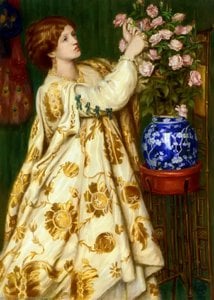
Anthony Frederick Augustus Sandys's “Grace Rose,” painted in 1866, is more than just a portrait; it’s a meticulously crafted tableau vivant, a shimmering glimpse into the opulent world of Victorian society and infused with the evocative spirit of the Pre-Raphaelites. This captivating work, now housed at the Yale Center for British Art, reveals Sandys's profound understanding of color, texture, and symbolic detail – elements that elevate it beyond a simple likeness to a richly layered exploration of beauty, femininity, and the allure of antiquity.
The subject herself, Grace Charlotte Rose, was a woman of considerable social standing, the daughter of Captain Winterton Snow and wife of Sir William Anderson Rose. Sandys’s choice to depict her in such exquisite detail speaks volumes about the importance placed on lineage and status within Victorian society. However, it's not merely a celebration of wealth; rather, the painting subtly hints at a deeper narrative woven through carefully chosen motifs. The elegant pose, the delicate lace trim, and the shimmering pearls all contribute to an atmosphere of refined grace, while simultaneously grounding the portrait in a tradition of aristocratic portraiture.
Sandys’s technical mastery is immediately apparent. He employs a rich, velvety impasto technique, building up layers of paint to create a tactile surface that invites close inspection. The delicate rendering of Grace's silk dress, the subtle sheen of her jewelry, and the intricate details of the antique vase all demonstrate his exceptional skill in capturing texture and light. Notably, Sandys deliberately avoids the stark realism favored by earlier portraitists, instead opting for a softer, more atmospheric approach—a hallmark of Pre-Raphaelite painting.
The composition is carefully orchestrated to draw the viewer’s eye through a series of interconnected elements. The green marble parapet, reminiscent of Italian Renaissance architecture, provides a dramatic backdrop for Grace and establishes an immediate connection to classical antiquity. The arrangement of the pink, crimson, and yellow roses within the vase isn't merely decorative; it speaks to themes of beauty, love, and fleeting moments—a common preoccupation in Pre-Raphaelite art. The inclusion of Japanese painted screens, a popular motif during this period (Japonisme), further enhances the sense of exoticism and adds another layer of visual richness.
“Grace Rose” occupies a fascinating space between the Pre-Raphaelite Brotherhood and the burgeoning aesthetic movement. Sandys, like many artists of his time, was drawn to the Pre-Raphaelite’s emphasis on beauty, detail, and mythological subjects, but he also embraced the aesthetic movement's fascination with decorative arts and exotic influences. The painting’s opulent details—the gold jewelry, the intricate vase, the Japanese screens—reflect this dual sensibility.
The choice of a Japanese screen as a backdrop is particularly significant. It represents a deliberate attempt to incorporate elements of Eastern art into a Western context, aligning with the aesthetic movement's interest in creating visually stimulating and emotionally evocative works. Furthermore, Sandys’s use of color—the rich reds, greens, and golds—is deliberately heightened, creating a sense of dramatic intensity that is characteristic of both Pre-Raphaelite and aesthetic paintings.
Ultimately, “Grace Rose” transcends its formal elements to evoke a powerful emotional response. The portrait captures not just Grace’s physical appearance but also her inner grace and dignity. The subtle gaze, the delicate expression, and the overall atmosphere of quiet elegance suggest a woman of considerable intelligence and refinement. It's a painting that invites contemplation—a reminder of the beauty and complexity of Victorian society and the enduring power of art to capture the essence of human experience.
Μπορείτε να κατεβάσετε το έργο "Grace Rose" του Άντονιος Φρέντερικ Όυγουστος Σάνδης από τη σελίδα Λήψη ψηφιακού αρχείου, ως λήψη ψηφιακής εικόνας υψηλής ανάλυσης.
Για το έργο "Grace Rose" του Άντονιος Φρέντερικ Όυγουστος Σάνδης προτείνεται αναπαραγωγή μεγέθους Medium. Το μέγεθος μπορεί να προσαρμοστεί διατηρώντας τις αναλογίες.
Η χρωματική ταυτότητα του έργου "Grace Rose" του Άντονιος Φρέντερικ Όυγουστος Σάνδης: μια παλέτα με αποχρώσεις Earthy, κυριαρχεί το Walnut (#7f5827).


1829 - 1904 , Ηνωμένο Βασίλειο της Αγγλίας και της Ιρλανδίας
 Προεπισκόπηση σε πραγματική κλίμακα
 Αποστολή
 Κοινοποίηση
 Λεπτομέρειες
 Οδηγός

 Λήψη
Λήψη
 Παρόμοια αντικείμενα συλλογής
 Ακτινογραφία
 Παρουσίαση
 Ερωτήσεις & Απαντήσεις
 Στατιστικά


 Περισσότερα