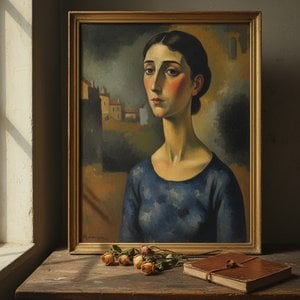
Μια Ζωή Σκαλισμένη στη Ματαιοδοξία: Ο Κόσμος του Αμέντιου Μωδιλιανί
Ο Αμέδιος Κλεμέντε Μωδιλιανί, ένα όνομα ταυτισμένο με μια μαρμαρωτή ομορφιά και μια μελαγχολική χάρη, παραμένει μία από τις πιο αγαπητές και τραγικά ρομαντικές μορφές της τέχνης του αρχαιού 20ου αιώνα. Γεννημένος στο Λιβερνό της Ιταλίας το 1884 σε μια οικογένεια βαθιά ριζωμένη στην Σεφαρδική Εβραϊκή κληρονομιά, η ζωή του χαρακτηρίστηκε τόσο από μια βαθιά καλλιτεχνική οραματικότητα όσο και από συνεχή δυσχέρεια. Συχνές ασθένειες σκίασαν τη νεότητά του – η πλευρίτιδα και ο τύφος έγιναν ανεπιθύμητοι σύντροφοι – ίσως instilling μέσα του μια ευαισθησία στη φθορά που θα διέπρεπε το έργο του. Παρόλο που γεννήθηκε σε σχετικά άνετες συνθήκες, η οικονομική τύχη της οικογένειας φθίνει, προσθέτοντας ένα άλλο στρώμα πολυπλοκότητας στα formative χρόνια του νεαρού Μωδιλιανί. Ήταν μια παιδική ηλικία σημαδεμένη από πνευματική διέγερση, χάρη στη μητέρα και τον παππού του, οι οποίοι τον εισήγαγαν στα έργα των Νίτσε, Μποδλέρ και Λοτρεαμόν, θέτοντας τα θεμέλια για μια καλλιτεχτική αισθητική που θα απέρριπτε τους συμβατικούς κανόνες.
Η έλξη της Πάρις αποδείχθηκε ακαταμάχητη και το 1906, ο Μωδιλιανί ξεκίνησε ένα ταξίδι που θα ορίσει την καριέρα του. Η πόλη ήταν τότε ένας εστιακός σημείο καλλιτεχνικής καινοτομίας, γεμάτη επαναστατικές ιδέες και προκλήσεις των παραδόσεων. Βυθίστηκε στη ζωντανή καλλιτεχνική σκηνή, συναντώντας κολοσσούς όπως ο Πάμπλο Πικάσο και ο Κ constamment Constantin Brâncuși, πρόσωπα που διαμόρφωσαν βαθιά την αισθητική του πορεία. Αρχικά ελκυσμένος από το αναδυόμενο Κουβιστικό κίνημα, ο Μωδιλιανί βρήκε γρήγορα τη σκληρή γεωμετρία του πολύ περιοριστική για τις εκφραστικές του ανάγκες. Το καλλιτεχνικό του πνεύμα αναζητούσε κάτι πιο λυρικό, πιο βαθιά ριζωμένο στο ανθρώπινο συναίσθημα. Ξεκίνησε μια περίοδο έντονης πειραματισμού, απορροφώντας επιρροές από τη αφρικανική γλυπτική – ιδιαίτερα τους μακρυά σχήματα και τα απλοποιημένα χαρακτηριστικά της – και την αρχαϊκή χάρη της ιταλικής τέχνης της Αναγέννησης.
Η Σκαλισμένη Ψυχή: Στυλ και Καινοτομία
Το χαρακτηριστικό στυλ του Μωδιλιανί αναδύθηκε ως μια μοναδική σύνθεση αυτών των διαφορετικών εμπνεύσεων. Τα πορτρέτα του, ίσως τα πιο διάσημα έργα του, είναι αμέσως αναγνωρίσιμα για τα μακρυά πρόσωπα και λαιμούς τους, τα αμυγδαλωτά μάτια χωρίς κόρη και μια συνολική αίσθηση γαλήνιας μελαγχολίας. Αυτά δεν ήταν απλώς ομοι𝙤ειδή πρόσωπα· ήταν εξερευνήσεις της εσωτερικής ζωής, που αποτύπωναν ένα βαθύ ψυχολογικό βάθος σε κάθε θέμα. Αφαίρεσε κάθε περιττή λεπτομέρεια, εστιάζοντας στα ουσιαστικά σχήματα για να μεταδώσει το συναίσθημα με αξιοσημείωτη οικονομία. Τα γυμνά του έργα, συχνά αμφιλεγόμενα κατά τη διάρκεια της ζωής του, διαθέτουν μια παρόμοια ποιότητα – μια ήσυχη αξιοπρέπεια και ευαλωτότητα που ξεπερνά την απλή φυσική αναπαράσταση. Οι μορφότυποι δεν είναι υπερβολικά ερωτικοί, αλλά περισσότερο εμποτισμένοι με μια αίσθηση διαχρονικής ομορφιάς και υπαρξιακής νοσταλγίας.
Πέρα από τη ζωγραφική, ο Μωδιλιανί αφιέρωσε τον εαυτό του επίσης στη γλυπτική, δημιουργώντας μια σειρά από εξαιρετικά στιλιζαρισμένους κεφάλους και торσά. Αυτά τα γλυπτά, επηρεασμένα από την αφρικανική τέχνο και τα αναγωγικά σχήματα του Brâncuși, επιδεικνύουν περαιτέρω την αφοσίωσή του στην απλοποίηση της μορφής και την έμφαση στις ουσιαστικές ποιότητες. Παρόλο που εξέθεσε αυτά τα έργα σύντομα με την ομάδα Section d'Or το 1912, συνάντησαν σκληρή κριτική και αποσύρθηκαν σε μεγάλο βαθμό από την έκθεση στο κοινό. Αυτή η απόρριψη επηρέασε βαθιά τον Μωδιλιανί, συμβάλλοντας σε μια περίοδο καλλιτεχνικής αυτοαμφισβήτησης και οικονομικών δυσκολιών.
Μια Ζωή Σκιασμένη από Σκιές
Η προσωπική ζωή του Μωδιλιανί ήταν τόσο ταραχώδης όσο και το καλλιτεχνικό του ταξίδι. Αγωνίστηκε με τη φτώχεια και την εθιστική κατά τη διάρκεια μεγάλο μέρος της καριέρας του, βασιζόμενος συχνά στην щеδর্য των φίλων και προστάτων του. Η σχέση του με την Ζαν Εμπερν, μια νεαρή καλλιτέχνιδα και αυτή, έγινε ο κεντρικός συναισθηματικός αγκύρωμα στη ζωή του. Μοιράστηκαν έναν βαθύ έρωτα και αμοιβαία καλλιτεχνική κατανόηση, αλλά η ευτυχία τους ήταν τραγικά σύντομη. Οι πιέσεις της φτώχειας, η επιθέουσα κατάσταση της υγείας του Μωδιλιανί και η εγκυμοσύνη της Ζαν δημιούργησαν μια ανυπόφορη πίεση. Το 1920, κατεξολοθλημένη από τη γέννηση της κόρης τους και καταρρέοντας από την απελπισία, η Ζαν τεलीωσε τη ζωή της. Μόλις λίγες μέρες αργότερα, ο Μωδιλιανί υποδέχθηκε τον θάνατο από φυματιώδη μηνιγγίτιδα σε ηλικία μόλις 35 ετών.
Κληρονομιά μιας Χαμένης Γενιάς
Παρά την έλλειψη αναγνώρισης κατά τη διάρκεια της ζωής του, το έργο του Αμέντιου Μωδιλιανί γνώρισε μια δραματική άνοδο στην δημοτικότητα μετά τον θάνατό του. Οι πίνακές και τα γλυπτά του άρχισαν να επιτυγχάνουν ολοένα και υψηλότερες τιμές, και το ιδιαίτερο στυλ του άσκησε βαθιά επίδραση στις επόμενες γενιές καλλιτεχνών. Έγινε ένα εμβληματικό σύμβολο του μποέμ πνεύματος, ενσαρκώνοντας τους αγώνες και τις νίκες μιας χαμένης γενιάς που παλεύει με την νεωτερικότητα και τα υπαρξιακά ερωτήματα.
Σήμερα, τα έργα του Μωδιλιανί φυλάσσονται σε κορυφαία μουσεία σε όλο τον κόσμο, συμπεριλαμβανομένου του Μουσείου Σύγχρονης Τέχνης της πόλης της Οσάκα, του Musée d'Art Moderne de la Ville de Paris και πολυάριθτων ιδιωτικών συλλογών. Τα πορτρέτα του συνεχίζουν να μαγεύουν τους θεατές με την μαρμαρωτή ομορφιά και τη συναισθηματική τους αντήχηση, λειτουργώντας ως μια συγκινητική υπενθύμιση μιας ζωής που ειπώθηκε στο χείλος – μια ζωή χαραγμένη στη νοσταλγία, το πάθος και την αταίρετη αφοσίωση στην καλλιτεχνική αλήθεια.
Σημαντικά Έργα
- Γυμνό Στήθος (35 x 26 εκ.): Ένα κλασικό παράδειγμα των μακρυών μορφών και του εκφραστικού στυλ του Μωδιλιανί, αναδεικνύοντας την αρτιότητα του στην ανθρώπινη μορφή.
- <Γυμνό με Απλωμένη Στάση και Ατημέλητα Μαλλιά: Αποδεικνύει την ικανότητά του να αγγίζει την ουσία της γυναικείας φύσης με μια λεπτή ισορροπία σαρκοτόχιας ομορφιάς και ευαλωτότητας.
- <Καθιστό Γυναικείο Γυμνό (92 x 60 εκ.): Μια δυναμική απεικόνιση της γυναικείας μορφής, χαρακτηρισμένη από τα απλοποιημένα σχήματά της και τη γαλήνια ηρεμία.
- <Πορτρέτο της Ζαν Εμπερν: Πολλά πορτρέτα που αιχμαλωτίζουν την αγαπημένη και μούσα του, αποκαλύπτοντας μια συγκινητική συναισθηματική βάθος και μια βαθιά εσωτερική σύνδεση.



 Δείτε σε πραγματικό χώρο
 Αγορά χειροποίητου πίνακα
 Αποστολή
 Κοινοποίηση
 Λεπτομέρειες

 Λήψη
Λήψη
 Παρόμοια αντικείμενα συλλογής
 Ακτινογραφία
 Παρουσίαση

 Διαβάστε περισσότερα






































 Η επιλογή με γυαλί είναι διαθέσιμη μόνο για μεγέθη κάτω από 110 εκ.