Προεπισκόπηση Προεπισκόπηση σε AR Μετάβαση σε Εκτυπώσεις Μετάβαση σε Ψηφιακή Εικόνα Αποστολή
Λεπτομέρειες Οδηγός Προσθήκη στα αγαπημένα Λήψη Παρόμοια αντικείμενα συλλογής Ακτινογραφία Παρουσίαση Στατιστικά

Untitled (study for

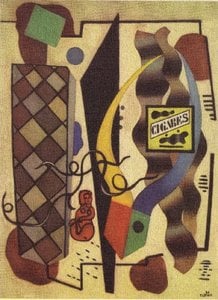
This artwork is a bold exploration of abstraction featuring geometric shapes and expressive blues and reds. Inspired by early Cubism and Expressionism, it showcases Souza-Cardoso's pioneering spirit in Portuguese art.

Ανακαλύψτε τον Αμαδέα Ντε Σούζα Κάρντοσο (1887-1918), έναν πρωτοποριακό πορτογαλικό ζωγράφο μοντερνισμού. Εξερευνήστε τις έντονες χρωματικές του συνθέσεις και την ιστορική καλλιτεχνική κληρονομιά του.

Χειροποίητη Αναπαραγωγή σε Έλαιο

Χειροποίητη ελαιογραφία σε καμβά στο δικό σας μέγεθος και πλαίσιο, κατά παραγγελία από τους καλλιτέχνες μας. ( Μετάβαση σε Εκτυπώσεις Μετάβαση σε Ψηφιακή Εικόνα)

P118B $10
P118H $10
P118W $10
P438Z $10
P508JH $12
P508YH $12
P805H $10
P805Z $10
P919BZ $10
P919G $10
P919XJ $10
P959ZH $10
P968JZ $12
W106C $8
W218G $10
W218JH $8
W218Y $10
W307PJ $10
W316G $10
W316PJ $8
W316Y $10
W398PJ $8
W4111J $10
W500HY $15
W500JH $15
W692G $12
W849H $8
W940BG $15
W953PJ $8

Πρότυπο
κατόπιν παραγγελίας
CM
INCH

Επιλέξτε από τις προκαθορισμένες διαστάσεις μας που διατηρούν τις αρχικές αναλογίες του έργου τέχνης.

πλάτος
ύψος

Μπορείτε να ορίσετε δικές σας διαστάσεις ώστε το έργο να ταιριάζει σε ένα συγκεκριμένο πλαίσιο ή χώρο. Εάν το επιλεγμένο μέγεθος δεν συμπίπτει με τις αναλογίες της αρχικής εικόνας, θα περικοψούμε το έργο ή θα επεκτείνουμε τη ζωγραφιά με πρόσθετα χειρόγραφα στοιχεία. Ένα ψηφιακό προσχέδιο θα σας αποσταλεί για έγκριση πριν την έναρξη της παραγωγής.
Παρακαλούμε σημειώστε ότι η προεπισκόπηση στην οθόνη δεν αντικατοπτρίζει την πραγματική περικοπή ή επέκταση. Μόνο το προσχέδιο θα δείξει με ακρίβεια την τελική σύνθεση.
Παρόλο που είναι διαθέσιμα προσαρμοσμένα μεγέθη, συνιστούμε να επιλέξετε μια διάσταση από τη λίστα των προκαθορισμένων μεγεθών για τη διατήρηση των αρχικών αναλογιών.

Παραδείγματα αλλαγών: Αντικατάσταση προσώπου με φωτογραφία του πελάτη· Προσθήκη κατοικίδιου (π.χ., αντικατάσταση γάτας με σκύλο)· Ενσωμάτωση κρυφού μηνύματος στο φόντο· Αλλαγή τοπίου ή στοιχείων του φόντου.
Μετά την παραγγελία, η ομάδα του WahooArt.com θα στείλει email στον πελάτη με οδηγίες και θα παρέχει μια προεπισκόπηση προσχεδίου

Παγκόσμια Αποστολή () σε 3-4 εβδομάδες αντί για τις συνήθεις 5 εβδομάδες. (24 Σεπτέμβριος). Χωρίς συμβιβασμούς στην ποιότητα.

why_choose_icon
Δωρεάν γρήγορη διεθνής αποστολή
why_choose_icon
Κάμβας από Λινό Υψηλής Ποιότητας
why_choose_icon
Πλήρης ασφάλιση μεταφοράς
why_choose_icon
Εγγύηση επιστροφής δασμών και φόρων εισαγωγής
why_choose_icon
Εγγύηση Απόλυτης Ομοιότητας Χρωμάτων
why_choose_icon
Πολιτική Επιστροφής 100 Ημερών (Μόνο σε περίπτωση ελαττωμάτων)
why_choose_icon
Εγγύηση επιστροφής 100% των χρημάτων
why_choose_icon
Έκπτωση για πολλαπλές παραγγελίες

Συνολική Τιμή

$ 272

reproduction

Untitled (study for

Τεχνική Αναπαραγωγής

Διαστάσεις Αναπαραγωγής

-

Συνολικό Κόστος

$ 272

Βασικά στοιχεία

  • Influences: Futurism
  • Notable elements or techniques: Bold colors, geometric shapes
  • Medium: Watercolor/Gouache on paper
  • Location: Private Collection
  • Movement: Modernism
  • Dimensions: 33 x 28 cm
  • Artistic style: Cubism/Expressionism

ΚВИΖ Τέχνης

Για κάθε ερώτηση υπάρχει μόνο μία σωστή απάντηση.

Ερώτηση 1:
What artistic movement is Amadeo de Souza-Cardoso’s Untitled (study for) most closely associated with?
Ερώτηση 2:
The image description mentions a ‘dynamic and abstract composition.’ What does this suggest about Souza-Cardoso’s approach to painting?
Ερώτηση 3:
What medium is likely used in the artwork based on its appearance?
Ερώτηση 4:
The color palette described as ‘dominated by blues and reds’ reflects a characteristic feature of which artistic style?
Ερώτηση 5:
Considering Souza-Cardoso's connections with Parisian artists like Brancusi and Delaunay, what broader context does this artwork represent?

A Fragmented Vision of Modernity: Analyzing Amadeo de Souza-Cardoso’s “Untitled (study for )”

“Untitled (study for )”, executed in 1915 by Portuguese modernist painter Amadeo de Souza-Cardoso, stands as a testament to the burgeoning artistic fervor of its time—a pivotal moment where European avant-garde movements wrestled with capturing the dynamism and complexity of the modern experience. More than just pigment on paper, this piece embodies a profound engagement with Cubism’s revolutionary exploration of spatial perception and the expressive potential of color, establishing Souza-Cardoso as one of Portugal's foremost champions of artistic innovation amidst the broader European landscape.

Composition and Technique: Embracing Instability

The artwork’s visual impact immediately commands attention through its strikingly asymmetrical composition. Geometric shapes—primarily rectangles and squares—overlap and intersect with disconcerting abandon, creating a palpable sense of movement and disrupting any conventional notion of equilibrium. Souza-Cardoso eschews meticulous detail in favor of loose brushstrokes and broad color blocks, prioritizing expressive gesture over precise representation. This technique – characteristic of the early Cubist experimentation – reflects a desire to dismantle traditional artistic conventions and convey an emotional response to the subject matter rather than simply mirroring reality. The subtle variations in opacity within the paint layers contribute to textural interest without resorting to overtly decorative elements.

Color Palette: A Clash of Emotion

Dominating the canvas is a vibrant color palette dominated by hues of blue and red, punctuated by flashes of yellow, green, and purple. These colors aren’t blended harmoniously; instead, they are applied in bold strokes that create a jarring juxtaposition—a deliberate provocation designed to stimulate visual perception. The strategic use of warm reds against cool blues underscores the inherent tension within the composition, mirroring perhaps the anxieties and uncertainties prevalent during Souza-Cardoso's era. This chromatic dissonance speaks volumes about the artist’s intention to communicate feeling rather than simply depicting form.

Symbolism and Context: Echoes of Parisian Avant-Garde

Beyond its formal qualities, “Untitled (study for )” carries symbolic weight rooted in the intellectual currents circulating within Paris during Souza-Cardoso's formative years. Influenced by figures like Picasso and Gris, he actively participated in the dialogue between Portuguese art and the revolutionary ideas of Cubism—a movement that sought to challenge perspectival illusion and represent objects from multiple viewpoints simultaneously. The inclusion of “Corporation” – a simple inscription – adds another layer of meaning, hinting at broader concerns about social identity and artistic patronage within Portugal’s cultural milieu. It serves as a reminder that Souza-Cardoso's work wasn't merely an aesthetic exercise but also a reflection of his engagement with the pressing questions of his time.

Concluding Impression: A Legacy of Bold Experimentation

Ultimately, “Untitled (study for )” transcends its technical merits to convey a powerful emotional resonance—a feeling of restless energy and intellectual curiosity. Souza-Cardoso’s masterful manipulation of color and form encapsulates the spirit of early modernism, demonstrating an unwavering commitment to artistic innovation and establishing himself as a cornerstone of Portuguese art history. It remains a compelling visual testament to the transformative power of abstraction and the enduring fascination with capturing the complexities of human experience through unconventional stylistic choices.

Βιογραφικό Καλλιτέχνη

Amadeo de Souza-Cardoso: A Pioneer of Portuguese Modernism

Amadeo de Souza-Cardoso, a name resonating with the vibrant energy of early 20th-century modernism, remains a somewhat enigmatic figure despite his pivotal role in bridging Portuguese art to the international avant-garde. Born on November 14, 1887, in Manhufe, Mancelos, Amarante, Portugal, his brief but intensely creative life was marked by a restless spirit and an unwavering dedication to artistic innovation. From humble beginnings rooted in the rural landscapes of his homeland, Souza-Cardoso embarked on a journey that would lead him to the heart of Parisian modernism, where he forged connections with some of the most influential artists of his time – Modigliani, Brancusi, Delaunay, and Gris among them. His early education began with architectural studies in Lisbon, but it was the allure of painting, particularly the expressive power of caricature, that truly captivated his imagination and set him on a path toward artistic exploration. This initial foray into art wasn’t merely technical training; it was an awakening to the potential of visual language as a means of commentary and self-expression.
  • Early Life & Education: Souza-Cardoso's formative years were spent in Manhufe, where he absorbed the traditions of rural Portugal. His architectural studies provided him with foundational knowledge but it was his passion for caricature—a medium that allowed for biting social critique—that ignited his artistic ambition.
  • Parisian Encounters & Artistic Development: In 1906, Souza-Cardoso relocated to Paris, immersing himself in the burgeoning artistic atmosphere of the city. He quickly embraced Cubism and Futurism, establishing himself as one of Portugal’s first true modern painters. His style was characterized by bold forms, vibrant colors, and dynamic compositions—a deliberate rejection of academic conventions.

The Influence of Avant-Garde Movements

Souza-Cardoso didn't simply mimic the stylistic trends of his time; he synthesized them with his own unique sensibility. The impact of Cubism and Futurism is undeniable in his oeuvre, particularly around 1910. Artists like Picasso and Boccioni profoundly shaped his artistic vision, encouraging him to experiment with fragmented perspectives and explore new ways of representing reality. However, Souza-Cardoso’s genius lay not merely in adopting these movements but in transforming them—infusing them with Portuguese cultural heritage and a deeply personal aesthetic.
  • Cubism & Futurism: Souza Cardoso's exploration of Cubism and Futurism resulted in groundbreaking works that challenged traditional notions of representation.
  • Connections with Key Artists: He cultivated relationships with prominent figures like Modigliani, Brancusi, Delaunay, Gris, Picasso and Archipenko, fostering a dialogue between artistic ideas across Europe.

Notable Paintings & Exhibitions

Souza-Cardoso’s artistic output is marked by several iconic pieces that exemplify his distinctive style. *Saut du Lapin* (1911) and *Cabeça* (1913) are considered masterpieces of Portuguese modernism, showcasing his masterful manipulation of color and form—a testament to his ability to convey emotion through abstraction. His participation in the Salon des Indépendants and, crucially, the Armory Show in New York solidified his reputation as a visionary artist on an international scale. These exhibitions brought him recognition and propelled him into the spotlight of the European avant-garde.
  • Iconic Works: *Saut du Lapin* (1911) and *Cabeça* (1913) are considered pivotal pieces in Souza Cardoso’s artistic legacy.
  • International Recognition: His inclusion in the Armory Show ensured his work gained prominence within the global art scene.

Legacy & Remembrance

Tragically, Amadeo de Souza-Cardoso’s promising career was cut short by his untimely death on October 25, 1918, at the age of just thirty. He succumbed to pneumonia during the Spanish Flu pandemic—a poignant reminder of the fragility of artistic life. Despite initial obscurity and the shadow cast by Francoist dictatorship in Portugal, Souza-Cardoso’s contribution to Portuguese art history has been rediscovered in recent decades. Two major retrospectives – one in 1958 and another at the Grand Palais in Paris in 2016 – have reintroduced his work to a wider audience, cementing his place as a pioneer of Portuguese modernism and an important voice within the broader European avant-garde. Today, his paintings can be found in museums around the world, including the Plymouth City Museum and Art Gallery, alongside works by other notable artists—a lasting testament to his enduring artistic influence.

Αμαδές Ντε Σούζα Κάρντοσο

Αμαδές Ντε Σούζα Κάρντοσο

1887 - 1918 , Πορτογαλία

Στοιχεία καλλιτέχνη

  • Artistic Movement Or Style: Μοντερνισμός
  • Artists Or Movements Influenced By This Artist:
    • Κυβισμός
    • Φουτουρισμός
  • Artists Who Influenced This Artist:
    • Μοδιλιανί
    • Βρανκούσι
    • Δελουάναι
  • Date Of Birth: 14 Νοεμβρίου 1887
  • Date Of Death: 25 Οκτωβρίου 1918
  • Full Name: Amadeo de Souza-Cardoso Ferreira
  • Nationality: Πορτογάλος
  • Notable Artworks:
    • Σαύτ του Λαμπίνος
    • Κεφαλή
  • Place Of Birth: Μανχούφη, Πορτογαλία
Εξερευνήστε έργα τέχνης ταξινομημένα ανά θέμα, στυλ και χαρακτηριστικά.