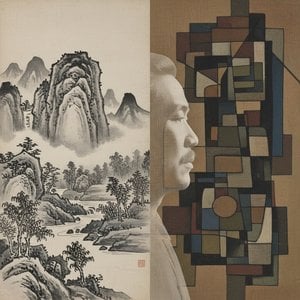
Der Weber von Mythos und Erinnerung
Lee Yun-gi (1947–2010) nahm eine seltene Stellung in der koreanischen Kulturlandschaft ein, indem er als Brücke zwischen den tiefgründigen Abgründen der antiken Mythologie und der unmittelbaren Realität der modernen Existenz fungierte. Geboren in Gunwi-si, Südkorea, wurde sein frühes Leben von den komplexen Spannungen einer Nation geprägt, die nach dem Krieg nach ihrer Identität suchte. Während die Geschichte ihn oft als Titanen der Literatur in Erinnerung behält – als preisgekrönten Romanautor und produktiven Übersetzer, der die komplizierten Labyrinthe eines Umberto Eco zu den koreanischen Lesern brachte –, suchte seine künstlerische Seele den Ausdruck in einem haptischeren Medium. Für Lee waren die Grenzen zwischen dem geschriebenen Wort und der bemalten Leinwand fließend; beide dienten als Gefäße, um die psychologischen Auswirkungen von Konflikten, Vertreibung und die beständige Kraft menschlicher Verbundenheit zu erforschen.
Seine kreative Reise war tiefgreifend durch seine Beobachtungen während des Vietnamkriegs geprägt, eine Erfahrung, aus der 1977 sein literarisches Debüt Hayan Hellikop hervorging. Diese frühe Begegnung mit den Schatten des Krieges entfachte eine lebenslange Beschäftigung mit den Themen Trauma und Überleben. Im Laufe seiner Reife erweiterten sich seine intellektuente Horizonte durch formale Studien an der Michigan State University, wo er in Vergleichende Literaturwissenschaft und Religionswissenschaft eintauchte. Diese akademische Strenge ermöglichte es ihm, die Kunst der Übersetzung zu meistern, und führte schließlich zur Veröffentlichung von über 150 Werken, die das schwere, symbolische Gewicht griechischer und römischer Mythen in sich trugen. Dieses tiefe Eintauchen in klassische Archetypen lieferte das fundamentale Vokabular für seine visuelle Kunst und erlaubte es ihm, seine Gemälde mit einem Gefühl von Zeitlosigkeit und universeller Wahrheit zu durchdringen.
Textur, Symbolik und die visuelle Erzählung
In seinem Übergang von der Präzision der Übersetzung zur expressiven Freiheit der Malerei entwickelte Lee Yun-gi einen stilistischen Ansatz, bei dem es ebenso sehr um körperliche Empfindung wie um visuelle Darstellung ging. Sein Werk zeichnet sich durch einen bemerkenswerten Einsatz von Textur aus, wobei Pigmentschichten auf die Leinwand aufgetragen werden, um eine spürbare, skulpturale Tiefe zu erzeugen. Diese Technik stellt nicht bloß ein Motiv dar; sie lädt den Betrachter ein, das Gewicht der Geschichte und die Rauheit der Erinnerung zu fühlen. In gefeierten Werken wie Blue-eyed Owl nutzt Lee die Vogelssymbolik – ein wiederkehrendes Motiv in seinem Œuvre –, um ein Gefühl von wachsamer Weisheit und die ätherische Verbindung zwischen dem Irdischen und dem Göttlichen heraufzubeschwören.
Die Fähigkeit des Künstlers, disparat wirkende Elemente zu verschmelzen, ist vielleicht seine größte Errungenschaft. Seine Gemälde spiegeln oft die Struktur seiner Prosa wider, indem sie subtile Farbvariationen und schweren Impasto nutzen, um eine Erzählung voranzutreiben, ohne auf explizite Darstellungen angewiesen zu sein. In Serien wie der Migrant Bird Series erforscht er die ergreifenden Themen der Vertreibung und der Suche nach Heimat, was die soziopolitischen Verschiebungen der koreanischen Halbinsel widerspiegelt. Durch den Einsatz von Licht und Schatten erschafft Lee Landschaften, die sich sowohl zutiefst persönlich als auch mythisch weit anfühlen und die Leinwand in einen Raum verwandeln, in dem der individuelle Kampf auf die kollektive menschliche Erfahrung trifft.
Ein Vermächtnis des interkulturellen Dialogs
Die historische Bedeutung von Lee Yun-gi liegt in seiner Rolle als kultureller Vermittler. Indem er die Komplexität westlichen Denkens in die koreanische Umgangssprache übersetzte und anschließend dieselben Archetypen in eine visuelle Sprache transformierte, förderte er einen einzigartigen interkulturellen Dialog. Sein Werk lehnte den einfachen Trost einer bloßen Beschreibung ab und entschied sich stattdessen für einen dynamischen Einsatz des Dialogs – sowohl im wörtlichen Sinne in seinen Büchern als auch metaphorisch in seinen Gemälden –, um sein Publikum herauszufordern und zu fesseln. Er begegnete dem Leben mit einem charakteristischen Sinn für Optimismus und Witz, weigerte sich, der Verzweiflung menschlicher Grausamkeit zu erliegen, und konzentrierte sich stattdessen auf die Auflösung von Konflikten durch Kreativität.
Letztendlich ist das Vermächtnis von Lee Yun-gi eines der tiefgreifenden Synthese. Er bleibt eine bedeutende Figur der zeitgenössischen koreanischen Kunst, weil es ihm gelang, die analytische Präzision eines Gelehrten mit der emotionalen Kraft eines Geschichtenerzählers zu vereinen. Sein Lebenswerk steht als Zeugnis für die Idee, dass – sei es durch die akribische Übersetzung eines Textes oder den schweren Auftrag von Farbe auf eine Leinwand – das ultimative Ziel des Künstlers darin besteht, die universellen Wahrheiten zu enthüllen, die uns alle über Zeit und Geografie hinweg verbinden.
Fragen & Antworten
Wo kann ich alle Kunstwerke von Lee Yun-Gi entdecken?
Alle Werke von Lee Yun-Gi auf diese Webseite können auf der Alle Kunstwerke-Seite des Künstlers durchstöbert werden.
Kann ich die Kunstwerke von Lee Yun-Gi nach Farben sortieren?
Auf der Seite Farbindex sind die Kunstwerke von Lee Yun-Gi nach Farben sortiert.
Wo lassen sich die Kunstwerke von Lee Yun-Gi nach Schlagworten durchsuchen?
Die Werke von Lee Yun-Gi können auf der Nach Schlagworten-Seite nach Schlagworten durchsucht werden, wobei jedes Schlagwort die entsprechenden Kunstwerke gruppiert.