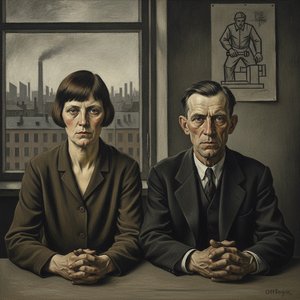
Ignaz Epper: A Bavarian Visionary of Realism
Ignaz Epper (dates unknown) stands as a prominent figure in the artistic landscape of Bavaria during the eighteenth century, celebrated for his meticulously crafted portraits and landscapes that capture the spirit of his time. Born into modest circumstances, Epper’s early life remains shrouded in obscurity, yet his prodigious talent quickly propelled him to recognition within the artistic circles of Augsburg and Munich. He honed his skills under the tutelage of Johann Baptist Eberhard Altmühl, a renowned painter known for his dramatic landscapes and masterful use of chiaroscuro—a technique that would profoundly influence Epper’s own artistic approach.
Early Influences: Altmühl's emphasis on atmospheric perspective and emotional intensity instilled in Epper a desire to convey not merely visual accuracy but also psychological depth within his compositions. He recognized the importance of capturing the inner life of his subjects, mirroring Altmühl’s profound understanding of human emotion. This formative influence shaped Epper’s artistic vision for years to come.
Epper established himself as a workshop painter in Augsburg, producing numerous commissions for noble families and ecclesiastical institutions. This prolific output demonstrates his versatility and technical prowess—a characteristic that would define his career. He mastered the art of blending meticulous observation with expressive brushstrokes, creating images that resonated deeply with their patrons. The Augsburg workshops were renowned for upholding high standards of craftsmanship, ensuring that each painting reflected Epper’s unwavering commitment to excellence.
Weyarn Parish Church Frescoes: Perhaps Epper’s most enduring legacy resides in the monumental frescoes adorning Weyarn Parish Church, commissioned by Freiherr Maximilian Joseph von Bethmannshausen. These ambitious works exemplify Epper's mastery of color and texture, depicting biblical scenes with remarkable realism and conveying a palpable sense of piety. The frescoes are considered masterpieces of Bavarian Baroque art, showcasing Epper’s ability to transform religious narratives into emotionally compelling visual experiences. Altmühl’s influence is evident in the dramatic lighting and masterful use of chiaroscuro—a technique that elevates the frescoes beyond mere decoration, imbuing them with spiritual significance.
Epper’s artistic style is characterized by an unwavering commitment to observation and detail—a hallmark of German Romanticism. He meticulously studied the nuances of human anatomy and facial expression, striving to portray subjects with unflinching honesty. Unlike many artists of his era who favored idealized representations, Epper consistently depicted individuals as they appeared in everyday life, subtly incorporating social commentary into his canvases. His landscapes are equally noteworthy, imbued with a sense of grandeur and tranquility that reflects the beauty of the Bavarian countryside. The Weyarn frescoes stand out particularly for their masterful depiction of light and shadow—a technique perfected by Altmühl—creating an immersive experience for viewers.
Technique: Epper employed oil paints on canvas, utilizing a layering process that allowed him to build up rich textures and achieve luminous effects. He skillfully blended pigments to create subtle gradations of color, capturing the nuances of natural light with breathtaking accuracy. This meticulous approach demanded considerable patience and skill—qualities that Epper possessed in abundance.
Notable Works: Among his celebrated paintings are “Mann mit Pferd” (Man with Horse) and “Paar am Tisch” (Couple at Table), which showcase Epper’s exceptional skill in capturing human emotion and conveying a sense of immediacy. These works exemplify Epper's ability to distill complex psychological states into visually arresting compositions—a testament to his artistic genius. They continue to inspire admiration for their expressive power and technical brilliance.
Ignaz Epper's contribution to Bavarian art history is undeniable. He represents a pivotal link between Baroque grandeur and Romantic idealism, embodying the spirit of his time through his unwavering dedication to realism and his profound understanding of human psychology. His frescoes at Weyarn Parish Church continue to inspire awe and admiration, serving as enduring monuments to artistic excellence and humanist values—a testament to Epper’s lasting impact on the visual arts.