Early Life and Education
Franz Ehrlich, a name synonymous with both architectural innovation and profound political engagement, was born in Reuth, Germany, in 1907. From his earliest years, a deep-seated passion for the arts ignited within him—a desire to translate vision into tangible form. This innate inclination led him to enroll at the prestigious Bauhaus school in Dessau, beginning in 1927. The Bauhaus represented more than just an educational institution; it was a crucible of artistic experimentation, a breeding ground for avant-garde movements that sought to redefine aesthetics and functionality. Under the tutelage of masters like Walter Gropius, László Moholy-Nagy, Paul Klee, and Joost Schmidt, Ehrlich immersed himself in the principles of modernism, exploring typography, design, and sculpture with an unwavering commitment to innovation. The Bauhaus experience fundamentally shaped his artistic perspective, instilling within him a belief in the power of art to transform society and a deep appreciation for collaborative creativity.Artistic Career and Communist Affiliation
Ehrlich’s career trajectory was inextricably linked to his political convictions. A fervent supporter of the communist party, he became deeply involved in the resistance against the rising tide of Nazism. This commitment ultimately led to his arrest and imprisonment in 1935, a harrowing experience that profoundly altered the course of his life. Despite facing immense hardship and persecution, Ehrlich refused to abandon his artistic pursuits. He continued to contribute significantly to the world of art, leaving behind a legacy marked by resilience, integrity, and a steadfast belief in social justice. His work during this period reflects both the constraints imposed upon him and his unwavering determination to express himself creatively within those limitations.Notable Works
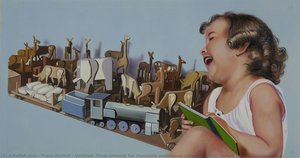
Ehrlich’s artistic output encompassed a diverse range of projects, each demonstrating his unique approach to design and architecture. Among his most celebrated achievements are: “800 YRS. FRAMEWORK WALL 3” (Leipzig Trade Fair), an ambitious exhibition display that showcased his innovative use of space and materials; the meticulously planned foundation drawings for Professor Dr. Baumann’s house, a testament to his architectural expertise; and "1933" – a groundbreaking photo-sculptural advertising project—a daring experiment that seamlessly blended photography and sculpture, revealing Ehrlich's experimental nature and willingness to push artistic boundaries. These projects, along with numerous others, collectively illuminate the breadth of his creative vision and his ability to translate complex ideas into compelling visual forms.Museums and Collections Featuring Ehrlich’s Work
Ehrlich’s work has been preserved in several key institutions, offering visitors a valuable opportunity to engage with his artistic legacy. The WahooArt.com website features an extensive collection of his works, including the aforementioned projects. Furthermore, the Bauhaus Dessau Foundation (Dessau-Roßlau, Germany) serves as a vital repository for his artistic endeavors, housing original drawings, models, and other artifacts that provide insights into his creative process. The preservation and exhibition of these works ensure that Ehrlich’s contributions to art history will continue to be appreciated by future generations.Legacy and Impact
Franz Ehrlich's impact extends far beyond the confines of his individual creations. His life story—a narrative interwoven with artistic brilliance, political activism, and personal hardship—offers a poignant reflection on the intersection of art and politics during a tumultuous period in German history. He stands as a symbol of resistance against oppression and a testament to the enduring power of creativity to inspire hope and challenge convention. His work continues to resonate today, prompting us to consider the role of art in shaping our understanding of the world and advocating for social justice.Fragen & Antworten
Welche Kunstwerke von Franz Ehrlich werden am häufigsten aufgerufen?
Die Seite Statistiken von Franz Ehrlich zeigt Statistiken, die auf Basis der auf diese Webseite gelisteten Kunstwerke des Künstlers berechnet wurden.
Wo kann ich die Kunstwerke von Franz Ehrlich nach Stimmung sortiert finden?
Auf der Stimmungswelten von Franz Ehrlich werden die Kunstwerke des Künstlers nach Stimmung sortiert präsentiert.
Welche Farben hat Franz Ehrlich am häufigsten verwendet?
Die Verwendung von Farbe in den Werken von Franz Ehrlich, die auf diese Webseite zu finden sind, lässt sich auf der Farbpalette des Künstlers-Seite des Künstlers entdecken.