Der Visionär von Nürnberg: Das Leben und Vermächtnis von Augustin Hirschvogel
Im Herzen des Deutschlands der Renaissance, wo das filigrane Handwerk Nürnbergs auf die aufkeimende intellektuelle Neugier der Epoche traf, trat Augustin Hirschvogel als ein Universalgenie hervor, dessen Talente die Grenzen einer einzelnen Disziplin überschritten. Geboren im Jahr 1503 in eine Linie berühmter Kunsthandwerker, war Hirschvogel für ein Leben bestimmt, das tief in den akribischen Traditionen seines Vaters, Veit Hirschvogel dem Älteren, verwurzelt war. Als Kind atmete er die Atmosphäre einer Werkstatt, die der leuchtenden Kunst der Glasmalerei gewidmet war, und lernte, wie Licht durch farbiges Glas eingefangen und verwandelt werden konnte. Dieses frühe Eintauchen in das zarte Zusammenspiel von Transparenz und Pigment prägte in ihm eine lebenslange Ehrfurcht vor dem Detail und einen geschulten Blick für das strukturelle Wesen der Welt um ihn herum.
Doch die Lebensbahn Hirschvogels wurde durch die Windeseile des Wandels, die Europa erfasste, unwiderruflich verändert. Das Aufkommen der Protestantischen Reformation in Nürnberg setzte der Ära prächtiger, monumentaler Glasmalereiaufträge ein abruptes Ende. Während diese Zeit religiöser Umbrüche einen weniger bedeutenden Künstler hätte ersticken können, diente sie für Hirschvogel als Katalysator für eine tiefgreifende Neuerfindung. Er wandte seinen Blick vom ätherischen Glanz des Glases der greifbaren Präzision der Mathematik und Kartografie zu. Dieser Übergang vom Dekorativen zum Analytischen erlaubte es ihm, das ästhetische Empfinden eines Malers mit der strengen Logik eines Wissenschaftlers zu verschmelzen und so eine einzigartige künstlerische Stimme zu erschaffen, die sowohl evokativ als auch mathematisch fundiert war.
Meisterschaft der Linie: Die Donauschule und die Landschaftsradierungen
Zwischen 1545 und 1549 erlangte Hirschvogel seine dauerhafteste künstlerische Anerkennung durch eine Serie von fünfunddreißig kleinen Landschaftsradierungen. Diese Werke rückten ihn in das Zentrum der Donauschule, einer Bewegung, die durch ihre romantisierte, oft dramatische Darstellung der Natur gekennzeichnet war. Im Gegensatz zu den eher starren, klassischen Landschaften, die anderswo in Europa entstanden, fingen Hirschvorgels Radierungen den rauen, ungezähmten Geist der bayerischen und österreichischen Gebiete ein. Seine Beherrschung der Radiernadel ermöglichte es ihm, das dichte Laub der Wälder, die schroffen Klippen der Alpen und die imposanten Silhouetten der Burgen von Nürnberg und Hohenzollern mit einer fast haptischen Realität darzustellen.
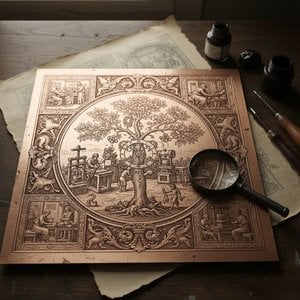
In diesen Drucken findet sich eine atemberaubende Synthese aus Beobachtung und Emotion. Er dokumentierte nicht bloß die Topografie; er hauchte der Landschaft Leben ein. Durch feine Kreuzschraffuren und variierende Linienstärken erreichte er eine atmosphärische Tiefe, die den Betrachter dazu einlud, durch seine Miniaturwelten zu wandern. Seine Fähigkeit, die Weite der deutschen Wildnis auf eine kleine Kupferplatte zu übertragen, bleibt ein Zeugnis seiner technischen Virtuosität. Diese Radierungen waren weit mehr als bloße Reproduktionen von Landschaften; sie waren Fenster in eine Zeit, in der die natürliche Umgebung als Sujet einer tiefen spirituellen und nationalen Identität wiederentdeckt wurde.
Architekt der urbanen Identität: Kartografie und Stadtplanung
Jenseits des intimen Maßstabs seiner Radierungen reichte Hirschvorgels Intellekt bis ins Monumentale. Seine Faszination für Mathematik und räumliche Beziehungen führte ihn ganz natürlich in den Bereich der Kartografie und des Städtebaus. Er wurde zu einem Pionier der Stadtplanung, am deutlichsten durch seine Beiträge zur visuellen Identität Wiens. Seine Arbeit an komplexen Karten, wie etwa dem Tisch mit kreisförmiger Karte der Stadt Wien, bewies eine beispiellose Fähigkeit, komplizierte urbane Daten in wunderschöne, lesbare und ästhetisch ansprechende Kompositionen zu ordnen.
Diese Phase seiner Karriere stellt die ultimative Konvergenz seiner vielfältigen Fähigkeiten dar. Als Kartograf besaß er die Präzision, die für exakte Vermessungen erforderlich war; als Künstler verstand er es, die Komposition einzusetzen, um das Auge durch die labyrinthartigen Straßen einer wachsenden Metropole zu führen. Sein visionärer Ansatz der Stadtgestaltung half dabei, das eigentliche Gefüge der historischen Entwicklung Wiens zu formen und hinterließ ein Erbe, das in den physischen Steinen der Stadt selbst eingraviert ist. Das Leben Hirschvogels bleibt eine bemerkenswerte Erzählung von Anpassungsfähigkeit und Brillanz – eine Reise von den farbenprächtigen Fenstern einer Nürnberger Werkstatt bis hin zu den grandiosen, strukturellen Entwürfen einer der bedeutendsten kaiserlichen Hauptstädte Europas.
Fragen & Antworten
Wo und wann wurde Augustin Hirschvogel geboren?
Augustin Hirschvogel wurde im Jahr 1503 in Nürnberg geboren.
Gibt es eine virtuelle 3D-Tour durch die Werke von Augustin Hirschvogel?
Die Virtuelle 3D-Galerie von Augustin Hirschvogel präsentiert die Kunstwerke des Künstlers in einer virtuellen dreidimensionalen Galerie.
Wie finde ich Werke von Augustin Hirschvogel nach einer bestimmten Farbpalette sortiert?
Um Werke von Augustin Hirschvogel nach einer bestimmten Farbpalette zu finden, nutzen Sie die Nach Farbpaletten-Seite des Künstlers.