Kostenlose Kunstberatung

x
Druck bestellen Druck bestellenBild kaufen Bild kaufen VersendenVersenden
DetailsDetails Zu Favoriten hinzufügen Zu Favoriten hinzufügen HerunterladenHerunterladen Ähnliche ObjekteÄhnliche Objekte RöntgenaufnahmeRöntgenaufnahme Diashow anzeigenDiashow anzeigen

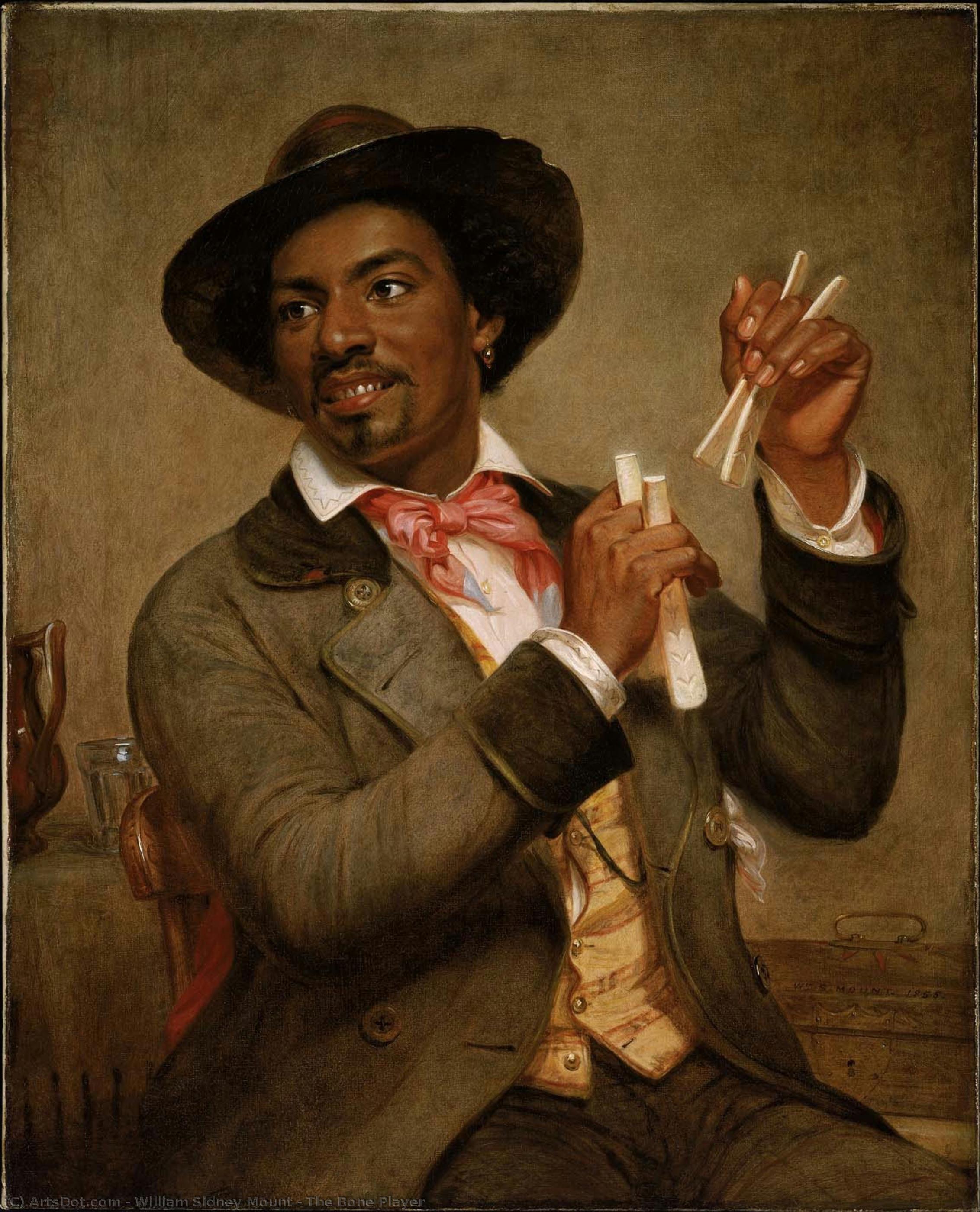
The Bone Player

William Sidney Mount’s ‘The Bone Player,’ a captivating 1856 genre painting, portrays a dignified African American musician with chopsticks – a unique detail reflecting Victorian stereotypes. Explore this remarkable piece and its historical context.

Entdecken Sie William Sidney Mount (1807-1868), Pionier der amerikanischen Genremalerei! Erleben Sie authentische Darstellungen des Landlebens auf Long Island.

Handgefertigte Öl-Reproduktion

Handgemaltes Ölgemälde auf Leinwand in Ihrer Wunschgröße und mit Rahmen, auf Bestellung von unseren Künstlern angefertigt.

P118B $10
P118H $10
P118W $10
P438Z $10
P508JH $12
P508YH $12
P805H $10
P805Z $10
P919BZ $10
P919G $10
P919XJ $10
P959ZH $10
P968JZ $12
W106C $8
W218G $10
W218JH $8
W218Y $10
W307PJ $10
W316G $10
W316PJ $8
W316Y $10
W398PJ $8
W4111J $10
W500HY $15
W500JH $15
W692G $12
W849H $8
W940BG $15
W953PJ $8

Standard
custom
CM
INCH

Wählen Sie aus unseren vordefinierten Größen, die den ursprünglichen Proportionen des Kunstwerks entsprechen.

Breite
Höhe

Sie können Ihre eigenen Maße eingeben, um einen bestimmten Rahmen oder Platz auszufüllen. Wenn die gewählte Größe nicht den Proportionen des Originalbildes entspricht, werden wir das Kunstwerk entweder beschneiden oder das Gemälde durch zusätzliche, handgemalte Elemente erweitern. Ein digitales Mockup wird Ihnen zur Genehmigung zugesandt, bevor die Produktion beginnt.
Bitte beachten Sie, dass die Bildschirmvorschau nicht die tatsächliche Beschneidung oder Erweiterung widerspiegelt. Nur das Mockup zeigt die endgültige Komposition exakt an.
Obwohl Sondermaße verfügbar sind, empfehlen wir, eine Größe aus der vordefinierten Liste zu wählen, um die ursprünglichen Proportionen beizubehalten.

Beispiele für Anpassungsmöglichkeiten: Gesicht durch Kundenfoto ersetzen; Haustier hinzufügen (z. B. Katze durch Hund ersetzen); eine versteckte Nachricht im Hintergrund einfügen; Hintergrundlandschaft oder -elemente ändern.
Nach der Bestellung wird das WahooArt.com-Team dem Kunden Anweisungen per E-Mail zusenden und eine Mockup-Vorschau bereitstellen.

Weltweiter Versand () in nur 3 bis 4 Wochen statt der üblichen 5 Wochen. (2 Juli). Keine Kompromisse bei der Qualität.

why_choose_icon
Kostenloser weltweiter Expressversand
why_choose_icon
Hochwertige Leinenleinwand
why_choose_icon
Umfassender Versicherungsschutz beim Versand
why_choose_icon
Zollsteuer-Rückerstattungsgarantie
why_choose_icon
Garantie für echte Farbtreue
why_choose_icon
60-Tage-Rückgaberecht (nur bei Mängeln)
why_choose_icon
100% Geld-zurück-Garantie
why_choose_icon
Mengenrabatt verfügbar

Gesamtpreis

-

reproduction

The Bone Player

Art der Reproduktion

Größe der Reproduktion

-

Endpreis aller Optionen

-

Eckdaten auf einen Blick

  • Subject or theme: African American Musicianship
  • Notable elements or techniques: Ivory, wood, bone instruments; Detailed facial features
  • Artistic style: Realistic Portraiture
  • Artist: William Sidney Mount
  • Year: 1856
  • Dimensions: 91.76 x 73.98 cm
  • Title: The Bone Player

Kunst-Quiz

Jede Frage hat nur eine richtige Antwort.

Frage 1:
What artistic style is William Sidney Mount’s *The Bone Player* primarily associated with?
Frage 2:
Why was *The Bone Player* commissioned by Goupil and Company?
Frage 3:
Scholars debated whether *The Bone Player* represents a stereotypical depiction of African Americans or a sensitive portrait of an individual. What evidence supports this debate?
Frage 4:
What was Mount’s primary motivation for creating *The Bone Player*, considering his own musical interests?
Frage 5:
What broader historical context influenced Mount’s decision to portray an African American musician?

Beschreibung des Kunstwerks

The Bone Player: A Portrait of Musical Identity Amidst Victorian Stereotypes

William Sidney Mount’s *The Bone Player* stands as a fascinating testament to the artistic landscape of mid-nineteenth century America—a blend of portraiture and genre painting that simultaneously celebrates individual character and reflects prevailing societal attitudes toward African American musicians. Born in Long Island, Mount honed his craft alongside his brother, a skilled painter specializing in portraits and signage, before pursuing formal training at the National Academy of Design in New York City. By 1856, he had firmly established himself as one of the nation’s foremost artists, recognized for his ability to capture the essence of everyday life with remarkable realism. Mount embarked on this ambitious project—two depictions of African American musicians destined for lithographic reproduction in Europe—following a commission from Goupil and Company. This undertaking wasn't merely about commercial success; it was deeply intertwined with intellectual currents shaping the era, notably theories of evolution which positioned African Americans as possessing innate musical aptitude surpassing that of Caucasians. Recognizing the potential market appeal of such imagery – both to European audiences captivated by exoticism and to American sensibilities eager to define national identity – Mount skillfully navigated the complexities of artistic representation within a politically charged climate surrounding slavery. The painting itself presents a man seated comfortably, holding chopsticks with an air of quiet contemplation. He wears a scarlet bow tie and boasts a neatly groomed mustache, details meticulously rendered by Mount—a deliberate departure from stereotypical depictions prevalent in genre paintings of the time. Unlike many artists of his era who employed caricature to portray African Americans as caricatured figures, Mount treated his subject with respect and nuance, emphasizing his distinctive facial features – high cheekbones, white teeth, and a refined mustache – suggesting an individual portrait rather than a generalized type. The inclusion of instruments like ivory chopsticks—a symbol associated with African American minstrels—further reinforces the painting’s thematic focus on musical skill as opposed to broader biographical information. Adding to the intrigue is the backdrop: bottles of liquor positioned strategically, alongside two books and cups – elements that contribute to an intimate domestic scene. These props subtly underscore the sitter's social milieu and invite contemplation about his life beyond his musical talent. Scholars have debated whether *The Bone Player* embodies a genuine portrayal of an individual or merely reflects Victorian stereotypes concerning African American intellect and artistic inclination. While Mount’s title— “The Bone Player”—indicates an emphasis on musical proficiency, the careful delineation of physical characteristics argues for a more humanist approach. Ultimately, Mount's masterpiece transcends its historical context to offer a poignant meditation on identity and representation. It exemplifies his masterful technique – blending realism with psychological insight – securing its place as a landmark achievement in American genre painting and demonstrating an artist’s awareness of the cultural currents shaping his time. Its enduring appeal lies not only in its aesthetic beauty but also in its capacity to provoke thoughtful discussion about perceptions of race and artistry during the tumultuous years leading up to the Civil War.

Stylistic Considerations: Genre Painting Meets Portraiture

Mount's approach distinguishes *The Bone Player* from many contemporary artistic endeavors. Rather than adhering strictly to formal portrait conventions—characterized by idealized poses and meticulous attention to detail—he embraced the tenets of genre painting, a movement that championed depictions of everyday life with an emphasis on capturing authentic emotion and atmosphere. This stylistic choice reflects Mount’s broader artistic philosophy: to elevate the commonplace into something beautiful and meaningful. The artist skillfully combined elements of both genres, resulting in a composition that is simultaneously intimate and socially conscious. The muted color palette—dominated by earthy tones—contributes to the painting's subdued yet contemplative mood. Mount employed meticulous brushwork, layering thin glazes to achieve remarkable luminosity and textural richness. This technique—characteristic of American Realism—allowed him to convey subtle nuances of expression and capture the tactile qualities of the sitter’s clothing and surroundings. Furthermore, Mount’s compositional arrangement—centered around the figure—creates a focal point that draws the viewer's eye inward, fostering a sense of connection with the subject.

Historical Context: Victorian Stereotypes and Evolutionary Thought

*The Bone Player* emerged during a period marked by intense intellectual debate concerning racial hierarchies and evolutionary theories. The prevailing belief was that African Americans possessed inherent musical talent surpassing that of Europeans due to their perceived proximity to “primitive” instincts—a notion championed by figures like Herbert Spencer. Mount’s decision to portray his subject as an individual, rather than adhering to stereotypical representations prevalent in genre painting, speaks to this broader intellectual landscape. He deliberately avoided caricature, opting instead for a dignified depiction that acknowledged the sitter's humanity and challenged prevailing prejudices. The commission from Goupil and Company—a Parisian printing firm eager to capitalize on European fascination with exotic cultures—further underscores the painting’s significance within its historical context. Mount understood that images of African American musicians would resonate powerfully with audiences abroad, bolstering his reputation as a commercially astute artist while simultaneously engaging in a dialogue about societal perceptions of race.

Symbolism: Instruments and Domestic Tranquility

The inclusion of instruments like ivory chopsticks—a symbol associated with African American minstrels—serves as more than mere decorative element; it encapsulates the painting’s central theme – musical skill as opposed to biographical information. This deliberate choice reflects Mount's artistic sensitivity and his awareness of cultural conventions shaping Victorian society. Simultaneously, the domestic setting—characterized by bottles of liquor, books, and cups—suggests a scene of quiet contemplation and social comfort. These props invite viewers to consider the sitter’s life beyond his musical talent, prompting reflection on themes of identity, leisure, and human connection.

Emotional Impact: Dignity and Observation

Ultimately, *The Bone Player* succeeds in conveying a profound sense of dignity and observation—qualities that define Mount's artistic legacy. Unlike many artists of his time who prioritized spectacle or melodrama, he focused on capturing the quiet beauty of everyday life with remarkable empathy. The painting’s understated palette, meticulous brushwork, and carefully considered compositional arrangement contribute to its emotional resonance, inviting viewers to contemplate the complexities of human experience within a specific historical context. It remains a powerful reminder that art can illuminate both individual character and broader societal concerns—a testament to Mount's enduring artistic vision.

Ähnliche Kunstwerke


Biografie des Künstlers

William Sidney Mount: Ein Pionier der amerikanischen Genremalerei

  • Geboren: 26. November 1807, Setauket, Long Island, New York
  • Gestorben: 19. November 1868, Setauket, New York
  • Nationalität: Amerikaner
  • Bekannt für: Genremalerei, Landschaftsbilder, Porträts und Geigenbau

Frühes Leben und künstlerische Ausbildung

  • William Sidney Mount wurde in eine Familie mit künstlerischen Neigungen hineingeboren. Sein Vater, Thomas Shepard Mount, betrieb eine Farm, ein Geschäft und eine Taverne, während sein Onkel, Micah Hawkins, Komponist, Dramatiker, Imitator und Dichter war. Diese Umgebung förderte Williams frühes Interesse an Kunst und Musik.
  • Er begann zunächst eine Lehre bei seinem älteren Bruder, Henry Smith Mount, einem Schildermaler in New York City. Während dieser Zeit verfeinerte er seine Fähigkeiten im Zeichnen und Malen.
  • Mount besuchte 1825 die Ausstellung der American Academy of the Fine Arts, was seinen künstlerischen Kurs maßgeblich beeinflusste. Er begann, Szenen aus dem täglichen Leben darzustellen und wich von traditionellen Porträts und historischen Themen ab.
  • Im Jahr 1829 eröffnete er in New York City sein eigenes Atelier, was einen bedeutenden Schritt in seiner Karriere als unabhängiger Künstler markierte.

Künstlerischer Stil und bemerkenswerte Werke

  • Mount wird gefeiert als einer der ersten amerikanischen Künstler, die sich auf die Genremalerei spezialisierten – die Darstellung von Szenen aus dem täglichen Leben. Seine Arbeit fing das Wesen des ländlichen Long Island im 19. Jahrhundert ein und porträtierte Bauern, Musiker, Tänzer und andere einfache Leute bei ihren täglichen Aktivitäten.

  • Hauptmerkmale: Mounts Stil zeichnet sich durch Realismus, Detailgenauigkeit und den Fokus auf das Festhalten authentischer Momente aus. Er stellte oft Szenen mit Wärme und Humor dar und feierte die einfachen Freuden des Landlebens.
  • Bemerkenswerte Werke:
    • The Banjo Player (1856): Ein ergreifendes Porträt eines afroamerikanischen Musikers, der eine Banjo spielt, das Mounts Engagement für die Darstellung vielfältiger Menschen mit Würde zeigt.
    • The Long Story (auch bekannt als The Tough Story): Stellt einen Mann dar, der in eine Zeitung vertieft ist und einen Moment stiller Kontemplation einfängt und die Bedeutung von Lesen und Information im täglichen Leben hervorhebt.
    • Dancing on the Barn Floor (1831): Eine lebhafte Szene ländlicher Heiterkeit, die Mounts Fähigkeit zeigt, Bewegung und Emotion durch seine Pinselstriche einzufangen.
    • Right and Left: Eine humorvolle Darstellung eines Boxkampfs, die Mounts Geschicklichkeit bei der Darstellung menschlicher Interaktion und dem Festhalten flüchtiger Momente demonstriert.

Einfluss und Vermächtnis

  • William Sidney Mounts Arbeit beeinflusste maßgeblich die Entwicklung der amerikanischen Kunst. Indem er sich auf die Genremalerei konzentrierte, trug er dazu bei, diese als ein wichtiges Genre innerhalb der amerikanischen Kunstlandschaft zu etablieren.
  • Seine realistischen Darstellungen des Landlebens ebneten den Weg für zukünftige Generationen von Künstlern, die versuchten, das Wesen der amerikanischen Identität und Kultur einzufangen.
  • Mounts Darstellung afroamerikanischer Menschen in seinen Gemälden war zu seiner Zeit bahnbrechend, da sie vorherrschende Stereotypen in Frage stellten und Gleichberechtigung und Respekt einforderten.
  • Er wird als Pionier des amerikanischen Realismus und Chronist des Landlebens auf Long Island in Erinnerung behalten, dessen Werk weiterhin das Publikum anspricht. Sein Vermächtnis geht über die Kunstwelt hinaus und spiegelt ein Engagement für die Darstellung von einfachen Menschen mit Würde und die Feier der einfachen Freuden des Lebens wider.

Spätere Jahre und weitere künstlerische Bestrebungen

  • Im Jahr 1860 baute Mount ein tragbares Atelier in einem von Pferden gezogenen Wagen, das es ihm ermöglichte, frei durch Long Island zu reisen und Szenen direkt aus dem Leben zu malen. Dieses mobile Atelier ermöglichte es ihm, spontane Momente einzufangen und mit den Menschen, die er darstellte, in Kontakt zu treten.
  • Neben seiner Malerei war Mount auch ein begabter Musiker und Erfinder. Er spielte Geige, komponierte Musik und entwarf mehrere Versionen seiner eigenen Geige, die er "Cradle of Harmony" nannte.
  • Er starb am 19. November 1868 in Setauket, New York, und hinterließ ein reiches künstlerisches Vermächtnis, das weiterhin inspiriert und das Publikum fesselt. Sein Haus und Atelier sind heute als National Historic Landmark ausgewiesen und bewahren seinen kreativen Raum für zukünftige Generationen.
William Sidney Mount

William Sidney Mount

1807 - 1868 , Vereinigte Staaten von Amerika

Kurzinfos

  • Bemerkenswerte Werke:
    • Der Banjospieler
    • Die Lange Geschichte
    • Tanzen auf dem Bauernhof
  • Geburtsdatum: 26. November 1807
  • Geburtsort: Setauket, USA
  • Künstlerische Richtung: Genrebildmalerei
  • Nationalität: Amerikanisch
  • Todatum: 19. November 1868
  • Vollständiger Name: William Sidney Mount
Entdecken Sie Kunstwerke, die nach Themen, Stilen und Merkmalen sortiert sind.