A Tender Glimpse into Victorian Intimacy
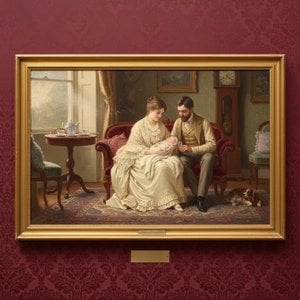
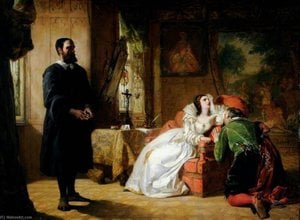
In the quiet corners of late nineteenth-century England, domestic life was often defined by a delicate balance of social propriety and deep-seated familial devotion. William Powell Frith’s 1890 masterpiece, "The Invalid," serves as a profound window into this era, capturing a moment that is simultaneously heavy with the weight of illness and lightened by the warmth of human connection. The painting presents a domestic tableau where a family gathers around a woman resting in bed, creating an atmosphere that feels less like a formal portrait and more like a stolen glance into a private, sacred space. Through his masterful use of color and composition, Frith invites us to witness the quiet strength found in companionship during times of vulnerability.
The scene is bathed in a comforting, golden glow, achieved through a palette dominated by rich reds, oranges, and yellows. This warmth does more than just illuminate the room; it acts as an emotional embrace, softening the somber reality of the subject matter. As we gaze upon the canvas, our eyes are drawn to the meticulous details that ground the scene in a tangible reality: the steady, silent presence of a grandfather clock on the wall, a vase brimming with fresh flowers that offers a flicker of life amidst the stillness, and scattered books that hint at the intellectual lives of those present. Every element is placed with intention, contributing to a narrative of caregiving and quiet endurance.
Mastery of Narrative and Technique
Frith was renowned for his ability to construct panoramic narratives, and even within this intimate domestic setting, his skill in storytelling is palpable. Drawing significant inspiration from the celebrated Sir David Wilkie, Frith eschews grand, theatrical gestures in favor of a more nuanced realism. He does not merely record a scene; he constructs an unfolding drama where the unspoken anxieties and affections of the characters are felt by the viewer. The positioning of the figures—particularly the man seated vigilantly beside the bed—underscores the Victorian ideal of duty and support, making the painting a poignant study of the bonds that hold a family together.
For the discerning collector or interior designer, "The Invalid" offers much more than mere decoration. It is a piece of historical storytelling that brings a sense of depth and soul to any space. The painting’s ability to evoke empathy makes it an ideal centerpiece for rooms designed for reflection and conversation. Whether placed in a traditional study or a contemporary living area, the work provides a sophisticated touch of nostalgia, reminding us of the timelessness of love and the enduring importance of presence in the face of adversity.
Fragen & Antworten
In welchem Jahr wurde "The Invalid" von William Powell Frith geschaffen?
Die Entstehung von "The Invalid" von William Powell Frith wird auf 1890 datiert.
Welche Farbe sticht in "The Invalid" am meisten hervor?
Die Farbe, die in „The Invalid“ am stärksten hervorsticht, ist Black (#230f06). Die dominante Farbe ist hilfreich, um ein Kunstwerk auf eine Inneneinrichtung abzustimmen.
Ist "The Invalid" insgesamt eher hell oder eher dunkel?
"The Invalid" von William Powell Frith weist eine Helligkeit von deep_shadow mit einer Luminanz von Soft Shadow auf.



 In echtem Maßstab anzeigen
 Zum Druck wechseln
 Versenden als Grußkarte
 Teilen
 Details anzeigen
 Leitfaden öffnen

 Herunterladen
 Ähnliche Objekte
 Röntgenaufnahme
 Diashow
 Besucherstatistiken


 Mehr anzeigen






































 Die Glasoption ist nur für Größen unter 110 cm verfügbar.