Kostenlose Kunstberatung

x
Gemälde kaufen Gemälde kaufenBild kaufen Bild kaufen VersendenVersenden
Details anzeigenDetails anzeigen Zu Favoriten hinzufügen Zu Favoriten hinzufügen HerunterladenHerunterladen Ähnliche ObjekteÄhnliche Objekte RöntgenaufnahmeRöntgenaufnahme Diashow anzeigenDiashow anzeigen

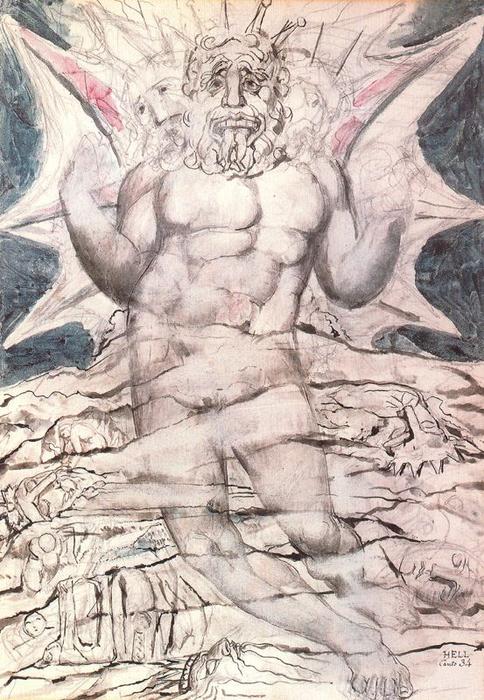
Lucifer

Lucifer - This striking painting by William Blake depicts Zeus-like figure battling amidst turbulent clouds and mountains, wielding a lightning bolt and accompanied by two birds. Blake's masterful detail captures the essence of Romanticism’s visionary spirit.

Erkunden Sie die visionäre Kunst und Poesie von William Blake (1757-1827). Eine Schlüsselgestalt des Romantik, bekannt für illuminierte Drucke, mystische Themen und prophetische Werke wie 'The Tyger'. Entdecken Sie sein Erbe in Museen und online!

Giclée / Kunstdruck

Giclée- oder Leinwanddruck in Museumsqualität mit schneller Produktion und flexiblen Veredelungsoptionen.

P118B $10
P118H $10
P118W $10
P438Z $10
P508JH $12
P508YH $12
P805H $10
P805Z $10
P919BZ $10
P919G $10
P919XJ $10
P959ZH $10
P968JZ $12
W106C $8
W218G $10
W218JH $8
W218Y $10
W307PJ $10
W316G $10
W316PJ $8
W316Y $10
W398PJ $8
W4111J $10
W500HY $15
W500JH $15
W692G $12
W849H $8
W940BG $15
W953PJ $8

Standard
custom
CM
INCH

Wählen Sie aus unseren vordefinierten Größen, die den ursprünglichen Proportionen des Kunstwerks entsprechen.

Breite
Höhe

Sie können Ihre eigenen Maße eingeben, um ein bestimmtes Format oder einen speziellen Platz einzupassen. Wenn das von Ihnen gewählte Format nicht den Proportionen des Originalbildes entspricht, werden wir das Kunstwerk entweder beschneiden oder das Bild mit einem gespiegelten oder einfarbigen Rand erweitern. Ein digitaler Entwurf wird Ihnen zur Genehmigung zugesandt, bevor die Produktion beginnt.
Bitte beachten Sie, dass die Vorschau auf dem Bildschirm nicht den tatsächlichen Zuschnitt oder die Erweiterung widerspiegelt. Nur der Entwurf zeigt die endgültige Komposition präzise an.
Obwohl Sondermaße verfügbar sind, empfehlen wir die Auswahl eines Maßes aus der vordefinierten Liste, um die ursprünglichen Proportionen zu bewahren.

Weltweiter Versand () innerhalb von 2 Wochen statt der üblichen 4/5 Wochen. (17 Juli)

why_choose_icon
Kostenloser weltweiter Expressversand
why_choose_icon
Hochwertige Leinenleinwand
why_choose_icon
Umfassender Versicherungsschutz beim Versand
why_choose_icon
Zollsteuer-Rückerstattungsgarantie
why_choose_icon
Garantie für echte Farbtreue
why_choose_icon
60-Tage-Rückgaberecht (nur bei Mängeln)
why_choose_icon
100% Geld-zurück-Garantie
why_choose_icon
Mengenrabatt verfügbar

Gesamtpreis

-

reproduction

Lucifer

Giclée / Kunstdruck

Größe der Reproduktion

-

Endpreis aller Optionen

-

Eckdaten auf einen Blick

  • Title: Lucifer
  • Notable elements or techniques: Lithography; Detailed etching; Symbolic imagery
  • Movement: Romanticism
  • Year: 1827
  • Artist: William Blake
  • Subject or theme: Mythology; Religion; Darkness

Kunst-Quiz

Jede Frage hat nur eine richtige Antwort.

Frage 1:
What mythological figure is Lucifer likely to represent?
Frage 2:
The painting depicts a battle scene. What weapon does Lucifer hold?
Frage 3:
Which artistic movement is William Blake associated with?
Frage 4:
What prominent element contributes to the painting's dramatic atmosphere?
Frage 5:
Blake is known for his intricate and detailed style. What technique did he utilize extensively in his artwork?

Beschreibung des Sammlerstücks

William Blake’s Lucifer: A Descent Into Mythic Darkness

William Blake’s “Lucifer,” completed in 1814-1815, stands as a monumental testament to the Romantic preoccupation with visionary experience and the exploration of primal forces. More than just a depiction of Satan—though undeniably embodying the rebellious spirit of Lucifer—the painting delves into profound psychological and spiritual territory, presenting a complex portrait of demonic transformation and the confrontation between divine order and chaotic liberation.

Style and Technique: Blake’s Revolutionary Printmaking

Blake eschewed conventional artistic conventions, prioritizing direct observation and imaginative intuition over academic training. His technique—primarily mezzotint engraving combined with watercolor—was groundbreaking for its time. Mezzotint, a laborious process involving roughening metal plates to create tonal gradations, allowed Blake to achieve astonishing levels of detail and atmospheric depth. The subsequent application of watercolor imbued the image with luminous color and ethereal texture, creating a captivating interplay between darkness and light that underscores the painting’s central themes.

Historical Context: Romantic Rebellion Against Enlightenment Ideals

“Lucifer” emerged during the turbulent years preceding the Napoleonic Wars—a period marked by fervent intellectual debate and social unrest. The Romantic movement reacted against the rationalism of the Enlightenment, championing emotion, imagination, and intuition as pathways to understanding the human condition. Blake’s Lucifer embodies this rebellious impulse, rejecting the constraints of reason and embracing the transformative power of darkness—seen not merely as evil but as a necessary precondition for spiritual illumination.

Symbolism: Layers of Mythic Resonance

The painting is replete with symbolic imagery drawn from classical mythology and Blake’s own visionary cosmology. Lucifer himself dominates the composition, positioned atop a mountain peak—a traditional symbol of aspiration and transcendence—holding aloft a lightning bolt—representing divine power and destructive energy. The two birds flanking Lucifer—one white, one black—represent opposing forces: innocence and corruption; light and darkness; good and evil. These symbols resonate with biblical references to Satan’s rebellion against God in Genesis, reflecting Blake's belief that confronting the shadow self is crucial for achieving spiritual wholeness.

Emotional Impact: Confrontation With The Abyss

"Lucifer" compels viewers to confront the abyss—to grapple with anxieties about mortality, transgression, and the inherent instability of existence. Yet, amidst the darkness and terror depicted on canvas, Blake subtly suggests a glimmer of hope—a recognition that even in the darkest recesses of consciousness lies the potential for transformative grace. The painting’s enduring power resides not merely in its technical brilliance but also in its ability to provoke profound contemplation about the nature of evil, beauty, and the eternal struggle between opposing forces.

  • Artist: William Blake
  • Year Completed: 1814-1815
  • Medium: Mezzotint engraving with watercolor
  • Genre: Mythology, Visionary Art

Biografie des Künstlers

ein Leben, das von einem kreativen Geist geprägt ist

William Blake, ein visionärer Künstler, Dichter und Grafiker, hat eine unvergessliche Spur in der Kunstwelt hinterlassen. Geboren in London am 28. November 1757 und gestorben am 12. August 1827, war Blakes Leben ein Beweis für seinen tiefgreifenden kreativen Geist.

Frühes Leben und Einflüsse

Blakes frühe Jahre waren von einer tiefen Verbindung zur Kunst geprägt. Sein Vater, William Blake Sr., ein Hosier, und seine Mutter, Catherine Wright, beeinflussten seine spirituellen und künstlerischen Neigungen. Dies führte zu seiner Lehre bei Francisco Bartolozzi, einem Kupferstecher.

Künstlerische Entwicklung und bedeutende Werke

Blakes künstlerischer Weg führte durch verschiedene Medien wie Malerei, Poesie und Grafik. Zu seinen bekanntesten Werken gehören:
  • The Tyger (1795) - Ein Meisterwerk der romantischen Literatur, das Blakes einzigartige Mischung aus Mystik und Realität zeigt.
  • The Sickle (1803) - Ein eindringliches Beispiel für seine Druckkunstfähigkeiten, das seine tiefe Verbindung zur Natur widerspiegelt.
  • The Ghost of a Flea (ca. 1819–1820) - Ein Beweis für Blakes innovativen Ansatz in der Kunst, der die Grenzen zwischen Realität und Fantasie verwischt.

Museen mit Blakes Werken

  • Blake Museum, Vereinigtes Königreich - Ein Muss für jeden Blake-Enthusiasten, das eine umfangreiche Sammlung seiner Werke beherbergt. [https://WahooArt.com/@/william-blake](https://WahooArt.com/@/william-blake)
  • Fulham Public Library, Vereinigtes Königreich - Obwohl es sich nicht ausschließlich um ein Blake-Museum handelt, beherbergt es mehrere seiner bemerkenswerten Werke und bietet so eine einzigartige Perspektive auf die britische Kunst. [https://WahooArt.com/@@/a@d3bma9-discovering-the-artworks-of-fulham-public-library-united-kingdom](https://WahooArt.com/@@/a@d3bma9-discovering-the-artworks-of-fulham-public-library-united-kingdom)

Vermächtnis und Einfluss

Blakes Einfluss auf die britische Kunst ist unbestreitbar. Seine einzigartige Mischung aus Mystik, Prophezeiung und Vorstellungskraft hat Generationen von Künstlern inspiriert. Als Vorläufer der Romantik hat Blakes Werk bis heute eine einfache Kategorisierung verwehrt und ihn zu einem Grundstein der britischen Literatur und Kunst gemacht.

Weitere Informationen

Für mehr über William Blake und seine Werke erfahren Sie:
William Blake

William Blake

1757 - 1827 , Vereinigtes Königreich

Kurzinfos

  • Beeinflusste Künstler:
    • Dante Gabriel Rossetti
    • William Holman Hunt
  • Bemerkenswerte Werke:
    • The Tyger
    • Das Sichelwerk
    • Der Geist der Wahrheit
  • Einflussreiche Künstler:
    • Raphael
    • Michelangelo
  • Geburtsdatum: 1757-11-28
  • Geburtsort: London, Vereinigtes Königreich
  • Künstlerische Bewegung: Romantik
  • Nationalität: Britisch
  • Todatum: 1827-08-12
  • Vollständiger Name: William Blake
Entdecken Sie Kunstwerke, die nach Themen, Stilen und Merkmalen sortiert sind.