In echtem Maßstab anzeigen In AR an der Wand sehen Handgemalte Reproduktion kaufen Zum digitalen Bild wechseln Versenden als Grußkarte
Details anzeigen Zu Favoriten hinzufügen Herunterladen Ähnliche Objekte Röntgenaufnahme Diashow Besucherstatistiken

Untitled (10)

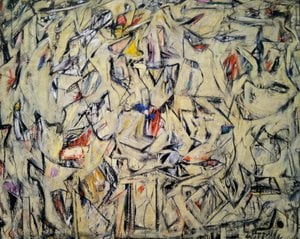
This monumental abstract expressionist painting by Willem de Kooning embodies the turbulent spirit of postwar America. Featuring fragmented figures and vibrant colors within a chaotic collage of furniture, it exemplifies De Kooning's signature "action painting" style.

Erkunden Sie die mutige Welt von Willem de Kooning (1904-1997), einem Pionier des abstrakten Expressionismus. Entdecken Sie seine ikonischen Gemälde wie 'Frau I', bekannt für dynamische Pinselstriche, Figuration und emotionale Intensität. Eine Schlüsselperson der New Yorker Schule.

Giclée / Kunstdruck

Giclée- oder Leinwanddruck in Museumsqualität mit schneller Produktion und flexiblen Veredelungsoptionen. ( Handgemalte Reproduktion kaufen Zum digitalen Bild wechseln)

P118B $10
P118H $10
P118W $10
P438Z $10
P508JH $12
P508YH $12
P805H $10
P805Z $10
P919BZ $10
P919G $10
P919XJ $10
P959ZH $10
P968JZ $12
W106C $8
W218G $10
W218JH $8
W218Y $10
W307PJ $10
W316G $10
W316PJ $8
W316Y $10
W398PJ $8
W4111J $10
W500HY $15
W500JH $15
W692G $12
W849H $8
W940BG $15
W953PJ $8

Standardformat
individuell anpassbar
CM
INCH

Wählen Sie aus unseren vordefinierten Formaten, die den ursprünglichen Proportionen des Kunstwerks entsprechen.

Breite
Höhe

Sie können Ihre eigenen Maße eingeben, um ein bestimmtes Format oder einen speziellen Platz einzupassen. Wenn das von Ihnen gewählte Format nicht den Proportionen des Originalbildes entspricht, werden wir das Kunstwerk entweder beschneiden oder das Bild mit einem gespiegelten oder einfarbigen Rand erweitern. Ein digitaler Entwurf wird Ihnen zur Genehmigung zugesandt, bevor die Produktion beginnt.
Bitte beachten Sie, dass die Vorschau auf dem Bildschirm nicht den tatsächlichen Zuschnitt oder die Erweiterung widerspiegelt. Nur der Entwurf zeigt die endgültige Komposition präzise an.
Obwohl Sondermaße verfügbar sind, empfehlen wir die Auswahl eines Maßes aus der vordefinierten Liste, um die ursprünglichen Proportionen zu bewahren.

Weltweiter Versand () innerhalb von 2 Wochen statt der üblichen 4/5 Wochen. (15 September)

why_choose_icon
Kostenloser weltweiter Expressversand
why_choose_icon
Hochwertige Leinenleinwand
why_choose_icon
Vollständiger Versicherungsschutz beim Versand
why_choose_icon
Zollgebühren-Rückerstattungsgarantie
why_choose_icon
Garantie für exakte Farbtreue
why_choose_icon
100-tägiges Rückgaberecht (nur bei Mängeln)
why_choose_icon
100% Geld-zurück-Garantie
why_choose_icon
Angebot für Mengenrabatt

Gesamtpreis

$ 68

reproduction

Untitled (10)

Giclée / Kunstdruck

Format der Reproduktion

-

Gesamtpreis

$ 68

Kurzübersicht

  • Artistic style: Action Painting
  • Artist: Willem de Kooning
  • Notable elements or techniques: Collage, Fragmented Figures
  • Title: Untitled (10)
  • Subject or theme: Chaos, Emotion
  • Location: Private Collection

Kunst-Quiz

Jede Frage hat nur eine richtige Antwort.

Frage 1:
What artistic movement is Willem de Kooning primarily associated with?
Frage 2:
The painting depicts a scene featuring several figures, but they appear to be...
Frage 3:
What is a prominent technique employed by Willem de Kooning in this artwork?
Frage 4:
Approximately when was this painting created?
Frage 5:
The artwork’s overall mood can be described as...

A Symphony of Chaos: The Visceral World of Willem de Kooning

In the pantheon of mid-century modernism, few works command the room with such raw, unbridled energy as Willem de Kooning’s Untitled (10). Painted in 1950, this monumental canvas serves as a profound window into the heart of Abstract Expressionism, specifically the high-octane subgenre known as action painting. To stand before this piece is to witness an artist in the midst of a physical struggle with his medium. De Kooning did not merely paint; he famously described his process as attacking the canvas, and that sense of combat is palpable in every stroke. The work eschews the comfort of recognizable landscapes or serene portraits, opting instead to prioritize spontaneous gesture and impulsive marks as the primary conduits for human emotion.

The technique employed here is nothing short of sculptural. Through a heavy use of thick impasto, De Kooning creates palpable ridges and valleys of pigment that catch the light and cast miniature shadows across the surface. This layered approach gives the painting a three-dimensional vitality, where the texture itself mimics the feeling of psychological exertion and struggle. For the discerning collector or interior designer, this tactile quality offers an unparalleled depth, making the artwork feel less like a static image and more like a living, breathing entity that evolves as one moves around it.

Fragmented Identities and Domestic Tension

While the painting defies easy categorization, it is far from purely abstract. Within the swirling vortex of color and texture, one can discern the ghostly, distorted remnants of human figures and domestic objects. These fragmented forms—ostensibly human yet rendered with a grotesque, unsettling distortion—appear caught in an agitated confrontation. This deliberate fragmentation serves as a powerful symbol of psychological complexity and the fractured nature of identity in the post-war era. De Kooning uses these shapes to mirror the inner turmoil and anxieties that characterized the intellectual climate of the 1950s.

Adding a layer of profound unease to the composition is the inclusion of mundane objects, such as a chair and a dining table, scattered amidst the chaos. These elements ground the abstraction in a recognizable, albeit fractured, reality. The presence of furniture suggests a domestic setting fraught with tension, transforming a simple scene into an arena of existential dread. This juxtaposition of the familiar with the chaotic creates a captivating tension that draws the viewer deeper into the narrative, making it an ideal centerpiece for spaces that value intellectual depth and provocative conversation.

An Enduring Legacy for Modern Interiors

For those looking to curate a space of distinction, Untitled (10) offers more than just visual interest; it provides an emotional anchor. The vibrant and varied color palette, ranging from aggressive primaries to muted, earthy tones, allows the piece to integrate seamlessly into diverse high-end environments—from minimalist galleries to richly textured, eclectic studies. It is a work that demands attention and rewards prolonged contemplation.

Owning a high-quality reproduction of this masterpiece allows one to bring the revolutionary spirit of the New York School into the contemporary home. It serves as a tribute to an era when art broke free from its representational chains to explore the very essence of the human soul. Whether used to add a sense of movement to a quiet corner or to act as the bold protagonist of a large-scale room, this work remains a timeless testament to the power of spontaneous, uninhibited expression.


Biografie des Künstlers

frühes Leben und Karriere

Willem de Kooning, ein renommierter niederländisch-amerikanischer abstrakter Expressionist, wurde am 24. April 1904 in Rotterdam, Niederlande, geboren. Seine Eltern, Leendert de Kooning und Cornelia Nobel, trennten sich 1907, und Willem de Kooning lebte zunächst mit seinem Vater, bevor er in die Obhut seiner Mutter überging. Er verließ die Schule 1916 und arbeitete als Lehrling in einer Werbeagentur.

Künstlerische Entwicklung

De Kooning besuchte von 1916 bis 1924 Abendkurse an der Akademie für Bildende Künste und Technische Wissenschaften in Rotterdam. Im Jahr 1927 zog er nach New York City, wo er als Hausmaler arbeitete und seinen einzigartigen künstlerischen Stil entwickelte.

Abstrakter Expressionismus

De Koonings Werk verschob sich in den späten 1950er Jahren hin zum abstrakten Expressionismus, der durch kräftige Pinselstriche und leuchtende Farben gekennzeichnet ist. Sein Gemälde Woman I (1950-1952) ist ein wegweisendes Werk dieser Bewegung, das Figuration mit Spontaneität und emotionaler Intensität verbindet.

Bekannte Werke und Sammlungen

* The Glazier (137 x 112 cm, Öl auf Leinwand): Ein düsteres, erdtoniges Gemälde, inspiriert von den Fresken von Boscoreale. * Door to the River (Abstrakter Expressionismus): Ein breitschichtiges Gemälde, das an seine Tätigkeit als Hausmaler erinnert. * Standing Man (Abstrakter Expressionismus): Ein charakteristisches Beispiel für De Koonings abstrakten Expressionismus.

Museen und Sammlungen

* Museum Boijmans van Beuningen, Rotterdam, Niederlande: Bietet eine beeindruckende Sammlung von über 151.000 Kunstwerken. * Universitätsbibliothek Leiden, Niederlande: Ein bedeutendes Kulturzentrum mit über 5.200.000 Büchern und 1.000.000 E-Books. Willem de Koonings Vermächtnis inspiriert weiterhin Künstler und Kunstliebhaber gleichermaßen und festigt seinen Platz als Pionier des abstrakten Expressionismus.
Willem de Kooning

Willem de Kooning

1904 - 1997 , Niederlande

Eckdaten zum Künstler

  • Beeinflusste Künstler: ['Arshile Gorky']
  • Bemerkenswerte Werke:
    • Frau I
    • The Glazier
    • Excavation
  • Geburtsdatum: 24. April 1904
  • Geburtsort: Rotterdam, Niederlande
  • Künstlerische Bewegung: Abstrakter Expressionismus
  • Nationalität: Niederländisch-Amerikanisch
  • Todatum: 1997
  • Vollständiger Name: Willem de Kooning
Entdecken Sie Kunstwerke, die nach Themen, Stilen und Merkmalen sortiert sind.