In echtem Maßstab anzeigen In AR an der Wand sehen Handgemalte Reproduktion kaufen Zum digitalen Bild wechseln Versenden als Grußkarte
Details anzeigen Leitfaden Zu Favoriten hinzufügen Herunterladen Ähnliche Objekte Röntgenaufnahme Diashow Besucherstatistiken

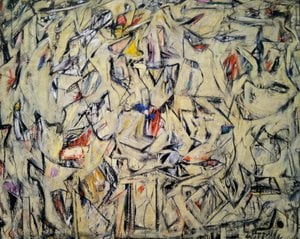
Frauen singen II

Ein beeindruckendes Gemälde von Willem de Kooning aus dem Jahr 1966 zeigt drei Frauen beim Singen und wird von der Tate Gallery gefeiert. Entdecken Sie die Energie des abstrakten Expressionismus!

Erkunden Sie die mutige Welt von Willem de Kooning (1904-1997), einem Pionier des abstrakten Expressionismus. Entdecken Sie seine ikonischen Gemälde wie 'Frau I', bekannt für dynamische Pinselstriche, Figuration und emotionale Intensität. Eine Schlüsselperson der New Yorker Schule.

Giclée / Kunstdruck

Giclée- oder Leinwanddruck in Museumsqualität mit schneller Produktion und flexiblen Veredelungsoptionen. ( Handgemalte Reproduktion kaufen Zum digitalen Bild wechseln)

P118B $10
P118H $10
P118W $10
P438Z $10
P508JH $12
P508YH $12
P805H $10
P805Z $10
P919BZ $10
P919G $10
P919XJ $10
P959ZH $10
P968JZ $12
W106C $8
W218G $10
W218JH $8
W218Y $10
W307PJ $10
W316G $10
W316PJ $8
W316Y $10
W398PJ $8
W4111J $10
W500HY $15
W500JH $15
W692G $12
W849H $8
W940BG $15
W953PJ $8

Standardformat
individuell anpassbar
CM
INCH

Wählen Sie aus unseren vordefinierten Formaten, die den ursprünglichen Proportionen des Kunstwerks entsprechen.

Breite
Höhe

Sie können Ihre eigenen Maße eingeben, um ein bestimmtes Format oder einen speziellen Platz einzupassen. Wenn das von Ihnen gewählte Format nicht den Proportionen des Originalbildes entspricht, werden wir das Kunstwerk entweder beschneiden oder das Bild mit einem gespiegelten oder einfarbigen Rand erweitern. Ein digitaler Entwurf wird Ihnen zur Genehmigung zugesandt, bevor die Produktion beginnt.
Bitte beachten Sie, dass die Vorschau auf dem Bildschirm nicht den tatsächlichen Zuschnitt oder die Erweiterung widerspiegelt. Nur der Entwurf zeigt die endgültige Komposition präzise an.
Obwohl Sondermaße verfügbar sind, empfehlen wir die Auswahl eines Maßes aus der vordefinierten Liste, um die ursprünglichen Proportionen zu bewahren.

Weltweiter Versand () innerhalb von 2 Wochen statt der üblichen 4/5 Wochen. (24 September)

why_choose_icon
Kostenloser weltweiter Expressversand
why_choose_icon
Hochwertige Leinenleinwand
why_choose_icon
Vollständiger Versicherungsschutz beim Versand
why_choose_icon
Zollgebühren-Rückerstattungsgarantie
why_choose_icon
Garantie für exakte Farbtreue
why_choose_icon
100-tägiges Rückgaberecht (nur bei Mängeln)
why_choose_icon
100% Geld-zurück-Garantie
why_choose_icon
Angebot für Mengenrabatt

Gesamtpreis

$ 68

reproduction

Frauen singen II

Giclée / Kunstdruck

Format der Reproduktion

-

Gesamtpreis

$ 68

Kurzübersicht

  • Movement: Abstract Expressionism
  • Subject or theme: Music, Female figures
  • Location: Private Collection
  • Notable elements or techniques: Bold brushstrokes, expressive gesture
  • Medium: Oil on canvas
  • Title: Women Singing II
  • Artist: Willem de Kooning

A Symphony of Color and Emotion: Willem de Kooning’s “Women Singing II”

“Women Singing II,” painted in 1966 by Willem de Kooning, stands as a cornerstone of Abstract Expressionism—a movement that irrevocably altered the landscape of twentieth-century art. More than just a depiction of three women harmoniously vocalizing, this canvas embodies De Kooning’s relentless pursuit of visceral emotion and his masterful manipulation of pigment to convey psychological depth. The artwork resides within the Tate Collection, offering visitors an unparalleled opportunity to experience firsthand the legacy of one of America's most influential artists.

The Bold Strokes and Energetic Composition

De Kooning’s technique is instantly recognizable: thick impasto—a layering of paint applied with aggressive brushstrokes—dominates the surface of this monumental paper on canvas. The artist eschewed meticulous realism, prioritizing instead a dynamic interplay between gesture and color. Spiraling lines and fractured planes create an unsettling yet captivating visual rhythm, mirroring the turbulent emotions simmering beneath the surface. Unlike traditional portraiture, De Kooning deliberately avoided capturing likenesses; rather, he aimed to distill human experience into its purest form—a bold departure from artistic conventions of his time. The painting’s scale contributes significantly to its impact, immersing the viewer in a world of unrestrained energy and expressive fervor.

Historical Context: Embracing Abstraction Amidst Change

“Women Singing II” emerged during a period of profound social and intellectual upheaval—the mid-1960s saw burgeoning countercultural movements challenging established norms and questioning societal values. De Kooning’s embrace of abstraction mirrored this spirit of rebellion, rejecting the constraints of representational art in favor of exploring inner landscapes and conveying subjective feelings. The painting reflects the broader anxieties surrounding identity and performance prevalent during the era, subtly hinting at themes of vulnerability and resilience. It's important to note that De Kooning was actively engaged in debates about the role of art within society, arguing passionately for its ability to express profound truths beyond mere visual description.

Symbolism Beyond Surface Appearance

While seemingly simple in its subject matter—three women singing—the painting is laden with symbolic resonance. The figures themselves are deliberately ambiguous, representing not specific individuals but rather archetypal representations of femininity and artistic expression. The vibrant hues—primarily reds, yellows, and blues—are employed not merely for decorative effect but to convey emotional intensity. Color psychology suggests that red symbolizes passion and aggression, yellow embodies optimism and vitality, while blue evokes contemplation and melancholy. These colors intertwine to create a complex tapestry of feeling, inviting viewers to contemplate the multifaceted nature of human experience.

Emotional Resonance: Capturing the Essence of Performance

Ultimately, “Women Singing II” succeeds in capturing the very essence of performance—the simultaneous expression of vulnerability and confidence inherent in artistic endeavor. The painting’s unsettling dynamism compels contemplation, prompting us to consider what it means to communicate emotion through visual art. De Kooning's masterful brushwork conveys a palpable sense of urgency and immediacy, transporting the viewer into the artist’s creative process. It is this profound emotional impact—the ability to evoke feelings of unease, fascination, and introspection—that cements “Women Singing II” as an enduring masterpiece of Abstract Expressionism and a testament to De Kooning's unparalleled artistic vision.

Biografie des Künstlers

frühes Leben und Karriere

Willem de Kooning, ein renommierter niederländisch-amerikanischer abstrakter Expressionist, wurde am 24. April 1904 in Rotterdam, Niederlande, geboren. Seine Eltern, Leendert de Kooning und Cornelia Nobel, trennten sich 1907, und Willem de Kooning lebte zunächst mit seinem Vater, bevor er in die Obhut seiner Mutter überging. Er verließ die Schule 1916 und arbeitete als Lehrling in einer Werbeagentur.

Künstlerische Entwicklung

De Kooning besuchte von 1916 bis 1924 Abendkurse an der Akademie für Bildende Künste und Technische Wissenschaften in Rotterdam. Im Jahr 1927 zog er nach New York City, wo er als Hausmaler arbeitete und seinen einzigartigen künstlerischen Stil entwickelte.

Abstrakter Expressionismus

De Koonings Werk verschob sich in den späten 1950er Jahren hin zum abstrakten Expressionismus, der durch kräftige Pinselstriche und leuchtende Farben gekennzeichnet ist. Sein Gemälde Woman I (1950-1952) ist ein wegweisendes Werk dieser Bewegung, das Figuration mit Spontaneität und emotionaler Intensität verbindet.

Bekannte Werke und Sammlungen

* The Glazier (137 x 112 cm, Öl auf Leinwand): Ein düsteres, erdtoniges Gemälde, inspiriert von den Fresken von Boscoreale. * Door to the River (Abstrakter Expressionismus): Ein breitschichtiges Gemälde, das an seine Tätigkeit als Hausmaler erinnert. * Standing Man (Abstrakter Expressionismus): Ein charakteristisches Beispiel für De Koonings abstrakten Expressionismus.

Museen und Sammlungen

* Museum Boijmans van Beuningen, Rotterdam, Niederlande: Bietet eine beeindruckende Sammlung von über 151.000 Kunstwerken. * Universitätsbibliothek Leiden, Niederlande: Ein bedeutendes Kulturzentrum mit über 5.200.000 Büchern und 1.000.000 E-Books. Willem de Koonings Vermächtnis inspiriert weiterhin Künstler und Kunstliebhaber gleichermaßen und festigt seinen Platz als Pionier des abstrakten Expressionismus.

Willem de Kooning

Willem de Kooning

1904 - 1997 , Niederlande

Eckdaten zum Künstler

  • Beeinflusste Künstler: ['Arshile Gorky']
  • Bemerkenswerte Werke:
    • Frau I
    • The Glazier
    • Excavation
  • Geburtsdatum: 24. April 1904
  • Geburtsort: Rotterdam, Niederlande
  • Künstlerische Bewegung: Abstrakter Expressionismus
  • Nationalität: Niederländisch-Amerikanisch
  • Todatum: 1997
  • Vollständiger Name: Willem de Kooning
Entdecken Sie Kunstwerke, die nach Themen, Stilen und Merkmalen sortiert sind.