Kostenlose Kunstberatung

x
Druck bestellen Druck bestellenBild kaufen Bild kaufen VersendenVersenden
Details anzeigenDetails anzeigen Zu Favoriten hinzufügen Zu Favoriten hinzufügen HerunterladenHerunterladen Ähnliche ObjekteÄhnliche Objekte RöntgenaufnahmeRöntgenaufnahme Diashow anzeigenDiashow anzeigen

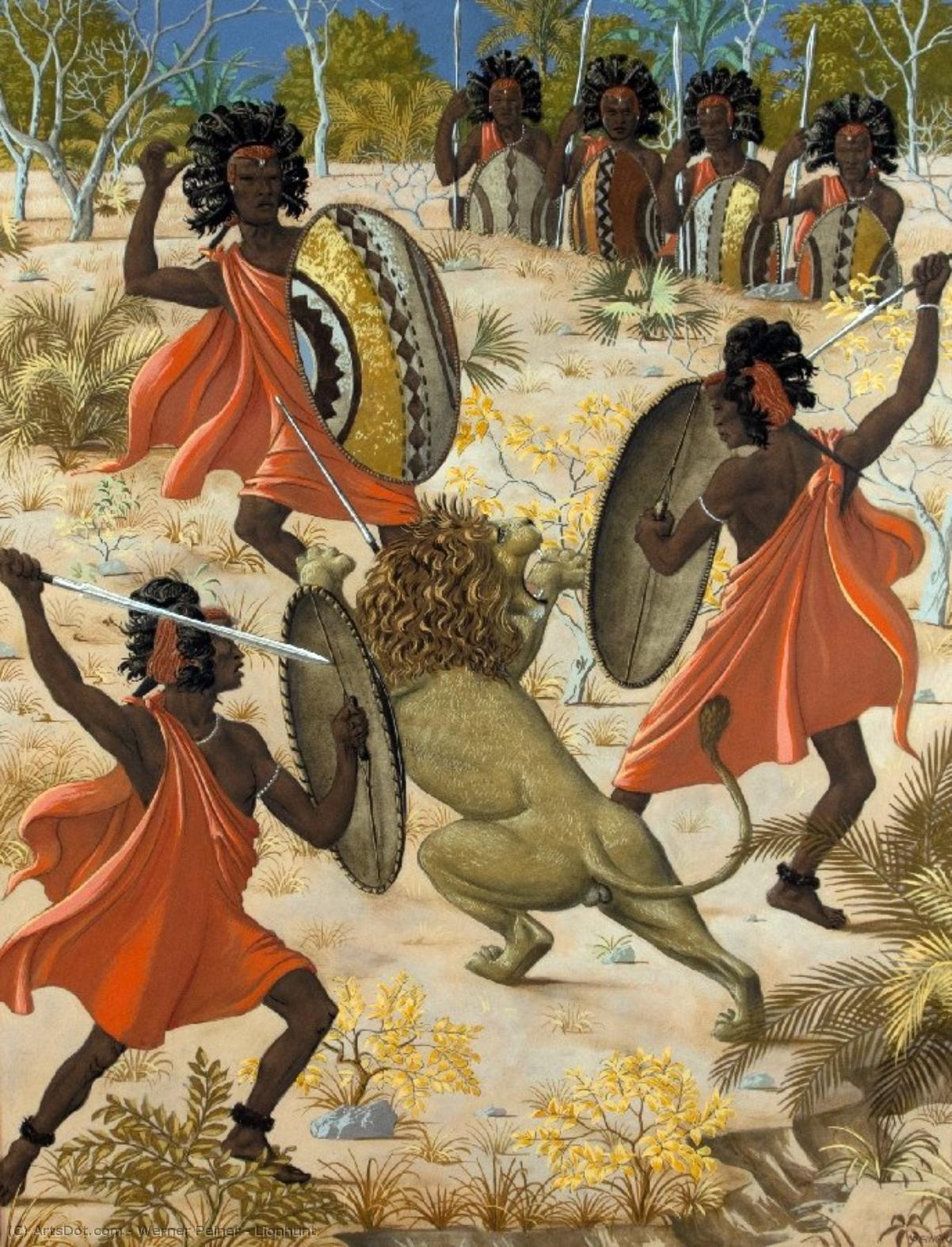
Lionhunt

Werner Peiner (1897-1984) war ein deutscher Maler, dessen Werk insbesondere durch beeindruckende Landschaftsbilder und präzise Porträts geprägt ist sowie eine zentrale Rolle im deutschen Kunstleben während des Nationalsozialismus spielte. Er gilt als einer der wichtigsten offiziellen Künstler dieser Zeit und wird für seine außergewöhnliche künstlerische Umsetzung von Nazi-Ideologien gefeiert.

Handgefertigte Öl-Reproduktion

Handgemaltes Ölgemälde auf Leinwand in Ihrer Wunschgröße und mit Rahmen, auf Bestellung von unseren Künstlern angefertigt.

Standard
custom
CM
INCH

Wählen Sie aus unseren vordefinierten Größen, die den ursprünglichen Proportionen des Kunstwerks entsprechen.

Breite
Höhe

Sie können Ihre eigenen Maße eingeben, um einen bestimmten Rahmen oder Platz auszufüllen. Wenn die gewählte Größe nicht den Proportionen des Originalbildes entspricht, werden wir das Kunstwerk entweder beschneiden oder das Gemälde durch zusätzliche, handgemalte Elemente erweitern. Ein digitales Mockup wird Ihnen zur Genehmigung zugesandt, bevor die Produktion beginnt.
Bitte beachten Sie, dass die Bildschirmvorschau nicht die tatsächliche Beschneidung oder Erweiterung widerspiegelt. Nur das Mockup zeigt die endgültige Komposition exakt an.
Obwohl Sondermaße verfügbar sind, empfehlen wir, eine Größe aus der vordefinierten Liste zu wählen, um die ursprünglichen Proportionen beizubehalten.

Beispiele für Anpassungsmöglichkeiten: Gesicht durch Kundenfoto ersetzen; Haustier hinzufügen (z. B. Katze durch Hund ersetzen); eine versteckte Nachricht im Hintergrund einfügen; Hintergrundlandschaft oder -elemente ändern.
Nach der Bestellung wird das WahooArt.com-Team dem Kunden Anweisungen per E-Mail zusenden und eine Mockup-Vorschau bereitstellen.

Weltweiter Versand () in nur 3 bis 4 Wochen statt der üblichen 5 Wochen. (5 Juli). Keine Kompromisse bei der Qualität.

why_choose_icon
Kostenloser weltweiter Expressversand
why_choose_icon
Hochwertige Leinenleinwand
why_choose_icon
Umfassender Versicherungsschutz beim Versand
why_choose_icon
Zollsteuer-Rückerstattungsgarantie
why_choose_icon
Garantie für echte Farbtreue
why_choose_icon
60-Tage-Rückgaberecht (nur bei Mängeln)
why_choose_icon
100% Geld-zurück-Garantie
why_choose_icon
Mengenrabatt verfügbar

Gesamtpreis

-

reproduction

Lionhunt

Art der Reproduktion

Größe der Reproduktion

-

Endpreis aller Optionen

-


Biografie des Künstlers

Werner Peiner: A Painter Caught Between Realism and Nazi Ideology

Werner Peiner (20 July 1897 – 19 August 1984) was a German painter whose artistic journey spanned from the expressive currents of early Expressionism to the increasingly formalized aesthetic dictated by the Third Reich, ultimately cementing his position as one of its most prominent official artists. Born in Düsseldorf, Peiner’s formative years were steeped in the intellectual ferment of Weimar Germany, where he absorbed influences from figures like Wilhelm Döringer and embraced a style characterized by nuanced observation and emotional depth—a departure from purely representational art that would foreshadow his later allegiance to Nazi ideology.

Early Influences & Artistic Formation

The Expressionist Spirit: Peiner’s initial artistic explorations found resonance in the expressive fervor of Expressionism, particularly evident in landscapes imbued with melancholic beauty and portraits capturing psychological complexity. His early works demonstrated a sensitivity to tonal modulation and textural variation—techniques honed during his studies at Düsseldorf Art Academy under Döringer. Döringer's guidance instilled in Peiner a profound appreciation for capturing emotion through careful attention to detail and color harmony, shaping the core of his artistic vision. He sought to convey not merely what he saw but also how he felt—a hallmark of Expressionist aesthetics that distinguished him from more objective approaches to artmaking. New Objectivity & The Bauhaus Connection: As the decade progressed, Peiner’s artistic sensibilities shifted toward New Objectivity, mirroring the broader intellectual currents of the time. This movement championed a detached yet precise depiction of reality, prioritizing clarity and geometric forms—a stylistic choice that reflected Peiner's engagement with the principles espoused by Bauhaus. The Bauhaus influence instilled in him a belief in functional design and an unwavering commitment to artistic rigor, informing his compositional decisions and contributing to the distinctive character of his oeuvre.

The Rise of Official Art & Patronage Under Göring

Peiner’s career took a decisive turn in 1933 with his appointment as professor at Düsseldorf Art Academy, coinciding with Hitler's ascent to power. This position afforded him access to influential figures like Hermann Göring, who recognized Peiner’s talent and championed his artistic vision. Göring actively supported Peiner’s endeavors, notably commissioning monumental tapestries for the New Reich Chancellery—a project that served as a powerful visual embodiment of Nazi propaganda's narrative of Germanic grandeur and spiritual renewal. The patronage extended beyond mere financial backing; it represented an endorsement of Peiner’s artistic sensibilities within the framework of the regime’s ideological ambitions. Göring’s unwavering faith in Peiner’s ability to elevate German art solidified his position as a favored artist of the Third Reich.

Notable Works & Artistic Style

Peiner's distinctive style blended elements of Expressionism and New Objectivity, resulting in landscapes characterized by luminous tonal palettes and meticulous attention to detail—particularly exemplified in “Early Morning in the Eifel Mountains.” His portraits conveyed profound psychological insight, capturing subtle nuances of emotion with remarkable accuracy. Recurring motifs included depictions of rural landscapes and monumental architectural designs—reflecting Peiner’s fascination with both natural beauty and grand artistic undertakings. These works stand as enduring testaments to his artistic prowess and his unwavering commitment to upholding aesthetic standards while simultaneously aligning with the ideological imperatives of Nazi Germany.

Legacy & Historical Significance

Despite facing censure for accepting Nazi patronage, Werner Peiner remains a significant figure in German art history. His landscapes—particularly “Early Morning in the Eifel Mountains”—capture the serene beauty of the Rhineland region with remarkable precision and tonal subtlety. However, his role as an official artist raises complex questions about artistic integrity and complicity within a totalitarian context. Peiner’s oeuvre serves as a poignant reminder of how art can be shaped by political forces—a legacy that continues to provoke scholarly debate and artistic contemplation. He is remembered not only for his artistic achievements but also for embodying the tensions inherent in reconciling creative expression with ideological conformity during one of history's most turbulent periods.
Werner Peiner

Werner Peiner

1897 - 1984 , Deutschland

Kurzinfos

  • Artistic Movement Or Style: Expressionismus & Realismus
  • Artists Or Movements Influenced By This Artist: ['Die Brücke']
  • Artists Who Influenced This Artist: ['Wilhelm Döringer']
  • Date Of Birth: 20 Juli 1897
  • Date Of Death: 19 Aug. 1984
  • Full Name: Werner Peiner
  • Nationality: Deutsch
  • Notable Artworks: ['Frühschwärmer über die Eifel']
  • Place Of Birth: Düsseldorf, Deutschland