A Vision of Suffering and Grace: Unveiling Vincenzo Foppa’s St. Sebastian
Vincenzo Foppa, a name often overshadowed by the titans of the High Renaissance, nevertheless stands as a pivotal figure in the artistic landscape of Northern Italy. Born around 1427 in Bagnolo Mella, near Brescia, he wasn't merely a painter; he was a visionary who forged a distinct and deeply emotive style – the early Lombard school – blending the solemnity of Gothic traditions with the burgeoning humanist ideals of his time. His fresco depicting St. Sebastian isn’t simply a religious image; it’s a profound meditation on suffering, resilience, and ultimately, spiritual grace, rendered with an exquisite sensitivity that continues to resonate centuries later.
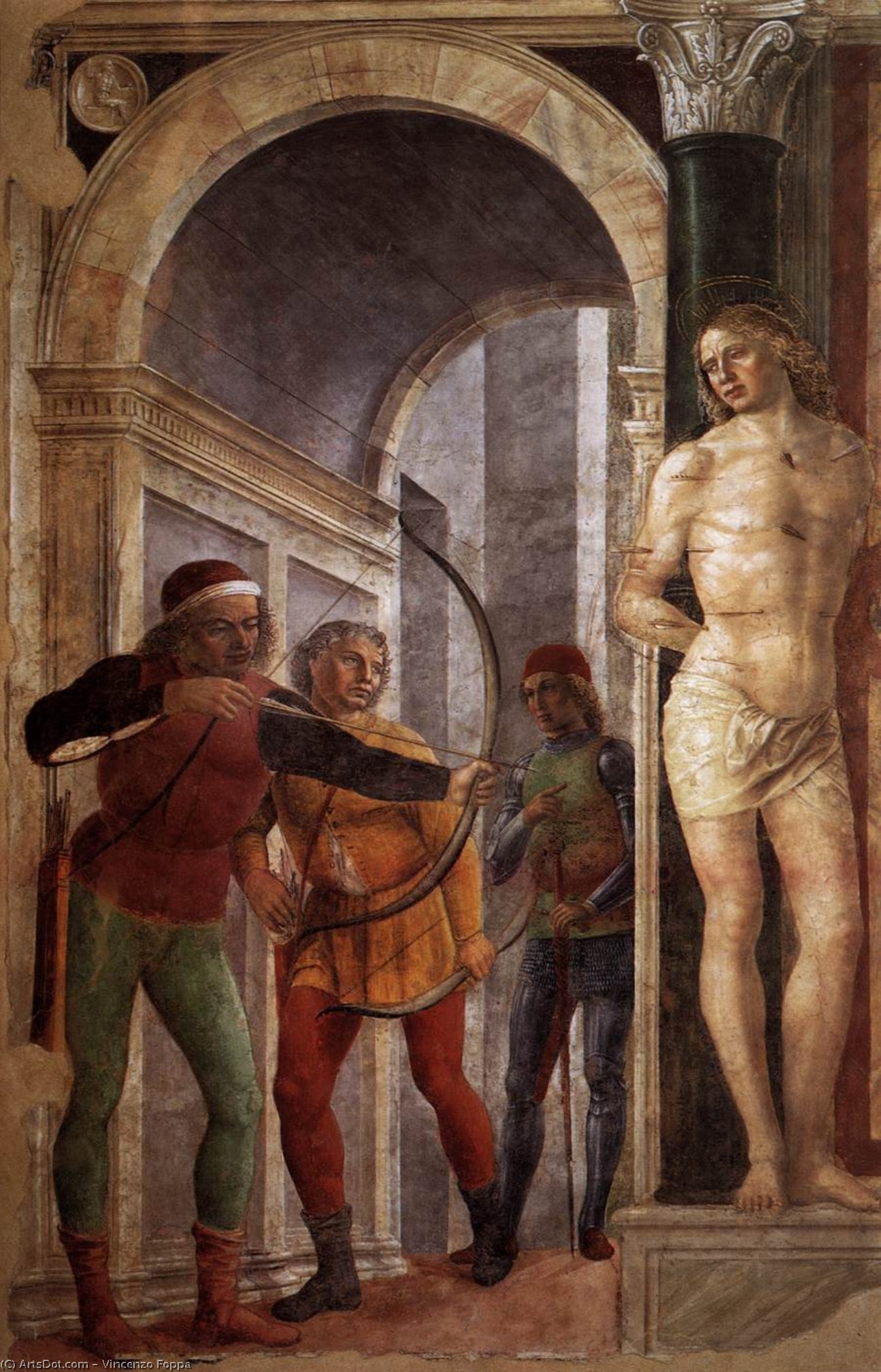
The painting, created in 1489 for a chapel within the Santa Maria di Brera in Milan, immediately draws the eye with its dramatic composition. St. Sebastian, depicted as a young man stripped bare and pierced by arrows, is not presented as a heroic martyr but rather as a figure of agonizing vulnerability. He stands before a statue of Venus, a subtle yet powerful symbol – a reminder of his earthly origins and the contrast between the fleeting pleasures of the flesh and the eternal promise of salvation. The three figures flanking him—a woman on the left and two men on the right—suggest a poignant scene of mourning and support, hinting at the profound impact of his martyrdom on those around him.
The Lombard School’s Distinctive Palette and Technique
Foppa's mastery lies not just in his dramatic subject matter but also in his innovative technique. He was a key figure in establishing the distinctive characteristics of the Lombard school, characterized by its muted color palette, soft modeling, and an almost ethereal quality to the figures. Unlike the vibrant hues favored by Florentine artists like Botticelli, Foppa employed a predominantly grey-toned scheme, achieved through careful layering of thin glazes – a technique known as *sfumato* – that creates a hazy, atmospheric effect. This deliberate lack of sharp outlines contributes significantly to the painting’s sense of melancholy and spiritual depth.
The fresco is executed in *buon fresco*, meaning it was painted directly onto wet plaster. This method demanded incredible speed and precision from the artist, requiring him to complete each section within a limited timeframe. Foppa's ability to capture such nuanced emotion and anatomical detail under these demanding conditions speaks volumes about his skill and dedication. The arrows themselves are rendered with remarkable realism – their sharp points and glistening surfaces conveying both physical pain and symbolic condemnation.
Historical Context and Symbolism
St. Sebastian’s martyrdom, a central event in Christian iconography, served as a potent symbol of sacrifice and endurance throughout the Middle Ages. The story itself—a Roman soldier condemned to die for his faith—resonates with themes of persecution, suffering, and unwavering devotion. Foppa's depiction aligns perfectly with this tradition, yet he imbues the scene with an intensely personal quality. The inclusion of Venus suggests a contemplation on mortality and the allure of earthly pleasures versus the promise of eternal life – a theme particularly relevant during the late 15th century, a period marked by both religious fervor and humanist inquiry.
Furthermore, the painting’s setting within a chapel dedicated to St. Sebastian underscores its devotional purpose. The choice of Venus as a counterpoint highlights the tension between earthly desires and spiritual aspirations – a central concern for artists and viewers alike during this era. The overall effect is not one of triumphant celebration but rather of quiet contemplation and profound sorrow, inviting the viewer to reflect on the nature of suffering and the possibility of redemption.
A Legacy of Emotional Resonance
Despite the loss of many of Foppa’s works over the centuries, St. Sebastian remains a testament to his artistic genius. Its enduring power lies in its ability to evoke a deep sense of empathy and spiritual awareness. The painting's muted colors, delicate modeling, and poignant composition combine to create an image that is both visually stunning and emotionally resonant – a timeless masterpiece that continues to captivate audiences today. Reproductions of this work offer a remarkable opportunity to experience the profound beauty and emotional depth of Foppa’s vision.



 Druck bestellen
 Versenden
 Teilen
 Details

 Herunterladen
 Ähnliche Objekte
 Röntgenaufnahme
 Diashow anzeigen


 Weiterlesen






































 Die Glasoption ist nur in Größen unter 110 cm verfügbar.





