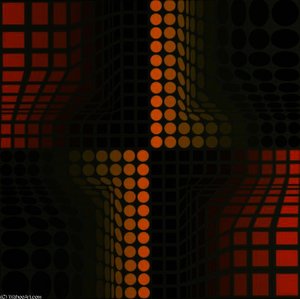
Handgemaltes Ölgemälde auf Leinwand in Ihrer Wunschgröße und mit Rahmen, auf Bestellung von unseren Künstlern angefertigt. ( Druck bestellen Bild kaufen)





























Wählen Sie aus unseren vordefinierten Formaten, die den ursprünglichen Proportionen des Kunstwerks entsprechen.

Sie können Ihre eigenen Maße eingeben, um einen bestimmten Rahmen oder Platz auszufüllen. Wenn die gewählte Größe nicht den Proportionen des Originalbildes entspricht, werden wir das Kunstwerk entweder beschneiden oder das Gemälde durch zusätzliche, handgemalte Elemente erweitern. Ein digitales Mockup wird Ihnen zur Genehmigung zugesandt, bevor die Produktion beginnt.
Bitte beachten Sie, dass die Bildschirmvorschau nicht die tatsächliche Beschneidung oder Erweiterung widerspiegelt. Nur das Mockup zeigt die endgültige Komposition exakt an.
Obwohl Sondermaße verfügbar sind, empfehlen wir, eine Größe aus der vordefinierten Liste zu wählen, um die ursprünglichen Proportionen beizubehalten.
Weltweiter Versand () in nur 3 bis 4 Wochen statt der üblichen 5 Wochen. (7 September). Keine Kompromisse bei der Qualität.


Zaphir 1
Format der Reproduktion
Victor Vasarely’s "Zaphir 1" is more than just a painting; it's an experience, a visual exploration of perception and the power of geometric abstraction. This work, characteristic of Vasarely’s pioneering role in Op Art and Kinetic art, invites viewers into a world where circles—in vibrant hues of blue, green, yellow, orange, and punctuated by stark black—interact to create a dynamic, almost pulsating composition. The painting isn't about depicting a scene or object from the real world; instead, it’s an investigation into how our eyes and brains interpret patterns, shapes, and color relationships. It is a testament to Vasarely’s lifelong dedication to understanding and manipulating visual perception.
To truly appreciate "Zaphir 1," one must understand the journey of its creator. Born Károly Vásárhelyi in Pécs, Croatia (then part of Austria-Hungary), Victor Vasarely initially pursued medical studies before embracing his artistic calling. His formal training at the Podolini-Volkmann Academy and later Sándor Bortnyik’s workshop – deeply influenced by the Bauhaus movement – laid the foundation for his unique style. The Bauhaus ethos, with its emphasis on functional design and geometric abstraction, resonated profoundly with Vasarely's evolving vision. He wasn't interested in replicating reality; he sought to create a new visual language based on fundamental geometric principles. This pursuit led him to abandon traditional painting techniques in favor of a systematic approach, meticulously constructing his compositions from basic shapes—circles, squares, and triangles—arranged according to precise mathematical relationships.
“Zaphir 1” exemplifies Vasarely’s mastery of optical illusion. The arrangement of the circles – varying in size and position – isn't random; it is carefully calculated to create a sense of depth, movement, and vibration. The contrasting colors further amplify this effect, playing tricks on the eye and blurring the boundaries between the individual shapes. It’s as if the circles are not static forms but rather spheres suspended in space, gently rotating or expanding. Vasarely's technique involved layering these geometric elements with precision, creating a complex interplay of positive and negative space that draws the viewer into an immersive visual experience. He aimed to create art that wasn't merely seen but *felt*, engaging the senses and challenging conventional notions of perception.
While seemingly abstract, Vasarely’s work carries a deeper symbolic weight. His systematic approach was not just about aesthetics; it was also rooted in his belief that art should be accessible to everyone. He envisioned a world where art wasn't confined to museums or galleries but integrated into everyday life—enhancing urban spaces and enriching the human environment. The circles themselves can be interpreted as symbols of wholeness, continuity, and interconnectedness – universal themes that resonate across cultures. "Zaphir 1," therefore, becomes more than just a visually striking composition; it’s a statement about the power of art to inspire, engage, and democratize visual experience. It is an invitation to see the world through a new lens—one shaped by geometry, color, and the boundless possibilities of human perception.
Victor Vasarely (geboren Károly Vaszary) war eine zentrale Figur in der Entwicklung der Op Art und kinetischen Kunst. Seine Arbeit versuchte, die traditionelle Malerei zu überwinden, indem er optische Illusionen erforschte und dynamische visuelle Erfahrungen schuf. Geboren in Pécs, damals Teil Österreich-Ungarns (heute Kroatien), umfassten seine frühen Jahre ein Medizinstudium an der Eötvös Loránd Universität in Budapest, bevor er sich ganz der Kunst widmete.
Vasarelys Beitrag zur Kunstgeschichte ist vielschichtig. Er ging über traditionelle Maltechniken hinaus, um Werke zu schaffen, die die Wahrnehmung des Betrachters aktiv einbeziehen. Sein systematischer Ansatz forderte konventionelle Vorstellungen künstlerischer Kreativität heraus und ebnete den Weg für computergenerierte Kunst und digitales Design. Indem er Reproduzierbarkeit und kommerzielle Anwendungen annahm, verschwamm Vasarely die Grenzen zwischen bildender Kunst und Populärkultur und hinterließ einen bleibenden Eindruck in beiden Bereichen.

1906 - 1997 , Kroatien
Explore the mesmerizing world of Victor Vasarely. Discover how his Bauhaus-inspired Op Art masters the science of perception through geometric abstraction and vibrant color. A sophisticated guide for discerning art collectors seeking to understand the legacy of optical illusion.

Embark on a visual journey through the mesmerizing world of Op Art. Discover the masters of optical illusion, explore geometric abstraction, and learn how to curate high-impact kinetic works for your private collection with expert guidance from art professionals.

Explore the profound spiritual depth of geometric abstraction. From Malevich's Suprematism to modern masters, our expert guide reveals how pure form and color command presence in fine art collections.

Discover the profound beauty of abstract art. Our expert guide explores geometric abstraction, Op Art, and Expressionism, offering connoisseurs deep insights into collecting and curating powerful, non-representational masterpieces for sophisticated interiors.

Explore the profound evolution of Neo-Abstract art. Discover how bold geometric forms, vibrant chromatic depth, and tactile textures redefine modern expression for the discerning collector seeking sophisticated, high-impact masterpieces for contemporary interiors.

 Vorschau anzeigen
 Versenden
 Teilen
 Details anzeigen

 Herunterladen
 Ähnliche Objekte
 Röntgenaufnahme
 Diashow
 Weiterlesen







 Die Glasoption ist nur für Größen unter 110 cm verfügbar.