Giclée- oder Leinwanddruck in Museumsqualität mit schneller Produktion und flexiblen Veredelungsoptionen. ( Handgemalte Reproduktion bestellen Bild kaufen)
Wählen Sie aus unseren vordefinierten Formaten, die den ursprünglichen Proportionen des Kunstwerks entsprechen.

Sie können Ihre eigenen Maße eingeben, um ein bestimmtes Format oder einen speziellen Platz einzupassen. Wenn das von Ihnen gewählte Format nicht den Proportionen des Originalbildes entspricht, werden wir das Kunstwerk entweder beschneiden oder das Bild mit einem gespiegelten oder einfarbigen Rand erweitern. Ein digitaler Entwurf wird Ihnen zur Genehmigung zugesandt, bevor die Produktion beginnt.
Bitte beachten Sie, dass die Vorschau auf dem Bildschirm nicht den tatsächlichen Zuschnitt oder die Erweiterung widerspiegelt. Nur der Entwurf zeigt die endgültige Komposition präzise an.
Obwohl Sondermaße verfügbar sind, empfehlen wir die Auswahl eines Maßes aus der vordefinierten Liste, um die ursprünglichen Proportionen zu bewahren.
Weltweiter Versand () innerhalb von 2 Wochen statt der üblichen 4/5 Wochen. (6 September)


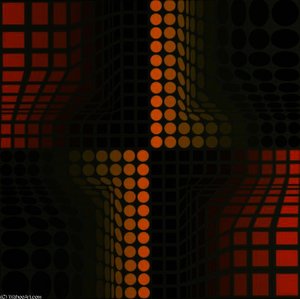
Nebulus II
Format der Reproduktion
Victor Vasarely's Nebulus II is not merely a visual spectacle; it’s an invitation, a carefully constructed challenge to the very nature of perception. Created in the mid-20th century by this pivotal figure in Op Art and kinetic art, the work embodies a profound exploration into how our eyes interpret depth, movement, and form. The piece immediately captivates with its complex layering of three overlapping spheres, each meticulously rendered as an intricate tessellation of cubes – a visual puzzle designed to subtly shift your perspective with every glance.
Born Károly Vaszary in 1906 in Pécs, Croatia (then part of Austria-Hungary), Victor Vasarely's artistic trajectory was remarkably unconventional. Initially pursuing a medical degree, he abandoned this path in 1927 to embrace the burgeoning world of painting, ultimately finding his true calling within geometric abstraction. His formative years were spent at the Podolini-Volkmann Academy and, crucially, in Sándor Bortnyik’s “Műhely” workshop – a space deeply rooted in the principles of Bauhaus functional design. This exposure ignited Vasarely's lifelong pursuit of understanding how visual elements interact to shape our perception, laying the foundation for his groundbreaking contributions to Op Art.
Nebulus II is a testament to the power of digital art. Executed through meticulous pixel manipulation and advanced rendering techniques, the artwork showcases a remarkable level of control over form and illusion. The smooth textures achieved are entirely dependent on this digital process, creating an almost hyper-realistic effect despite the abstract subject matter. The artist’s deliberate use of angular lines and sharply defined cubes within the tessellations further enhances the sense of depth and movement, skillfully mimicking the effects of forced perspective – making the spheres appear to recede into the background with a convincing three-dimensional quality.
While Nebulus II eschews overt symbolism or emotional narratives, its impact lies precisely in its ability to provoke a visceral response. The artwork’s primary function is not to represent something tangible but to challenge our assumptions about reality. It's an exploration of the subjective nature of perception, inviting viewers to actively participate in constructing their own interpretation. The piece resonates with a sense of intellectual curiosity and wonder – a reminder that the world we perceive is often far more complex and fascinating than it initially appears.
Victor Vasarely (geboren Károly Vaszary) war eine zentrale Figur in der Entwicklung der Op Art und kinetischen Kunst. Seine Arbeit versuchte, die traditionelle Malerei zu überwinden, indem er optische Illusionen erforschte und dynamische visuelle Erfahrungen schuf. Geboren in Pécs, damals Teil Österreich-Ungarns (heute Kroatien), umfassten seine frühen Jahre ein Medizinstudium an der Eötvös Loránd Universität in Budapest, bevor er sich ganz der Kunst widmete.
Vasarelys Beitrag zur Kunstgeschichte ist vielschichtig. Er ging über traditionelle Maltechniken hinaus, um Werke zu schaffen, die die Wahrnehmung des Betrachters aktiv einbeziehen. Sein systematischer Ansatz forderte konventionelle Vorstellungen künstlerischer Kreativität heraus und ebnete den Weg für computergenerierte Kunst und digitales Design. Indem er Reproduzierbarkeit und kommerzielle Anwendungen annahm, verschwamm Vasarely die Grenzen zwischen bildender Kunst und Populärkultur und hinterließ einen bleibenden Eindruck in beiden Bereichen.

1906 - 1997 , Kroatien
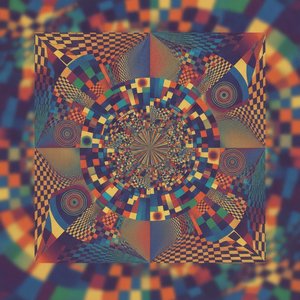
Explore the mesmerizing world of Victor Vasarely. Discover how his Bauhaus-inspired Op Art masters the science of perception through geometric abstraction and vibrant color. A sophisticated guide for discerning art collectors seeking to understand the legacy of optical illusion.

Embark on a visual journey through the mesmerizing world of Op Art. Discover the masters of optical illusion, explore geometric abstraction, and learn how to curate high-impact kinetic works for your private collection with expert guidance from art professionals.

Explore the profound spiritual depth of geometric abstraction. From Malevich's Suprematism to modern masters, our expert guide reveals how pure form and color command presence in fine art collections.
Elevate your digital portfolio with exclusive, unrepeatable original artist NFTs at WahooArt. Discover a curated selection of premium digital masterpieces and generative abstractions designed for the discerning collector seeking true scarcity and artistic prestige.

 Versenden
 Teilen
 Details anzeigen

 Herunterladen
 Ähnliche Objekte
 Diashow

 Weiterlesen




































 Die Glasoption ist nur für Größen unter 110 cm verfügbar.