In echtem Maßstab anzeigen In AR an der Wand sehen Handgemalte Reproduktion kaufen Zum digitalen Bild wechseln Versenden als Grußkarte
Details anzeigen Leitfaden öffnen Zu Favoriten hinzufügen Herunterladen Ähnliche Objekte Röntgenaufnahme Diashow Besucherstatistiken

Gonne

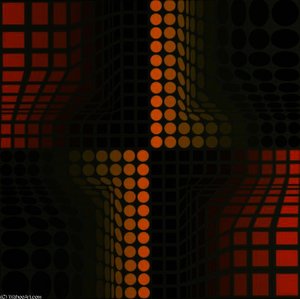
Experience Victor Vasarely’s iconic Op Art masterpiece, ‘Gonne,’ featuring a vibrant red circle amidst dynamic blue squares – a captivating exploration of geometric abstraction and visual perception. Discover this unique artwork and bring its bold design into your space.

Entdecken Sie Victor Vasarely (1906-1997), Pionier der Op Art! Seine geometrischen Abstraktionen & optischen Illusionen revolutionierten das Design. Jetzt auf WahooArt!

Die auf dieser Seite dargestellten Kunstwerke sind urheberrechtlich geschützt, was bedeutet, dass wir keine identische Reproduktion rechtmäßig erstellen oder verkaufen dürfen. Dieser Schutz wird durch internationale Abkommen wie die Berner Übereinkunft und durch nationale Gesetze, einschließlich derer, die von den ... festgelegt wurden US-Urheberrecht – Titel 17.

Diese Methode entspricht vollumfänglich den Urheberrechtsbestimmungen, da sie keine Kopie oder Vervielfältigung des geschützten Kunstwerks darstellt. Stattdessen handelt es sich um eine kreative Neuinterpretation – ein neues Gemälde, das vom Original inspiriert, aber nicht identisch mit ihm ist.

Giclée / Kunstdruck

Giclée- oder Leinwanddruck in Museumsqualität mit schneller Produktion und flexiblen Veredelungsoptionen. ( Handgemalte Reproduktion kaufen Zum digitalen Bild wechseln)

Corner sample of the P118B picture frame: formgepresstes Polystyrol, 5 cm wide and 3 cm thick
P118B €10
Corner sample of the P118H picture frame: formgepresstes Polystyrol, 5 cm wide and 3 cm thick
P118H €10
Corner sample of the P118W picture frame: formgepresstes Polystyrol, 5 cm wide and 3 cm thick
P118W €10
Corner sample of the P438Z picture frame: formgepresstes Polystyrol, 5.5 cm wide and 3.5 cm thick
P438Z €10
Corner sample of the P508JH picture frame: formgepresstes Polystyrol, 7 cm wide and 3.5 cm thick
P508JH €12
Corner sample of the P508YH picture frame: formgepresstes Polystyrol, 7 cm wide and 3.5 cm thick
P508YH €12
Corner sample of the P805H picture frame: formgepresstes Polystyrol, 5 cm wide and 3.5 cm thick
P805H €10
Corner sample of the P805Z picture frame: formgepresstes Polystyrol, 5 cm wide and 3.5 cm thick
P805Z €10
Corner sample of the P919BZ picture frame: formgepresstes Polystyrol, 7 cm wide and 3.5 cm thick
P919BZ €10
Corner sample of the P919G picture frame: formgepresstes Polystyrol, 7 cm wide and 3.5 cm thick
P919G €10
Corner sample of the P919XJ picture frame: formgepresstes Polystyrol, 7 cm wide and 3.5 cm thick
P919XJ €10
Corner sample of the P959ZH picture frame: formgepresstes Polystyrol, 5 cm wide and 3 cm thick
P959ZH €10
Corner sample of the P968JZ picture frame: formgepresstes Polystyrol, 6 cm wide and 4 cm thick
P968JZ €12
Corner sample of the W106C picture frame: Massivholz, 5 cm wide and 3 cm thick
W106C €8
Corner sample of the W218G picture frame: Massivholz, 5 cm wide and 3 cm thick
W218G €10
Corner sample of the W218JH picture frame: Massivholz, 5 cm wide and 3 cm thick
W218JH €8
Corner sample of the W218Y picture frame: Massivholz, 5 cm wide and 3 cm thick
W218Y €10
Corner sample of the W307PJ picture frame: Massivholz, 6 cm wide and 3 cm thick
W307PJ €10
Corner sample of the W316G picture frame: Massivholz, 6 cm wide and 3 cm thick
W316G €10
Corner sample of the W316PJ picture frame: Massivholz, 6 cm wide and 3 cm thick
W316PJ €8
Corner sample of the W316Y picture frame: Massivholz, 6 cm wide and 3 cm thick
W316Y €10
Corner sample of the W398PJ picture frame: Massivholz, 5 cm wide and 3 cm thick
W398PJ €8
Corner sample of the W4111J picture frame: Massivholz, 6.5 cm wide and 3.5 cm thick
W4111J €10
Corner sample of the W500HY picture frame: Massivholz, 7 cm wide and 5 cm thick
W500HY €15
Corner sample of the W500JH picture frame: Massivholz, 7 cm wide and 5 cm thick
W500JH €15
Corner sample of the W692G picture frame: Massivholz, 8 cm wide and 4 cm thick
W692G €12
Corner sample of the W849H picture frame: Massivholz, 5 cm wide and 3 cm thick
W849H €8
Corner sample of the W940BG picture frame: Massivholz, 7.5 cm wide and 4.5 cm thick
W940BG €15
Corner sample of the W953PJ picture frame: Massivholz, 6 cm wide and 3.5 cm thick
W953PJ €8

Standardformat
individuell anpassbar
CM
INCH

Wählen Sie aus unseren vordefinierten Formaten, die den ursprünglichen Proportionen des Kunstwerks entsprechen.

Breite
Höhe

Geben Sie die Breite und die Höhe an, die Sie benötigen, damit der Druck perfekt in Ihren Rahmen oder an Ihre Wand passt. Ein Druck kann nur beschnitten werden und niemals größer als das Originalbild gemacht werden; daher verliert ein Format mit einer anderen Proportion einen Teil des Bildes. Wir senden Ihnen ein digitales Mockup zur Freigabe, bevor wir den Druck ausführen. Das auf dieser Seite gezeigte Bild zeigt nicht den tatsächlichen Beschnitt – dies ist nur im Mockup ersichtlich.

Weltweiter Versand () innerhalb von 2 Wochen statt der üblichen 4/5 Wochen. (21 Oktober)

Kostenloser weltweiter Expressversand
Hochwertige Leinenleinwand
Vollständiger Versicherungsschutz beim Versand
Zollgebühren-Rückerstattungsgarantie
Garantie für exakte Farbtreue
100-tägiges Rückgaberecht (nur bei Mängeln)
100% Geld-zurück-Garantie
Angebot für Mengenrabatt

Gesamtpreis

€ 59

Gonne

Giclée / Kunstdruck

Format der Reproduktion

-

Gesamtpreis

€ 59

Kurzübersicht

  • Title: Gonne
  • Notable elements: Geometric shapes
  • Medium: Painting
  • Artistic style: Kinetic art

A Symphony in Squares: Exploring Victor Vasarely’s “Gonne”

Victor Vasarely's "Gonne," a vibrant explosion of red and blue, isn't merely a painting; it’s an invitation to reconsider the very nature of perception. This captivating artwork, reminiscent of a meticulously crafted optical illusion, embodies the core tenets of Op Art – Optical Art – a movement that emerged in the mid-20th century with Vasarely at its forefront. Born Károly Vaszary in 1906 in Pécs, Croatia, his artistic trajectory began unexpectedly, initially driven by an interest in medicine before he was drawn to the expressive possibilities of visual form. His formative years within the Bauhaus-influenced Műhely workshop instilled a profound understanding of geometric abstraction and its potential to manipulate our senses.

  • Style & Technique: “Gonne” exemplifies Vasarely’s signature style, characterized by precisely rendered, overlapping squares and circles. The technique is painstakingly executed, relying on meticulous layering and controlled color application – a testament to the artist's dedication to scientific precision within his art. The slightly darker shade of the central red circle against the surrounding blue squares creates a dynamic contrast that actively engages the viewer’s eye, drawing attention to the subtle shifts in perspective and depth.
  • Historical Context: Created during a period of rapid technological advancement and shifting artistic sensibilities, “Gonne” reflects the broader movement towards abstraction and the exploration of visual phenomena. Op Art, with its emphasis on optical illusions and the manipulation of perception, was a direct response to the increasing influence of mass media and industrial design.

Decoding the Geometry: Symbolism and Intent

While seemingly abstract, Vasarely’s work is deeply rooted in mathematical principles and an exploration of visual harmony. The geometric forms within “Gonne” aren't arbitrary; they represent a deliberate attempt to translate scientific concepts – particularly those related to optics and perception – into a tangible artistic experience. The repetition of squares and circles evokes a sense of order and rhythm, mirroring the underlying structures of the universe as perceived through mathematical models. The vibrant colors themselves are carefully chosen not just for aesthetic appeal but also for their optical effects—the red and blue hues intensify the illusion of movement and depth.

Emotional Resonance: A Visual Meditation

"Gonne" transcends mere visual stimulation; it invites a meditative state. The artwork’s dynamic composition, coupled with its bold color palette, creates a powerful emotional response – one of excitement, wonder, and perhaps even a slight disorientation. Vasarely aimed to create art that actively engaged the viewer's senses, challenging their assumptions about reality and prompting them to question how they perceive the world around them. The piece’s captivating nature makes it an ideal addition to any space seeking a touch of modern sophistication and intellectual stimulation.

Collecting “Gonne”: A Statement of Style

A hand-painted reproduction of Victor Vasarely's "Gonne" is more than just a decorative element; it’s an investment in art history and a testament to the enduring power of geometric abstraction. WahooArt offers meticulously crafted reproductions that faithfully capture the original artwork’s vibrancy and precision, ensuring that you can experience the full impact of Vasarely’s vision within your own environment. Whether adorning a contemporary living room or adding an element of intellectual intrigue to a corporate space, “Gonne” remains a timeless masterpiece.

Fragen & Antworten

Ist "Gonne" urheberrechtlich frei?

Was das Urheberrecht betrifft, so ist "Gonne" noch urheberrechtlich geschützt.

Verwendet "Gonne" von Victor Vasarely starke Kontraste oder sanfte Harmonien?

Die Farbkomposition von "Gonne" von Victor Vasarely vereint einen Serene Kontrast mit einer Discordant Palette Harmonie.

Welche Platzierung passt zum Format von "Gonne" von Victor Vasarely?

Format (Square) und der empfohlene Raum (Living Room) sind die zwei festgehaltenen Platzierungsdetails für "Gonne" von Victor Vasarely.


Biografie des Künstlers

Victor Vasarely: Pionier der Op Art und kinetischer Erkundung

  • Geboren: 9. April 1906, Pécs, Kroatien
  • Gestorben: 15. März 1997, Paris, Frankreich
  • Nationalität: Ungarisch-Französisch

Victor Vasarely (geboren Károly Vaszary) war eine zentrale Figur in der Entwicklung der Op Art und kinetischen Kunst. Seine Arbeit versuchte, die traditionelle Malerei zu überwinden, indem er optische Illusionen erforschte und dynamische visuelle Erfahrungen schuf. Geboren in Pécs, damals Teil Österreich-Ungarns (heute Kroatien), umfassten seine frühen Jahre ein Medizinstudium an der Eötvös Loránd Universität in Budapest, bevor er sich ganz der Kunst widmete.

Früher Einfluss und künstlerische Entwicklung

  • Frühzeitiges Training: Vasarely studierte zunächst traditionelle akademische Malerei an der Podolini-Volkmann Akademie.
  • Bauhaus-Einfluss: Ein entscheidender Wendepunkt war seine Einschreibung in den Workshop (Műhely) von Sándor Bortnyik in Budapest, einer Schule, die stark von den Bauhaus-Prinzipien beeinflusst war und die funktionale Gestaltung und geometrische Abstraktion betonte. Diese Exposition prägte seine zukünftige künstlerische Richtung.
  • Geometrische Abstraktion: In den späten 1920er und frühen 1930er Jahren experimentierte Vasarely mit geometrischen Formen und Farbharmonien, um sich von der gegenständlichen Kunst hin zur reinen Abstraktion zu bewegen. Schlüsselwerke wie "Blue Study" (1929) und "Green Study" (1929) demonstrieren diesen Übergang.
  • Einfluss von Mondrian & Malevich: Obwohl er seinen eigenen einzigartigen Stil entwickelte, wurde Vasarely von den geometrischen Abstraktionen von Piet Mondrian und Kasimir Malewitsch beeinflusst, strebte jedoch letztendlich danach, über ihre statischen Kompositionen hinauszugehen.

Der Aufstieg der Op Art und kinetische Erkundung

  • Definition der Op Art: Vasarely gilt weithin als Gründervater der Op Art (Optical Art), einer Bewegung, die in den 1960er Jahren entstand und durch Werke gekennzeichnet ist, die optische Illusionen durch präzise Anordnungen von Formen, Farben und Linien erzeugen.
  • Systematischer Ansatz: Im Gegensatz zu einigen Künstlern, die sich auf Intuition verließen, entwickelte Vasarely einen systematischen Ansatz für seine Kunst, der Gitter und mathematische Prinzipien nutzte, um Muster zu erzeugen und dynamische visuelle Effekte zu erzielen. Er strebte nach Reproduzierbarkeit und Massenappeal an.
  • Kinetische Kunst & Großinstallationen: Später in seiner Karriere erforschte Vasarely die kinetische Kunst – Werke, die Bewegung beinhalten oder den Eindruck von Bewegung erwecken. "Georges Pompidou" (1976), ein großes kinematische Objekt, das im Centre Pompidou in Paris installiert wurde, veranschaulicht diesen Anspruch und demonstriert sein Interesse an der Integration von Kunst mit Architektur und Stadtgestaltung.
  • Kommerzielle Unternehmungen: Vasarely war auch ein Innovator bei der Anwendung seiner Designs auf kommerzielle Produkte. Seine Zusammenarbeit mit Rosenthal-Porzellan führte zur "Suomi"-Geschirrserie, die seine Fähigkeit demonstriert, abstrakte Konzepte in funktionale Objekte zu übersetzen.

Wichtige Errungenschaften und Vermächtnis

  • Foundation Vasarely: Die Gründung der Foundation Vasarely in Aix-en-Provence, Frankreich, sorgte für die Erhaltung und Förderung seines umfangreichen Werkes.
  • Raumfahrt: Ein bedeutender Moment war, als Serigraphien von Vasarely an Bord der französischen sowjetischen Raumfähre Salyut 7 (1982) in den Weltraum geschickt wurden, später zum Wohle von UNESCO verkauft – ein Beweis für die globale Anerkennung seiner Kunst.
  • Einfluss auf das Design: Vasarelys systematischer Ansatz und sein geometrischer Stil beeinflussten tiefgreifend Grafikdesign, Mode und Inneneinrichtung. Seine Arbeit demonstrierte, wie abstrakte Prinzipien eingesetzt werden können, um visuell ansprechende und funktionale Umgebungen zu schaffen.
  • Bleibender Einfluss: Victor Vasarelys Vermächtnis liegt in seiner bahnbrechenden Erforschung optischer Illusionen, kinetischer Kunst und der Schnittstelle zwischen Kunst und Technologie. Er bleibt eine bedeutende Figur in der modernen Kunstgeschichte und inspiriert Generationen von Künstlern und Designern mit seiner innovativen Vision.

Historische Bedeutung

Vasarelys Beitrag zur Kunstgeschichte ist vielschichtig. Er ging über traditionelle Maltechniken hinaus, um Werke zu schaffen, die die Wahrnehmung des Betrachters aktiv einbeziehen. Sein systematischer Ansatz forderte konventionelle Vorstellungen künstlerischer Kreativität heraus und ebnete den Weg für computergenerierte Kunst und digitales Design. Indem er Reproduzierbarkeit und kommerzielle Anwendungen annahm, verschwamm Vasarely die Grenzen zwischen bildender Kunst und Populärkultur und hinterließ einen bleibenden Eindruck in beiden Bereichen.

Victor Vasarely

Victor Vasarely

1906 - 1997 , Kroatien

Eckdaten zum Künstler

  • Artistic Movement Or Style: Op Art, Geometrische Abstraktion
  • Artists Who Influenced This Artist:
    • Piet Mondrian
    • Kasimir Malevich
  • Date Of Birth: 9. April 1906
  • Date Of Death: 15. März 1997
  • Full Name: Victor Vasarely
  • Nationality: Ungarisch-Französisch
  • Notable Artworks:
    • Blue Study (1929)
    • Green Study (1929)
    • Georges Pompidou (1976)
  • Place Of Birth (City And Country): Pécs, Kroatien
Entdecken Sie Kunstwerke, die nach Themen, Stilen und Merkmalen sortiert sind.