Victor Vasarely’s “Gestalt” – A Window into Perception
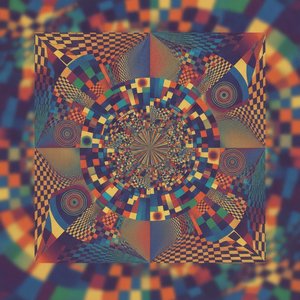
Victor Vasarely's "Gestalt," a vibrant explosion of color and geometric form, stands as a cornerstone of Op Art and a testament to the artist’s lifelong fascination with visual perception. Executed in a palette of intense blues, greens, reds, purples, yellows, and oranges, this artwork isn’t merely decorative; it's an intellectual exploration of how our eyes and minds construct reality. Created by Vasarely during his pivotal period as a pioneer of Op Art – a movement that emerged in the 1960s – “Gestalt” exemplifies the core principles of creating optical illusions through precise geometric arrangements. The piece’s seemingly simple composition belies a complex understanding of Gestalt psychology, particularly the concept of ‘figure-ground’ and how our brains automatically organize visual elements into meaningful patterns.
- Style & Technique: Vasarely's signature style is characterized by precisely rendered, static geometric shapes – predominantly squares and circles – arranged in dynamic compositions. “Gestalt” showcases this technique flawlessly, utilizing a meticulous layering of color to create an illusion of movement and depth. The artwork’s surface appears to vibrate with energy, drawing the viewer’s eye across its intricate structure.
- Historical Context: Born in 1906 in Pécs, Croatia (then part of Austria-Hungary), Vasarely's artistic journey began unexpectedly. Initially pursuing a medical degree, he abandoned this path to embrace painting, profoundly influenced by the Bauhaus movement and its emphasis on functional design and geometric abstraction. This shift reflects a broader cultural trend of the early 20th century – a desire to strip away traditional representational art and explore the underlying principles of visual experience.
- Symbolism & Perception: The title, “Gestalt,” itself is key. Derived from Gestalt psychology, it refers to the idea that the whole is greater than the sum of its parts. Vasarely’s work isn't about depicting a recognizable object; instead, he aims to trigger a specific perceptual experience in the viewer – one where the individual elements coalesce into a unified, dynamic form. The vibrant colors and sharp lines contribute to this effect, challenging our assumptions about space and depth.
The Bauhaus Influence & Kinetic Art
Vasarely’s artistic development was deeply rooted in the principles of the Bauhaus school, particularly its focus on functional design and geometric abstraction. This influence is immediately apparent in “Gestalt,” where clean lines, precise shapes, and a deliberate lack of illusionistic depth are hallmarks of the Bauhaus aesthetic. However, Vasarely's work transcends mere architectural or industrial design; it anticipates the rise of kinetic art – an artistic movement that explores the relationship between perception and motion. While "Gestalt" is static, its carefully constructed geometry creates an optical illusion of movement, mirroring the principles explored by artists working with rotating sculptures and other dynamic installations.
Emotional Impact & Visual Engagement
“Gestalt” isn’t simply a visually stimulating artwork; it evokes a profound emotional response. The intense colors and complex geometric patterns create a sense of excitement, dynamism, and even disorientation. The piece invites the viewer to actively participate in its creation, engaging their cognitive abilities to decipher the underlying structure and appreciate the artist's mastery. It’s a work that demands attention, rewarding careful observation with a constantly shifting visual experience. The artwork’s impact is amplified by its scale – though unknown here, it would have been designed to command a significant space, further immersing the viewer in its world of geometric abstraction.
Collecting & Interior Design Applications
A hand-painted reproduction of Victor Vasarely's “Gestalt” offers a unique opportunity to bring this iconic artwork into your home or office. Its bold colors and dynamic composition make it an ideal statement piece for modern interiors, adding a touch of intellectual sophistication and visual intrigue. The artwork’s geometric forms complement a variety of design styles – from minimalist to mid-century modern – and can be used as a focal point in any room. This reproduction captures the essence of Vasarely's original work, ensuring that you experience the same captivating visual effect.



 In echtem Maßstab anzeigen
 Handgemalte Reproduktion kaufen
 Versenden als Grußkarte
 Teilen
 Details anzeigen
 Leitfaden

 Herunterladen
 Ähnliche Objekte
 Röntgenaufnahme
 Diashow
 Besucherstatistiken

 Mehr anzeigen






































 Die Glasoption ist nur für Größen unter 110 cm verfügbar.