Über den Künstler
Ein kreolischer Romantiker: Das Leben und die Kunst von Théodore Chassériau
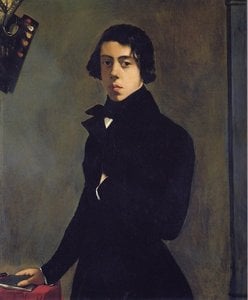
Geboren unter der tropischen Sonne von Samaná in der Dominikanischen Republik am 20. September 1819, war das Leben von Théodore Chassériau eine fasziniente Mischung aus Kulturen und künstlerischen Strömungen. Sein Vater, Benoît Chassériau, war ein französischer Diplomat, der sich in den Komplexitäten der karibischen Politik bewegte, während seine Mutter, Maria Magdalena Couret de la Blagniére, aus einer Familie stammte, die Wurzeln sowohl in Haiti als auch in Frankreich hatte – eine Abstammung, die dem jungen Théodore eine einzigartige Perspektive verlieh. Dieses kreolische Erbe sollte seine künstlerische Vision tiefgreifend prägen und ihn von vielen seiner Zeitgenossen abheben. Der Umzug der Familie nach Paris im Jahr 1820 markierte den Beginn von Chassériaus formeller künstlerischer Ausbildung, einer Erziehung, die unter der Anleitung von Jean-Auguste-Dominique Ingres tief in der strengen Tradition des Klassizismus verwurzelt war. Ingres erkannte ein seltenes Talent in dem jungen Künstler, nahm ihn als seinen Lieblingsschüler auf und vermittelte ihm die Meisterschaft über Linie, Form und klassische Komposition – ein Fundament, das im Laufe von Chassériaus Karriere sichtbar bleiben sollte, selbst als er in neue künstlerische Territorien vordrang.
Brücken zwischen den Welten: Vom Klassizismus zum romantischen Ausdruck
Anfänglich hielt sich Chassériau treu den strengen Standards Ingres' und schuf Werke, die durch präzise Zeichnung und idealisierte Formen bestachen. Doch die aufstrebende Romantik mit ihrem Schwerpunkt auf Emotion, Drama und individuellem Ausdruck übte eine unwiderstehliche Anziehungskraft aus. Die lebendigen Farbpaletten und dynamischen Kompositionen von Eugène Delacroix erwiesen sich als besonders einflussreich und lösten einen Wandel in Chassériaus künstlerischem Ansatz aus. Er begann, mit lockererem Pinselstrich, reicheren Farbtönen und emotional aufgeladeneren Sujets zu experimentieren. Dies war keine einfache Ablehnung seiner früheren Ausbildung; vielmehr war es eine Synthese – eine meisterhafte Verschmelzung klassizistischer Präzision mit romantischem Feuer. Chassériau übernahm nicht einfach den Stil von Delacroix, sondern absorbierte dessen Geist und schmiedete eine einzigartige künstlerische Sprache, die es ihm ermöglichte, komplexe Themen sowohl mit technischer Brillanz als auch mit emotionaler Tiefe zu erforschen. Seine Reisen nach Algerien im Jahr 1846 befeuerten diese Entwicklung weiter und konfrontierten ihn mit einer Welt exotischer Landschaften, lebendiger Kulturen und fesselnder menschlicher Geschichten, die zum Zentrum seines Œuvres werden sollten.
Themen und Meisterwerke: Ein vielfältiges Schaffen
Chassériaus künstlerisches Schaffen war bemerkenswert vielfältig und umfasste Porträts, Historienmalerei, religiöse Szenen, allegorische Wandgemälde und ein bedeutendes Werk des Orientalismus. Sein „Desdemona (Das Lied der Weide)“ ist ein ergreifendes Beispiel für seine Fähigkeit, tiefe Emotionen durch Form und Farbe zu vermitteln und die tragische Verletzlichkeit von Shakespeares Figur mit bemerkenswerter Sensibilität einzufangen. Die „Szene im jüdischen Viertel von Konstantinopel“ verdeutlicht seine Faszination für die nordafrikanische Kultur und zeigt das geschäftige Treiben auf den Straßen sowie komplizierte architektonische Details. Porträts wie die „Gräfin de La Tour-Maubourg“ demonstrieren sein Geschick, nicht nur die physische Ähnlichkeit, sondern auch den inneren Charakter und die Eleganz seiner Dargestellten festzuhalten. Zu weiteren bedeutenden Werken gehören „Maurische Frau beim Verlassen des Bades im Serail“, ein Gemälde, das eine Atmosphäre exotischer Sinnlichkeit heraufbeschwört, und „Der Kalif von Konstantin Ali Ben Ahmed“, eine dramatische Darstellung nordafrikanischer Herrschaft, die Macht und Autorität ausstrahlt. Über die einzelnen Leinwände hinaus unternahm Chassériau ehrgeizige dekorative Projekte, allen voran die Wandgemälde für den Cour des Comptes in Paris – obwohl diese tragischerweise 1871 größtenteils durch ein Feuer zerstört wurden.
Vermächtnis und Einfluss: Eine Brücke zur Moderne
Théodore Chassériaus vorzeitiger Tod im Alter von siebenunddreißig Jahren am 8. Oktober 1856 beendete eine vielversprechende Karriere vorzeitig, doch seine Wirkung auf die Kunstwelt war bedeutend. Er diente als entscheidendes Bindeglied zwischen Klassizismus und Romantik und bewies, dass diese scheinbar gegensätzlichen Stile koexistieren und einander bereichern konnten. Sein Werk beeinflusste spätere Künstler wie Vadim Muzika, der seine Fähigkeit bewunderte, klassische Technik mit emotionalem Ausdruck zu verbinden. Darüber hinaus trug Chassériaus Erforschung orientalistischer Themen zu einer breiteren künstlerischen Faszination für Nordafrika und den Nahen Osten bei und ebnete so den Weg für zukünftige Generationen von Künstlern, diese Regionen und Kulturen zu erkunden. Er imitierte nicht einfach Delacroix oder Ingres; er schuf seinen eigenen Weg – einen Weg, der sowohl Tradition als auch Innovation, Präzierung und Leidenschaft umarmte. Sein Vermächtnis liegt in seiner Fähigkeit, vielfältige Einflüsse zu einem einzigartig persönlichen Stil zu synthetisieren, der die Betrachter bis heute fesselt und inspiriert.
Ein bleibender Eindruck
Chassériau bleibt eine bedeutende Figur in der Geschichte der französischen Malerei des 19. Jahrhunderts, anerkannt als einer der talentiertesten romantischen Künstler seiner Zeit. Seine Gemälde bieten wertvolle Einblicke in die kulturellen und künstlerischen Trends seiner Ära – das wachsende Interesse an exotischen Orten, das Spannungsfeld zwischen klassischen Idealen und romantischer Sensibilität sowie die sich wandelnde Rolle des Künstlers in der Gesellschaft. Er war ein Maler, der es wagte, über etablierte Konventionen hinauszublicken, indem er sowohl sein kreolisches Erbe als auch die vielfältigen Einflüsse annahm, die seine Vision prägten. Sein Werk steht als Zeugnis für die Macht der Kunst, Grenzen zu überschreiten – kulturelle, stilistische und emotionale – und uns mit der universellen menschlichen Erfahrung zu verbinden.



 Vorschau anzeigen
 Druck bestellen
 Versenden
 Teilen
 Details anzeigen

 Herunterladen
 Ähnliche Objekte
 Röntgenaufnahme
 Diashow


 Weiterlesen






































 Die Glasoption ist nur für Größen unter 110 cm verfügbar.