Vorschau anzeigen In AR ansehen Zum Druck wechseln Zum digitalen Bild wechseln Versenden
Details anzeigen Leitfaden Zu Favoriten hinzufügen Herunterladen Ähnliche Objekte Röntgenaufnahme Diashow Statistiken

Fruit

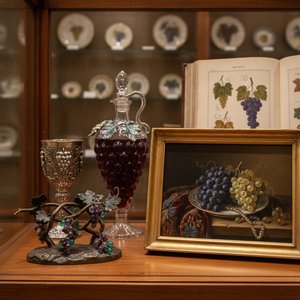
A stunning 17th-century still life featuring luminous fruits with realistic textures by Flemish master Théodoor van Aenvanck, offering a timeless touch of Baroque elegance for your private collection.

Entdecken Sie théodoor van Aenvanck, einen Antwerpener Maler des 17. Jahrhunderts, bekannt für seine exquisiten Stillleben mit Früchten und Genreszenen. Erforschen Sie seine Werke im Mayer van den Bergh Museum.

Handgefertigte Ölreproduktion

Handgemaltes Ölgemälde auf Leinwand in Ihrer Wunschgröße und mit Rahmen, auf Bestellung von unseren Künstlern angefertigt. ( Zum Druck wechseln Zum digitalen Bild wechseln)

Corner sample of the P118B picture frame: formgepresstes Polystyrol, 5 cm wide and 3 cm thick
P118B €10
Corner sample of the P118H picture frame: formgepresstes Polystyrol, 5 cm wide and 3 cm thick
P118H €10
Corner sample of the P118W picture frame: formgepresstes Polystyrol, 5 cm wide and 3 cm thick
P118W €10
Corner sample of the P438Z picture frame: formgepresstes Polystyrol, 5.5 cm wide and 3.5 cm thick
P438Z €10
Corner sample of the P508JH picture frame: formgepresstes Polystyrol, 7 cm wide and 3.5 cm thick
P508JH €12
Corner sample of the P508YH picture frame: formgepresstes Polystyrol, 7 cm wide and 3.5 cm thick
P508YH €12
Corner sample of the P805H picture frame: formgepresstes Polystyrol, 5 cm wide and 3.5 cm thick
P805H €10
Corner sample of the P805Z picture frame: formgepresstes Polystyrol, 5 cm wide and 3.5 cm thick
P805Z €10
Corner sample of the P919BZ picture frame: formgepresstes Polystyrol, 7 cm wide and 3.5 cm thick
P919BZ €10
Corner sample of the P919G picture frame: formgepresstes Polystyrol, 7 cm wide and 3.5 cm thick
P919G €10
Corner sample of the P919XJ picture frame: formgepresstes Polystyrol, 7 cm wide and 3.5 cm thick
P919XJ €10
Corner sample of the P959ZH picture frame: formgepresstes Polystyrol, 5 cm wide and 3 cm thick
P959ZH €10
Corner sample of the P968JZ picture frame: formgepresstes Polystyrol, 6 cm wide and 4 cm thick
P968JZ €12
Corner sample of the W106C picture frame: Massivholz, 5 cm wide and 3 cm thick
W106C €8
Corner sample of the W218G picture frame: Massivholz, 5 cm wide and 3 cm thick
W218G €10
Corner sample of the W218JH picture frame: Massivholz, 5 cm wide and 3 cm thick
W218JH €8
Corner sample of the W218Y picture frame: Massivholz, 5 cm wide and 3 cm thick
W218Y €10
Corner sample of the W307PJ picture frame: Massivholz, 6 cm wide and 3 cm thick
W307PJ €10
Corner sample of the W316G picture frame: Massivholz, 6 cm wide and 3 cm thick
W316G €10
Corner sample of the W316PJ picture frame: Massivholz, 6 cm wide and 3 cm thick
W316PJ €8
Corner sample of the W316Y picture frame: Massivholz, 6 cm wide and 3 cm thick
W316Y €10
Corner sample of the W398PJ picture frame: Massivholz, 5 cm wide and 3 cm thick
W398PJ €8
Corner sample of the W4111J picture frame: Massivholz, 6.5 cm wide and 3.5 cm thick
W4111J €10
Corner sample of the W500HY picture frame: Massivholz, 7 cm wide and 5 cm thick
W500HY €15
Corner sample of the W500JH picture frame: Massivholz, 7 cm wide and 5 cm thick
W500JH €15
Corner sample of the W692G picture frame: Massivholz, 8 cm wide and 4 cm thick
W692G €12
Corner sample of the W849H picture frame: Massivholz, 5 cm wide and 3 cm thick
W849H €8
Corner sample of the W940BG picture frame: Massivholz, 7.5 cm wide and 4.5 cm thick
W940BG €15
Corner sample of the W953PJ picture frame: Massivholz, 6 cm wide and 3.5 cm thick
W953PJ €8

Standardformat
individuell anpassbar
CM
INCH

Wählen Sie aus unseren vordefinierten Formaten, die den ursprünglichen Proportionen des Kunstwerks entsprechen.

Breite
Höhe

Geben Sie die Breite und die Höhe an, die Sie für Ihren Rahmen oder Ihre Wand benötigen. Da dieses Werk handgemalt ist, kann der Künstler bei einer anderen Form etwas mehr um das Bild herum malen oder etwas abschneiden – Sie entscheiden. Wir senden Ihnen ein digitales Mockup zur Freigabe, bevor mit dem Malen begonnen wird. Das auf dieser Seite gezeigte Bild stellt nicht das tatsächliche Ergebnis dar – dies tut nur das Mockup.

Beispiele für Anpassungsmöglichkeiten: Gesicht durch Kundenfoto ersetzen; Haustier hinzufügen (z. B. Katze durch Hund ersetzen); eine versteckte Nachricht im Hintergrund einfügen; Hintergrundlandschaft oder -elemente ändern.
Nach der Bestellung wird das WahooArt.com-Team dem Kunden Anweisungen per E-Mail zusenden und eine Mockup-Vorschau bereitstellen.

Weltweiter Versand () in nur 3 bis 4 Wochen statt der üblichen 5 Wochen. (27 Oktober). Keine Kompromisse bei der Qualität.

Kostenloser weltweiter Expressversand
Hochwertige Leinenleinwand
Umfassender Versicherungsschutz beim Versand
Zollgebühren-Rückerstattungsgarantie
Garantie für exakte Farbtreue
100 Tage Rückgaberecht (nur bei Mängeln)
100% Geld-zurück-Garantie
Mengenrabatt verfügbar

Gesamtpreis

€ 239

Fruit

Art der Reproduktion

Format der Reproduktion

-

Endpreis

€ 239

Eckdaten

  • Year: 1653
  • Location: Koninklijk Museum voor Schone Kunsten, Antwerp
  • Title: Fruit
  • Artist: Théodoor Van Aenvanck
  • Notable elements or techniques: Chiaroscuro, glazing, light and shadow

Kunst-Quiz

Jede Frage hat nur eine richtige Antwort.

Frage 1:
In which year was the painting 'Fruit' created?
Frage 2:
Where is the artwork 'Fruit' currently housed?
Frage 3:
What medium was used for this piece?
Frage 4:
Which artist is responsible for the painting 'Fruit'?
Frage 5:
What are some of the specific elements featured in the composition?

A Symphony of Abundance: The Luminous World of Théodoor Van Aenvanck

In the quiet, shadowed corners of the seventeenth century, few masters could capture the ephemeral beauty of nature with as much grace as Théodoor Van Aenvanck. His painting, Fruit, serves as a breathtaking window into the opulent spirit of the Antwerp School. Created in 1653, this oil on panel work is far more than a mere arrangement of produce; it is a carefully choreographed dance of light and texture. As one gazes upon the composition, the eye is immediately drawn to the vibrant reds and greens of scattered apples, which seem to emerge from the velvety darkness of the background. The artist employs a masterful use of chiaroscuro, allowing light to graze the curved surfaces of the fruit, lending them a three-dimensional weight that makes them appear almost tangible to the touch.

The arrangement is both bountiful and balanced, featuring a basket overflowing with harvest riches that suggests a sense of prosperity and natural plenty. Interspersed among the heavy, ripe forms are delicate leaves, their varied shapes and sizes adding a layer of organic complexity and depth to the scene. This meticulous attention to detail—the subtle glisten on a fruit's skin and the soft shadows cast by a leaf—demonstrates Van Aenvanck’s profound ability to translate the physical world into a sensory experience that resonates with the viewer long after the first glance.

Technique, Texture, and Timeless Elegance

To appreciate Fruit is to appreciate the technical virtuosity of the Flemish tradition. Van Aenvanck utilized sophisticated glazing techniques to achieve a luminous quality, allowing light to penetrate the upper layers of paint and reflect back, creating an inner glow within the fruit itself. This method is particularly evident in the way he renders the fleshy textures of the apples and the subtle tonal gradations across the composition. The dark, atmospheric background is not merely empty space but a vital element that pushes the subject forward, creating a dramatic stage for the play of light.

For the discerning collector or interior designer, this piece offers an unparalleled opportunity to introduce a sense of classical sophistication and quiet drama into a living space. The painting’s ability to evoke both the richness of the Dutch Golden Age and a serene, meditative atmosphere makes it a versatile masterpiece for high-end decor. Whether placed in a sunlit gallery or a moody, contemporary study, the work commands attention through its understated elegance and its profound celebration of life's simplest, most beautiful offerings. Owning a high-quality reproduction of such a work allows one to preserve this historical moment of perfection, bringing the tactile beauty of 1653 into the modern era.

Fragen & Antworten

Ist "Fruit" im Heimatland seines Künstlers verblieben?

Ja – das Kunstwerk befindet sich im Heimatland der Künstlerin / des Künstlers. „Fruit“ befindet sich in Belgien, während Théodoor Van Aenvanck in Belgien geboren wurde.

Für welchen Raum im Zuhause eignet sich eine Reproduktion von "Fruit" besonders gut?

Der empfohlene Raum für "Fruit" von Théodoor Van Aenvanck ist ein Dining Room. Dieser Vorschlag kann natürlich an Ihr Interieur angepasst werden.

Welcher Künstler und welcher Stil stecken hinter "Fruit"?

"Fruit" ist das Werk von Théodoor Van Aenvanck aus der Epoche des Baroque.


Künstlerbiografie

Théodoor van Aenvanck: Der Maler der zarten Schönheit des Stilllebens

Théodoor van Aenvanck (1633 – 1690) steht als ein Zeugnis für die blühende Antwerpener Schule der Malerei während des Goldenen Zeitalters der Niederlande, einer Ära, die durch künstlerische Innovation und opulente Schirmherrschaft geprägt war. Geboren in Antwerpen, Belgien – einer Stadt, die für ihre Seidenweberei und ihren Diamantenhandel berühmt war – fiel Aenvancks Leben mit einer Zeit immenser kultureller Dynamik zusammen, welche seine künstlerische Vision formte und ihn als einen der bedeutendsten Vertreter der Stilllebenmalerei mit Früchten etablierte. Während biografische Details im Vergleich zu Zeitgenossen wie Rembrandt oder Rubens eher spärlich sind, deutet die wissenschaftliche Forschung darauf hin, dass er seine Fähigkeiten unter der Anleitung von Rubens verfeinerte, den meisterhaften Einsatz des Chiaroscuro des Meisters in sich aufnahm und eine humanistische Ästhetik annahm, die tief in der Beobachtung und akribischen Detailtreue verwurzelt war.
  • Frühes Leben & Ausbildung:
  • Es existieren nur begrenzte biografische Informationen über Aenvancks prägende Jahre. Um 1650 absolvierte er seine Lehre bei Rubens und tauchte damit in die Atmosphäre des Ateliers ein, die von künstlerischer Experimentierfreude und humanistischer Gelehrsamkeit geprägt war – ein Schmelztiegel, der die Sensibilitäten künftiger Generationen formte. Diese einflussreiche Mentorenschaft vermittelte ihm eine tiefe Wertschuchtung für klassische Ideale und die Hingabe, das Wesen der Natur mit unvergleichlicher Genauigkeit einzufangen.

  • Stil & Technik:
  • Aenvancks unverwechselbarer Stil zeichnet sich durch bemerkenswerten Realismus aus, kombiniert mit subtilen expressiven Qualitäten. Er stellte Früchte – Äpfel, Birnen, Pfirsiche, Pflaumen – mit erstaunlicher Präzision dar und nutzte Lasurtechniken, um leuchtende Oberflächen zu erzielen und die zarten Texturen von Schale und Fruchtfleisch einzufangen. Im Gegensatz zu einigen Künstlern, die dramatische Lichteffekte priorisierten, bevorzugte Aenvanck eine diffuse Beleuchtung, die eine heitere Atmosphäre schuf, nuancierte Tonabstufungen ermöglichte und die subtilen Farbvariationen hervorhob. Seine Leinwände sind von einer dezenten Eleganz durchdrungen – ein Markenzeichen der Antwerpener Kunsttradition.

Bemerkenswerte Werke & künstlerische Errungenschaften

Aenvanck schuf ein produktives Œuvre, das Landschaften, Porträts, Genreszenen und dekorative Paneele umfasste – doch seine Stillleben mit Früchten festigten seinen Ruf als einer der größten Meister jener Epoche. Zu seinen gefeierten Gemälden gehören „Stillleben mit Äpfeln und Granatäpfeln“, das im Mayer van den Bergh Museum aufbewahrt wird, sowie „Landschaft mit Figuren“, welches seine Fähigkeit demonstriert, atmosphärische Tiefe und emotionale Resonanz zu vermitteln. Seine akribische Liebe zum Detail – sichtbar in jedem Pinselstrich – zeugt von dem Bestreben, nicht nur das Sichtbare, sondern auch das Empfundene festzuhalten. Darüber hinaus integrierten Aenvancks Landschaften häufig Elemente des Manierismus, was die breiteren künstlerischen Strömungen seiner Zeit widerspiegelte.
  • "Stillleben mit Äpfeln und Granatäpfeln": Dieses Meisterwerk zeigt Aenvancks unvergleichliches Geschick bei der Darstellung von Fruchttexturen und dem Einfangen subtiler Farbharmonien.
  • "Landschaft mit Figuren": Demonstriert seine meisterhafte Darstellung atmosphärischer Perspektive und emotionaler Tiefe – ein charakteristisches Merkmal der Antwerpener Kunstlandschaft.

Einflüsse & künstlerisches Vermächtnis

Aenvancks künstlerische Entwicklung wurde maßgeblich von den vorherrschenden Stilrichtungen seiner Zeit geprägt, insbesondere durch den Einfluss von Rubens und die weitreichende Annahme manieristischer Prinzipien. Rubens vertrat eine humanistische Ästhetik, die anatomische Genauigkeit und emotionale Intensität betonte – Werte, die tief mit Aenvancks künstlerischem Empfinden korrespondierten. Zudem zog er Lehren aus Künstlern wie Jan van Goyen, dessen Landschaften den Schwerpunkt auf atmosphärischen Realismus und kompositorisches Gleichgewicht legten. Sein Vermächtnis reicht weit über seine einzelnen Gemälde hinaus. Aenvanck trug dazu bei, Antwerpen als ein Zentrum der Stilllebenmalerei mit Früchten zu etablieren – ein Genre, das während der gesamten Barockzeit florieren sollte. Seine akribische Technik und seine dezente Eleganz dienten nachfolgenden Generationen von Künstlern als Inspiration und stellen sicher, dass sein Beitrag zur Kunst des Goldenen Zeitalters auch heute noch lebendig geschätzt wird.
Théodoor Van Aenvanck

Théodoor Van Aenvanck

1633 - 1690 , Belgien

Kurzinfos

  • Artistic Movement Or Style: Niederländisches Goldenes Zeitalter
  • Artists Or Movements Influenced By This Artist: ['Genremalerei']
  • Artists Who Influenced This Artist: ['Jan van Goyen']
  • Date Of Birth: 1633
  • Full Name: théodoor van Aenvanck
  • Nationality: Niederländisch
  • Notable Artworks: ['Stillleben mit Früchten']
  • Place Of Birth: Antwerpen, Belgien