x
Vorschau anzeigenVorschau anzeigen In AR erlebenIn AR erleben Druck bestellen Druck bestellenHandgemalte Reproduktion bestellen Handgemalte Reproduktion bestellen VersendenVersenden
Details anzeigenDetails anzeigen Zu Favoriten hinzufügen Zu Favoriten hinzufügen HerunterladenHerunterladen Ähnliche ObjekteÄhnliche Objekte RöntgenaufnahmeRöntgenaufnahme DiashowDiashow

USA

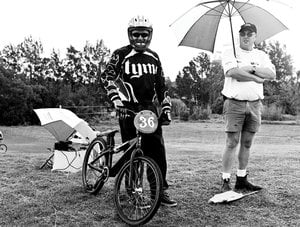
Black & white photo of cyclist Davis Phinney celebrating a race victory in Richmond, VA. Captures energy & excitement – a classic journalistic snapshot of athletic triumph.

The Richmond Times-Dispatch: A historic Virginia newspaper capturing key moments through photojournalism & documenting local events. Also associated with artists Leonard Richmond & Sir William Blake Richmond.

Erwerben Sie ein hochauflösendes, optimiertes digitales Bild, das der Online-Vorschau weit überlegen ist.

Jede Datei wird von unseren hauseigenen Spezialisten mit modernsten Werkzeugen und fachmännischer manueller Retusche sorgfältig vorbereitet. Wir stellen sicher, dass jedes Bild eine außergewöhnliche Klarheit, präzise Farbgenauigkeit und feinste Details aufweist.

Die endgültige Datei wird innerhalb von 72 Stunden per E-Mail zugestellt und ist für den sofortigen Einsatz in professionellen, redaktionellen und Druckumgebungen optimiert. Es handelt sich um dieselbe Qualität, der führende Designstudios, Verlage und Galerien vertrauen.

Digitales Bild

Laden Sie eine hochauflösende Datei für die persönliche Präsentation, den Druck und kreative Projekte herunter. (Druck bestellen Druck bestellenHandgemalte Reproduktion bestellen Handgemalte Reproduktion bestellen)

Endpreis

$ 24,90

In jeder Bestellung digitaler Bilder enthalten

Professionelle digitale Bereitstellung, garantiert

Wenn Sie sich für WahooArt.com entscheiden, erhalten Sie nicht nur ein Bild – Sie erhalten ein professionell aufbereitetes digitales Kunstwerk, das mit höchster Präzision erstellt und durch eine Zufriedenheitsgarantie abgesichert wird. Hier ist alles, was automatisch mit Ihrer Bestellung geliefert wird:

shipping_icon
Schnelle E-Mail-Zustellung

Ihre hochauflösende digitale Bilddatei wird Ihnen innerhalb von 72 Stunden nach der Bestellung per E-Mail zugestellt – bereit zur sofortigen Verwendung.

canvas_icon
KI-optimierte digitale Datei

Ihre Kunstwerke werden professionell mithilfe fortschrittlicher KI-Tools und manueller Bearbeitung optimiert, um maximale Detailtreue, Klarheit und Farbgenauigkeit zu gewährleisten.

insurance_icon
Lebenslanger kostenloser Neudruckservice

Datei versehentlich gelöscht oder verloren? Keine Sorge – wir senden sie Ihnen jederzeit kostenlos erneut zu.

tax_icon
Keine Einfuhrgebühren – jemals

Genießen Sie Ihr Kunstwerk sofort ohne Zollgebühren, Einfuhrabgaben oder Versandkosten – digitale Downloads sind immer steuerfrei.

color_icon
Garantierte Farbtreue

Wir garantieren, dass Ihr digitales Bild mithilfe professioneller Werkzeuge und Farbmanagement die Originalfarben so präzise wie möglich wiedergibt.

return_icon
60-Tage-Zufriedenheitsgarantie

Sollten Sie mit Ihrem digitalen Bild nicht zufrieden sein, werden wir es überarbeiten oder Ihnen innerhalb von 60 Tagen 100% erstatten – ohne Wenn und Aber.

guarantee_icon
100% Geld-zurück-Garantie

Nicht zufrieden? Erhalten Sie innerhalb von 60 Tagen nach Erhalt Ihrer digitalen Datei eine vollständige Rückerstattung – ohne Angabe von Gründen.

discount_icon
Rabatte bei Großbestellungen

3 Bilder kaufen, 10% sparen – 5 Bilder kaufen, 15% sparen – Ab 10 Bildern 20% sparen. Ideal für kreative Projekte, Galerien und Agenturen.

Black and white photograph of Davis Phinney, a cyclist on the 7-11 road race team; Phinney, an American, stands with his arms outstretched during the Tour de Trump in downtown Richmond; he wears his

Biografie des Künstlers

A Chronicle of Virginia: The Richmond Times-Dispatch

The story of the Richmond Times-Dispatch is far more than a chronicle of journalistic endeavor; it’s a vibrant tapestry woven into the very fabric of Virginia's history. Emerging from the complex social and political landscape of the 19th century, the paper has evolved from a staunchly partisan voice to become the state’s primary newspaper of record. Its journey reflects not only the changing face of journalism but also the tumultuous shifts in American society itself.

The roots trace back to 1850 with the establishment of the Richmond Dispatch, founded by James A. Cowardin and William H. Davis as a rival publication to the Richmond Compiler, which had previously merged with The Times but ultimately failed in 1853. Quickly gaining prominence, the Dispatch boasted a circulation that tripled its competitors by 1852, fueled by aggressive advertising and a clear editorial stance. Cowardin’s brief foray into Virginia politics as a Whig delegate underscored the paper's growing influence, though it was overshadowed by the looming shadow of the Civil War.

From Confederate Advocate to Post-War Reconstruction

As the nation fractured, the Dispatch became an unwavering voice for the Confederacy. Its pages throbbed with pro-slavery rhetoric, denouncing Union soldiers in fiery terms and documenting the war’s progress—or lack thereof—with a passionate intensity. The paper's survival through the conflict was a testament to its dedication, even as it faced immense challenges, including running the Union blockade to secure new presses from England in 1864. The April 1, 1865 issue marked a poignant end to wartime reporting, followed by the devastating fire that consumed Richmond and the paper’s offices alongside much of the city.

The resilience of the Dispatch was remarkable; it rose from the ashes in December 1865, establishing a new headquarters on 12th and Main Streets. This rebirth coincided with the tumultuous era of Reconstruction. Initially opposing the Ku Klux Klan, the paper later accepted its advertising—a reflection of its complex relationship with the changing political climate and its resistance to Congressional policies. The eventual acceptance of the revised state constitution, even after anti-Confederate provisions were removed, signaled a gradual shift in perspective.

The Consolidation and Rise as Virginia’s News Leader

The late 19th and early 20th centuries witnessed a period of consolidation. The merger with The Times, forming the Richmond Times-Dispatch, solidified its position as the dominant newspaper in Richmond. Under the leadership of figures like Henry K. Ellyson, who briefly served as mayor during a period of intense political strife known as the “Municipal War,” the paper navigated complex local issues and continued to expand its reach throughout Virginia.

By the mid-20th century, the Richmond Times-Dispatch had firmly established itself as "Virginia’s News Leader," serving not only the capital city but also rural regions lacking robust local news coverage. Its circulation steadily grew, becoming second only to Norfolk's The Virginian-Pilot. The paper’s commitment to comprehensive reporting and its role as a newspaper of record cemented its historical significance.

A Legacy in Print and Beyond

Today, the Richmond Times-Dispatch continues to adapt to the evolving media landscape. While embracing digital platforms with a growing subscriber base, it remains dedicated to its core mission: providing Virginians with accurate, insightful news coverage. The paper’s archives—a rich repository of historical photographs and articles—offer a unique window into the state's past, preserving moments of triumph, tragedy, and transformation.

  • Early Photography: The newspaper’s early photographic documentation, such as the black-and-white image of cyclist Davis Phinney celebrating his victory in Richmond, captures the energy and excitement of athletic achievement—a classic example of journalistic storytelling.
  • Community Focus: Images like the “Recycling Cycle” demonstrate a commitment to local issues and environmental awareness.
  • Historical Documentation: Photographs documenting events such as the inspection of a 1942 Mack pumper truck provide valuable insights into Virginia’s social and military history.

The Richmond Times-Dispatch is not merely a newspaper; it's a living chronicle, a testament to the enduring power of journalism in shaping public discourse and preserving the collective memory of a state—and a nation.