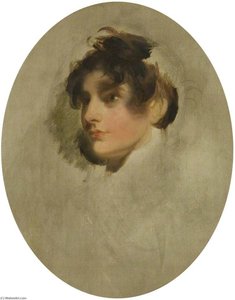
Samuel Woodburn: A Window into Regency Society
Sir Thomas Lawrence’s “Samuel Woodburn,” painted in 1820, isn't merely a portrait; it’s a meticulously crafted window into the social and intellectual currents of Regency England. The work depicts a gentleman seated comfortably, engrossed in a newspaper – a scene instantly familiar yet imbued with subtle layers of meaning. Lawrence, one of the era’s most celebrated portraitists, masterfully employed his signature style: a dramatic interplay of light and shadow, known as chiaroscuro, to create an atmosphere both dignified and intimate.
The composition itself is carefully considered. Woodburn occupies a significant portion of the canvas, drawing the viewer's eye immediately to his face – a study in quiet contemplation. His attire, a dark coat and waistcoat paired with a crisp white shirt and cravat, speaks volumes about his status and wealth. The draped curtain in the background adds depth and a sense of enclosed space, suggesting both privacy and intellectual pursuits. Notice how Lawrence subtly uses lines to define the contours of Woodburn’s face, clothing folds, and even the newspaper itself – a testament to his keen observational skills and technical prowess.
The Art of Chiaroscuro and its Regency Significance
Lawrence's masterful use of chiaroscuro is central to the painting’s impact. The strong contrasts between light and dark aren’t simply decorative; they serve to emphasize Woodburn’s features, highlighting his intelligence and perhaps even a hint of melancholy. This technique was particularly popular during the Regency period, reflecting a fascination with theatricality and dramatic effect – elements that resonated strongly within the fashionable circles of London society. The lighting itself feels carefully orchestrated, directing our gaze towards the subject and reinforcing his importance within the scene.
Furthermore, the choice of a newspaper as Woodburn’s primary activity is significant. It speaks to the burgeoning intellectual climate of the time, where reading and debate were increasingly valued. The gentleman isn't engaged in idle leisure; he’s actively absorbing information, suggesting an engagement with current affairs and perhaps even a degree of social influence. This reflects the growing importance of the middle class and their participation in public discourse.
A Portrait of Wealth and Status
“Samuel Woodburn” is undeniably a portrait of wealth and status – hallmarks of commissioned portraits during the Regency era. The quality of the fabrics, the meticulous detail in the rendering of his clothing, and the overall sense of refinement all communicate a message of prosperity and social standing. However, Lawrence doesn’t simply present a superficial depiction of wealth; he subtly imbues the portrait with an air of dignity and intellectualism.
The painting's historical context is crucial to understanding its full significance. Sir Thomas Lawrence was not just a painter; he was a key figure in shaping the visual culture of Regency England, advising on decorum and social etiquette for the aristocracy. His portraits were commissioned by prominent figures – members of Parliament, military officers, and wealthy merchants – and served as powerful symbols of their status and influence. “Samuel Woodburn” exemplifies this role perfectly, offering a glimpse into the lives and aspirations of a privileged segment of society.
Symbolism and Emotional Resonance
Beyond its social and historical context, "Samuel Woodburn" possesses a subtle emotional resonance. The gentleman’s contemplative gaze invites us to speculate about his thoughts and experiences. Is he lost in thought? Reflecting on recent events? Perhaps simply enjoying a moment of quiet contemplation amidst the bustle of London life?
The painting's muted color palette – dominated by dark browns, blacks, and creams – contributes to this sense of introspection. It’s a somber yet dignified atmosphere, reflecting the complexities of human experience. Ultimately, “Samuel Woodburn” is more than just a portrait; it’s a carefully constructed tableau that captures the essence of Regency society—its wealth, its intellect, and its quiet moments of reflection.



 In echtem Maßstab anzeigen
 Zum Druck wechseln
 Versenden als Grußkarte
 Teilen
 Details anzeigen
 Leitfaden

 Herunterladen
 Ähnliche Objekte
 Röntgenaufnahme
 Diashow
 Besucherstatistiken


 Mehr anzeigen