In echtem Maßstab anzeigen In AR an der Wand sehen Zum Druck wechseln Zum digitalen Bild wechseln Versenden als Grußkarte
Details anzeigen Leitfaden öffnen Zu Favoriten hinzufügen Herunterladen Ähnliche Objekte Röntgenaufnahme Diashow Besucherstatistiken

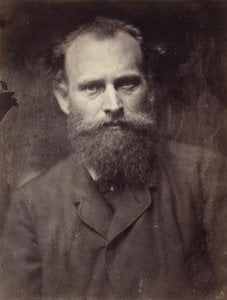
Eisener Billy

Entdecken Sie Cast Iron Billy von Sir Joseph John Thomson, ein Meisterwerk der Fotografie! Erleben Sie historische Szenen und Texturen.

Sir Joseph John Thomson (1856-1940): Pionier der Physik und beeindruckender Fotograf des viktorianischen Zeitalters. Entdeckung des Elektrons und Dokumentation sozialer Themen durch außergewöhnliche Albumdrucke.

Handgefertigte Ölreproduktion

Handgemaltes Ölgemälde auf Leinwand in Ihrer Wunschgröße und mit Rahmen, auf Bestellung von unseren Künstlern angefertigt. ( Zum Druck wechseln Zum digitalen Bild wechseln)

Corner sample of the P118B picture frame: formgepresstes Polystyrol, 5 cm wide and 3 cm thick
P118B €10
Corner sample of the P118H picture frame: formgepresstes Polystyrol, 5 cm wide and 3 cm thick
P118H €10
Corner sample of the P118W picture frame: formgepresstes Polystyrol, 5 cm wide and 3 cm thick
P118W €10
Corner sample of the P438Z picture frame: formgepresstes Polystyrol, 5.5 cm wide and 3.5 cm thick
P438Z €10
Corner sample of the P508JH picture frame: formgepresstes Polystyrol, 7 cm wide and 3.5 cm thick
P508JH €12
Corner sample of the P508YH picture frame: formgepresstes Polystyrol, 7 cm wide and 3.5 cm thick
P508YH €12
Corner sample of the P805H picture frame: formgepresstes Polystyrol, 5 cm wide and 3.5 cm thick
P805H €10
Corner sample of the P805Z picture frame: formgepresstes Polystyrol, 5 cm wide and 3.5 cm thick
P805Z €10
Corner sample of the P919BZ picture frame: formgepresstes Polystyrol, 7 cm wide and 3.5 cm thick
P919BZ €10
Corner sample of the P919G picture frame: formgepresstes Polystyrol, 7 cm wide and 3.5 cm thick
P919G €10
Corner sample of the P919XJ picture frame: formgepresstes Polystyrol, 7 cm wide and 3.5 cm thick
P919XJ €10
Corner sample of the P959ZH picture frame: formgepresstes Polystyrol, 5 cm wide and 3 cm thick
P959ZH €10
Corner sample of the P968JZ picture frame: formgepresstes Polystyrol, 6 cm wide and 4 cm thick
P968JZ €12
Corner sample of the W106C picture frame: Massivholz, 5 cm wide and 3 cm thick
W106C €8
Corner sample of the W218G picture frame: Massivholz, 5 cm wide and 3 cm thick
W218G €10
Corner sample of the W218JH picture frame: Massivholz, 5 cm wide and 3 cm thick
W218JH €8
Corner sample of the W218Y picture frame: Massivholz, 5 cm wide and 3 cm thick
W218Y €10
Corner sample of the W307PJ picture frame: Massivholz, 6 cm wide and 3 cm thick
W307PJ €10
Corner sample of the W316G picture frame: Massivholz, 6 cm wide and 3 cm thick
W316G €10
Corner sample of the W316PJ picture frame: Massivholz, 6 cm wide and 3 cm thick
W316PJ €8
Corner sample of the W316Y picture frame: Massivholz, 6 cm wide and 3 cm thick
W316Y €10
Corner sample of the W398PJ picture frame: Massivholz, 5 cm wide and 3 cm thick
W398PJ €8
Corner sample of the W4111J picture frame: Massivholz, 6.5 cm wide and 3.5 cm thick
W4111J €10
Corner sample of the W500HY picture frame: Massivholz, 7 cm wide and 5 cm thick
W500HY €15
Corner sample of the W500JH picture frame: Massivholz, 7 cm wide and 5 cm thick
W500JH €15
Corner sample of the W692G picture frame: Massivholz, 8 cm wide and 4 cm thick
W692G €12
Corner sample of the W849H picture frame: Massivholz, 5 cm wide and 3 cm thick
W849H €8
Corner sample of the W940BG picture frame: Massivholz, 7.5 cm wide and 4.5 cm thick
W940BG €15
Corner sample of the W953PJ picture frame: Massivholz, 6 cm wide and 3.5 cm thick
W953PJ €8

Standardformat
individuell anpassbar
CM
INCH

Wählen Sie aus unseren vordefinierten Formaten, die den ursprünglichen Proportionen des Kunstwerks entsprechen.

Breite
Höhe

Geben Sie die Breite und die Höhe an, die Sie für Ihren Rahmen oder Ihre Wand benötigen. Da dieses Werk handgemalt ist, kann der Künstler bei einer anderen Form etwas mehr um das Bild herum malen oder etwas abschneiden – Sie entscheiden. Wir senden Ihnen ein digitales Mockup zur Freigabe, bevor mit dem Malen begonnen wird. Das auf dieser Seite gezeigte Bild stellt nicht das tatsächliche Ergebnis dar – dies tut nur das Mockup.

Beispiele für Anpassungsmöglichkeiten: Gesicht durch Kundenfoto ersetzen; Haustier hinzufügen (z. B. Katze durch Hund ersetzen); eine versteckte Nachricht im Hintergrund einfügen; Hintergrundlandschaft oder -elemente ändern.
Nach der Bestellung wird das WahooArt.com-Team dem Kunden Anweisungen per E-Mail zusenden und eine Mockup-Vorschau bereitstellen.

Weltweiter Versand () in nur 3 bis 4 Wochen statt der üblichen 5 Wochen. (25 Oktober). Keine Kompromisse bei der Qualität.

Kostenloser weltweiter Expressversand
Hochwertige Leinenleinwand
Vollständiger Versicherungsschutz beim Versand
Zollgebühren-Rückerstattungsgarantie
Garantie für exakte Farbtreue
100-tägiges Rückgaberecht (nur bei Mängeln)
100% Geld-zurück-Garantie
Angebot für Mengenrabatt

Gesamtpreis

€ 239

Eisener Billy

Reproduktionsmedium

Format der Reproduktion

-

Gesamtpreis

€ 239

Kurzübersicht

  • Location: Princeton University Art Museum
  • Artist: Sir Joseph John Thomson
  • Dimensions: 26,4 × 20 cm
  • Year: 1877–78
  • Artistic style: Dokumentarfotografie

Ein Augenblick des viktorianischen Lebens: Eisener Billy

John Thomsons „Eisener Billy“, entstanden in den Jahren 1877-78, ist weit mehr als nur eine Fotografie; es ist ein akribisch gefertigtes Fenster in das Herz des spätviktorianischen Londons. Dieser Albuminabzug, der heute in der Sammlung des Art Institute of Chicago aufbewahrt wird, fängt einen flüchtigen Moment des Alltags ein – eine Pferdekutsche und ihren Kutscher, dargestellt mit bemerkenswerter Detailtreue und einer stillen Würde. Thomson, ein Physiker, der für seine Entdeckung des Elektrons berühmt wurde, war zugleich ein scharfsinniger Beobachter der Gesellschaft. Er nutzte die Fotografie als Werkzeug, um die Realitäten des städtischen Daseins in einer Ära rasanter Industrialisierung und sozialen Wandels zu dokumentieren. Das Bild besitzt jene körnige Textur, die charakteristisch für das Woodburytyp-Verfahren ist, was ihm eine greifbare historische Tiefe verleiht und uns dazu einlädt, über das Vergehen der Zeit nachzusinnen.

Die Mechanik der Erinnerung: Technik und Prozess

Thomsons Wahl des Woodburytyp-Verfahrens ist entscheidend für das Verständnis der Ästhetik dieser Fotografie. Im Gegensatz zu späteren fotografischen Techniken beinhaltete diese Methode die Erstellung eines Negativs auf Glas, das anschließend dazu verwendet wurde, direkt auf Papier zu drucken – ein Prozess, der im Vergleich zur Kollodium-Nassplatte ein etwas weicheres, texturreicheres Bild erzeugte. Die daraus resultierenden Sepiatöne sind reich und evokativ; sie schwingen subtil zwischen Braun- und Grautönen und spiegeln so die gedämpfte Farbpalette des viktorianischen Londons wider. Auch die Komposition selbst ist sorgfältig durchdacht: Die zentrale Platzierung der Kutsche und der Figuren zieht den Blick sofort auf sich, während die zurückweichende Kopfsteinpflasterstraße ein Gefühl von Tiefe und Perspektive erzeugt. Man beachte das subtile Spiel von Licht und Schatten, das die Texturen des Pferdegeschirrs, die Kleidung des Kutschers und die verwitterte Oberfläche der Kutsche hervorhebt – Details, die von Thomsons ausgeprägter Beobachtungsgabe zeugen.

Ein Porträt einer Ära: Kontext und Symbolik

„Eisener Billy“ bietet einen ergreifenden Einblick in das soziale Gefüge des viktorianischen Englands. Der Titel selbst bezieht sich auf den damals verbreiteten Kutschetyp – robuste, zuverlässige Fahrzeuge, die für den Transport von Waren und Menschen durch die Stadt unerlässlich waren. Der Kutscher, gekleidet in die formelle Tracht seines Berufsstandes, verkörpert den arbeitssamen Geist jener Epoche. Er steht als Symbol für harte Arbeit und Verantwortung, während er die belebten Straßen Londons navigiert. Die stille Unbeweglichkeit der Fotografie bildet einen scharfen Kontrast zur frenetischen Energie des viktorianischen Stadtlebens und regt uns dazu an, über die Rhythmen und Routinen nachzudenken, die das tägliche Dasein unzähliger Menschen prägten. Das Bild spiegelt zudem subtil die wachsenden Ängste im Zuge der Industrialisierung wider – die Abhängigkeit von Maschinen wie dieser Kutsche repräsentierte sowohl den Fortschritt als auch eine potenzielle Verdrängung des Alten.

Jenseits des Bildes: Emotionale Resonanz

Mehr als nur ein historisches Dokument, beschwört „Eisener Billy“ ein starkes Gefühl von Nostalgung und Kontemplation herauf. Die gedämpften Töne und das leicht verblasste Erscheinungsbild tragen zu einer melancholischen Schönheit bei, die eine verlorene Welt suggeriert – eine Zeit, in der das Leben in einem langsameren Tempo verlief und menschliche Begegnungen unmittelbarer waren. Der Szene wohnt eine immanente Würde inne, eine stille Anmut, die über die spezifischen Details des Motivs hinausgeht. Sie lädt uns ein, über unsere eigene Beziehung zur Geschichte, zum Gedächtnis und zu den beständigen Qualitäten des menschlichen Geistes nachzudenken. Reproduktionen dieses bemerkenswerten Bildes bieten eine greifbare Verbindung zur Vergangenheit und ermöglichen es uns, einen Moment im viktorianischen London durch das geschulte Auge von John Thomson nachzuerleben.

Fragen & Antworten

Wo kann ich "Eisener Billy" von Sir Joseph John Thomson herunterladen?

Für „Eisener Billy“ steht ein Download zur Verfügung: Die Download-Seite des Kunstwerks bietet ein hochauflösender digitaler Bild-Download.

Gibt es eine Diashow für "Eisener Billy" von Sir Joseph John Thomson?

"Eisener Billy" von Sir Joseph John Thomson kann als Diashow auf der Diashow-Seite des Kunstwerks betrachtet werden.

Ist "Eisener Billy" von Sir Joseph John Thomson ein helles oder ein dunkles Kunstwerk?

Insgesamt wird „Eisener Billy“ mit einer Helligkeit von mittlere Helligkeit erfasst. Die wahrgenommene Helligkeit beschreibt, wie hell oder dunkel das Werk erscheint.


Biografie des Künstlers

A Dual Legacy: Sir Joseph John Thomson – Scientist and Social Observer

Sir Joseph John Thomson, a name synonymous with the electron and groundbreaking advancements in physics, was also a keen observer of Victorian society, wielding his camera with an eye for detail and a commitment to documenting the lives unfolding around him. Born on December 18, 1856, in Cheetham Hill near Manchester, England, Thomson’s path wasn't one solely dedicated to scientific pursuit; it was a fascinating intersection of rigorous experimentation and compassionate social commentary. His early education at the University of Cambridge laid the foundation for his scientific brilliance, earning him a scholarship in mathematics and ultimately leading to his fellowship within the Royal Society. However, even as he delved into the mysteries of cathode rays, another passion began to blossom – photography. This wasn’t merely a hobby; it was a means of engaging with the realities of Victorian England, capturing its complexities, hardships, and vibrant street life.

The Unveiling of the Electron and a World Transformed

Thomson's scientific legacy is monumental. In 1897, through meticulous experimentation with cathode rays, he revealed that these beams were not waves, as previously believed, but composed of tiny, negatively charged particles – what we now know as electrons. This discovery fundamentally altered the understanding of atomic structure, dismantling the long-held belief in the indivisibility of atoms and opening up entirely new avenues of scientific inquiry. His calculations demonstrated that these electrons possessed a remarkably large charge-to-mass ratio, far smaller than anything previously imagined. The implications were profound, reshaping the landscape of physics and earning him the Nobel Prize in Physics in 1906. This breakthrough wasn’t an isolated event; it was the culmination of years of dedicated research, driven by a relentless curiosity and a commitment to empirical evidence. He tirelessly pursued his hypotheses, meticulously gathering data and formulating theories that challenged established dogma. His work fundamentally altered our comprehension of matter and paved the way for subsequent discoveries in nuclear physics and quantum mechanics.

Through the Lens: Documenting Victorian Life

Parallel to his scientific endeavors, Thomson developed a profound passion for photography, transforming himself into a dedicated social documentarian. He wasn’t content with simply recording images; he actively sought to portray the lives of ordinary people – street performers captivating audiences, laborers enduring harsh conditions, and those marginalized by society. His photographs offer an intimate glimpse into Victorian England, revealing both its grandeur and its grim underbelly. Works like Italian Street Musicians (1878) capture a fleeting moment of joy and artistry amidst the urban landscape, while images such as Sufferers from the Floods bear witness to the devastating impact of natural disasters on vulnerable communities. Cast Iron Billy, with its striking portraiture, freezes a single moment in time, inviting viewers to contemplate the story behind the subject’s gaze. His photographic style is characterized by realism and a documentary approach, eschewing artistic embellishment in favor of honest representation. He favored albumen prints, which contributed to the grainy texture and historical feel of his images, enhancing their sense of authenticity. These prints allowed him to capture subtle nuances of expression and emotion, conveying a powerful message about human experience.

Influences and Artistic Development

Thomson’s artistic sensibilities were nurtured by several influential figures. Notably, he was deeply impacted by the pioneering work of William John Thomson RSA (1771-1845), an American artist known for his portrait miniatures, silhouettes, and landscapes—a kindred spirit who recognized the importance of meticulous observation and detailed rendering. Furthermore, Thomson’s artistic vision resonated with artists like Henryk Siemiradzki and Max Klinger, who explored themes of modernity and human existence within their own artistic practices. These connections underscored Thomson's belief that art could serve as a conduit for conveying profound truths about the human condition—a conviction that informed his photographic endeavors.

A Lasting Impression: Legacy and Historical Significance

Thomson’s contributions extended far beyond the realm of science and photography; he embodied a rare synthesis of intellectual rigor and human compassion. His unwavering dedication to empirical evidence, combined with his empathy for the plight of others—particularly those facing hardship and injustice—established him as an exemplar of Victorian ideals. He died in 1940, but his discoveries continue to shape our understanding of the world around us – both the invisible realm of subatomic particles and the visible tapestry of human experience. His legacy resides not only in the annals of physics but also in the enduring power of his photographs to illuminate the complexities of Victorian society and inspire generations of artists and scientists alike. He remains a testament to the transformative potential of pursuing knowledge with integrity and compassion—a figure whose influence persists today.
Sir Joseph John Thomson

Sir Joseph John Thomson

1856 - 1940 , Vereinigtes Königreich

Eckdaten zum Künstler

  • Artistic Movement Or Style: Sozialdokumentarfotografie
  • Artists Or Movements Influenced By This Artist:
    • Henryk Siemiradzki
    • Max Klinger
  • Date Of Birth: 18 Dezember 1856
  • Date Of Death: 30 August 1940
  • Full Name: Sir Joseph John Thomson
  • Nationality: Britisch
  • Notable Artworks:
    • Italienische Straßenmusiker
    • Eisenfigur Billy
    • Novemberbildnisse
  • Place Of Birth: Cheetham Hill, UK
Entdecken Sie Kunstwerke, die nach Themen, Stilen und Merkmalen sortiert sind.