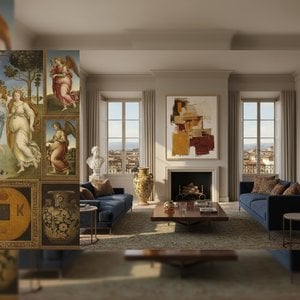
A Celebration of Renewal: Botticelli’s Primavera
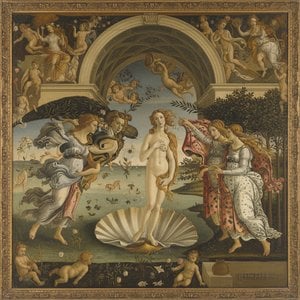
Sandro Botticelli’s “Primavera,” completed around 1482, stands as an emblem of the Florentine Renaissance—a visual manifesto of humanist ideals and a breathtaking testament to artistic innovation. More than just a depiction of flowers, it's a complex allegory brimming with mythological references and imbued with a palpable sense of optimism that continues to resonate centuries later.
The Subject Matter: Mythological Narrative
At its core, the painting portrays nine figures engaged in a dance of springtime renewal. These characters represent deities from Greco-Roman mythology—Venus, Flora, Zephyr, Mercury, Juno, Ceres, Pomona, Cupid, and Chloris—who preside over the arrival of spring. Botticelli meticulously recreates scenes from Hesiod’s “Works and Days,” specifically referencing myths about the awakening of nature and the fecundity of the earth.
Botticelli's Style: Delicate Linearity and Pastel Colors
Botticelli distinguishes himself through his signature style—characterized by graceful linearity, soft pastel hues, and an ethereal quality that defies gravity. Unlike the monumental frescoes of Michelangelo or Raphael, “Primavera” prioritizes subtlety and elegance. The artist employs a tempera technique on poplar wood panel, applying thin layers of pigment with meticulous precision. This method lends itself to achieving luminous colors and delicate contours—essential elements in conveying the painting’s serene beauty.
Symbolism: Layers of Meaning
The Primavera is replete with symbolic representations that elevate it beyond mere botanical illustration. The blossoming flowers symbolize fertility and rebirth, mirroring the cyclical rhythms of nature. Venus embodies feminine grace and love, presiding over the union of humankind and divine forces. Zephyr and Flora represent the winds and blossoms of spring, respectively, symbolizing vitality and growth. Even Cupid’s arrow piercing Chloris’s shoulder signifies the transformative power of desire and the genesis of new life.
Emotional Impact: An Expression of Ideal Beauty
"Primavera" transcends its formal elements to evoke a profound emotional response in viewers. Its harmonious composition, bathed in pastel shades, captures the essence of springtime—a moment of joyous awakening and boundless possibility. Botticelli’s masterful rendering of human figures conveys an idealized vision of beauty—one rooted in classical ideals but imbued with humanist compassion. It remains a cherished masterpiece, inspiring artists and collectors alike with its timeless elegance and enduring message of hope.



 Druck bestellen
 Versenden
 Teilen
 Details

 Herunterladen
 Ähnliche Objekte
 Röntgenaufnahme
 Diashow anzeigen

 Weiterlesen






































 Die Glasoption ist nur in Größen unter 110 cm verfügbar.