Vorschau anzeigenVorschau anzeigen In AR erlebenIn AR erleben Handgemalte Reproduktion bestellen Handgemalte Reproduktion bestellenZum digitalen Bild wechseln Zum digitalen Bild wechseln VersendenVersenden
Details anzeigenDetails anzeigen Zu Favoriten hinzufügen Zu Favoriten hinzufügen HerunterladenHerunterladen Ähnliche ObjekteÄhnliche Objekte RöntgenaufnahmeRöntgenaufnahme DiashowDiashow StatistikenStatistiken

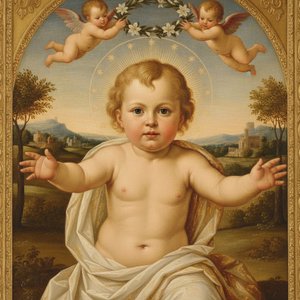
Madonna der Granatapfel (Detail)

Ausgewählte Details aus Sandro Botticellis 'Madonna der Granatapfel'. Entdecken Sie dieses Renaissance-Meisterwerk – reiche Farben, symbolische Tiefe und zeitlose Schönheit.

Entdecken Sie die fesselnde Kunst von Sandro Botticelli (1445-1510), einem Meister der Frührenaissance. Bekannt für seine elegante Linienführung, ikonische Werke wie 'Die Geburt des Venus' & 'Primavera' und die Brücke zwischen gotischen und Renaissance-Stilen. Erfahren Sie mehr über sein Vermächtnis!

Giclée / Kunstdruck

Giclée- oder Leinwanddruck in Museumsqualität mit schneller Produktion und flexiblen Veredelungsoptionen. (Handgemalte Reproduktion bestellen Handgemalte Reproduktion bestellenZum digitalen Bild wechseln Zum digitalen Bild wechseln)

P118B $10
P118H $10
P118W $10
P438Z $10
P508JH $12
P508YH $12
P805H $10
P805Z $10
P919BZ $10
P919G $10
P919XJ $10
P959ZH $10
P968JZ $12
W106C $8
W218G $10
W218JH $8
W218Y $10
W307PJ $10
W316G $10
W316PJ $8
W316Y $10
W398PJ $8
W4111J $10
W500HY $15
W500JH $15
W692G $12
W849H $8
W940BG $15
W953PJ $8

Standardformat
individuell anpassbar
CM
INCH

Wählen Sie aus unseren vordefinierten Formaten, die den ursprünglichen Proportionen des Kunstwerks entsprechen.

Breite
Höhe

Sie können Ihre eigenen Maße eingeben, um ein bestimmtes Format oder einen speziellen Platz einzupassen. Wenn das von Ihnen gewählte Format nicht den Proportionen des Originalbildes entspricht, werden wir das Kunstwerk entweder beschneiden oder das Bild mit einem gespiegelten oder einfarbigen Rand erweitern. Ein digitaler Entwurf wird Ihnen zur Genehmigung zugesandt, bevor die Produktion beginnt.
Bitte beachten Sie, dass die Vorschau auf dem Bildschirm nicht den tatsächlichen Zuschnitt oder die Erweiterung widerspiegelt. Nur der Entwurf zeigt die endgültige Komposition präzise an.
Obwohl Sondermaße verfügbar sind, empfehlen wir die Auswahl eines Maßes aus der vordefinierten Liste, um die ursprünglichen Proportionen zu bewahren.

Weltweiter Versand () innerhalb von 2 Wochen statt der üblichen 4/5 Wochen. (11 September)

why_choose_icon
Kostenloser weltweiter Expressversand
why_choose_icon
Hochwertige Leinenleinwand
why_choose_icon
Umfassender Versicherungsschutz beim Versand
why_choose_icon
Zollgebühren-Rückerstattungsgarantie
why_choose_icon
Garantie für exakte Farbtreue
why_choose_icon
100-Tage-Rückgaberecht (nur bei Mängeln)
why_choose_icon
100% Geld-zurück-Garantie
why_choose_icon
Mengenrabatt verfügbar

Gesamtpreis

$ 68

reproduction

Madonna der Granatapfel (Detail)

Giclée / Kunstdruck

Format der Reproduktion

-

Gesamtpreis

$ 68

Eckdaten

  • medium: Oil on canvas
  • title: Madonna of the Pomegranate (detail)
  • style: Renaissance, elegant linearity, sfumato, chiaroscuro
  • artist: Sandro Botticelli
  • subject: Infant Jesus/Sacred Child, Madonna
  • movement: Early Renaissance

Kunst-Quiz

Jede Frage hat nur eine richtige Antwort.

Frage 1:
The 'Madonna of the Pomegranate (detail)' is attributed to which artist?
Frage 2:
Which artistic period does this artwork primarily belong to?
Frage 3:
The description mentions the use of which technique to create realistic shading and depth?
Frage 4:
What symbolic meaning is associated with the pomegranate featured in the artwork?
Frage 5:
The image description highlights a focus on what aspect of the painting's composition?

Madonna of the Pomegranate (detail) – Botticelli’s Hymn to Innocence

Sandro Botticelli's *Madonna of the Pomegranate*, painted circa 1478/79, stands as an emblem of Florentine Renaissance artistic achievement and embodies a profound spiritual contemplation. More than just a depiction of Mary cradling her son Jesus—a motif prevalent throughout Christian iconography—this masterpiece delves into complex layers of symbolism and masterful technique, offering viewers centuries later a glimpse into the aesthetic sensibilities of its time. Its enduring allure stems from Botticelli’s ability to capture not merely visual beauty but also an intangible essence of innocence and divine grace.

Artistic Style & Technique – The Language of Light and Shadow

Botticelli's style is undeniably rooted in the Early Renaissance, marking a decisive break from the Gothic traditions that preceded it while simultaneously anticipating the grandeur of the High Renaissance. He skillfully employs *sfumato*, a technique pioneered by Leonardo da Vinci, to soften outlines and create an ethereal haze around Mary’s figure and Jesus’ face—a deliberate choice designed to convey serenity and otherworldly luminescence. Simultaneously, *chiaroscuro* – the dramatic interplay between light and dark – sculpts Jesus' form with remarkable precision, emphasizing his physicality while simultaneously hinting at his divine nature. The painting is executed in oil on canvas, allowing for unparalleled color saturation and meticulous layering that contributes significantly to its luminous quality. Botticelli’s painstaking linework defines every element—from the delicate folds of drapery to the wisps of hair—with an almost devotional care, reflecting the humanist values of his era. This meticulous attention to detail distinguishes him from many of his contemporaries and underscores his commitment to representing reality with breathtaking accuracy.

Symbolism & Iconography – The Fruit of Redemption

The inclusion of a pomegranate is far from accidental; it operates as a central symbol laden with profound religious significance. In Christian iconography, the pomegranate represents resurrection—its numerous seeds mirroring the multitude of virtues associated with Christ’s sacrifice and symbolizing his triumphant return to glory. Furthermore, Botticelli frequently employed symbolic objects within his Madonnas, enriching their narrative depth and inviting contemplation. Mary's gaze is serene yet melancholic, reflecting a quiet awareness of her son’s impending suffering—a poignant reminder of the Passion that precedes salvation. The angels flanking Mary are adorned with lilies and roses—flowers traditionally linked to purity and virginity—further reinforcing the Madonna’s sanctity. The angel on the left wears a robe embroidered with AVE MARIA GRATIA PLENA, invoking Mary's divine grace—a prayer that encapsulates the spiritual fervor of the Renaissance period.

Historical Context & Artistic Lineage – Echoes of Leonardo and Beyond

Botticelli flourished during Florence’s golden age—the Early Renaissance—a time marked by intellectual curiosity and artistic innovation. His style draws inspiration from earlier masters such as Filippo Lippi, yet simultaneously paves the way for artists like Leonardo da Vinci who would usher in a new era of realism and psychological depth. Botticelli's work was rediscovered in the 19th century by the Pre-Raphaelites, who admired his lyrical beauty and spiritual intensity—a testament to its timeless appeal. Examining this detail alongside Botticelli’s *Madonna of the Book* reveals a consistent thread of tenderness and refined elegance throughout his oeuvre—a stylistic hallmark that distinguishes him as one of the most influential artists of his generation.

Emotional Impact & Interior Design – A Moment of Tranquility

This exquisite depiction evokes feelings of profound tranquility, innocence, and quiet reverence. The muted palette—dominated by warm earth tones—creates an atmosphere of intimacy and solemn contemplation. As a focal point in an interior space, *Madonna of the Pomegranate* would lend an air of sophistication and serenity to any room—a timeless addition to any art collection or home décor scheme. Its classical Renaissance aesthetic complements both traditional and contemporary styles seamlessly. A high-quality reproduction captures the nuances of Botticelli’s brushwork and color palette with remarkable fidelity, ensuring that its beauty persists across generations.

Über den Künstler

frühes Leben und Ausbildung

Sandro Botticelli, geboren Alessandro di Mariano di Vanni Filipepi um 1445, war eine zentrale Figur im frühen italienischen Frührenaissance der Malerei. Zunächst posthumig vernachlässigt, wurde Botticellis Werk im späten 19. Jahrhundert von den Präraffaeliten revitalisiert und führte zu einer Neubewertung seiner künstlerischen Beiträge. Botticelli wurde in Florenz, Italien, geboren und lebte sein ganzes Leben im selben Viertel. Seine Familie, darunter sein Vater Mariano di Vanni d’Amedeo Filipepi, war in verschiedene Berufe involviert, was sie mit Künstlern in Kontakt brachte. Giorgio Vasari berichtete, dass Botticelli zunächst als Goldschmied ausgebildet wurde.

Künstlerischer Stil und bemerkenswerte Werke

Botticellis Werk ist durch elegante Linearität gekennzeichnet, die die Lücke zwischen der späten italienischen Gotik und dem frühen Frührenaissance schließt. Seine berühmtesten Werke, die Geburt des Venus und Primavera, werden in der Uffizialleerie in Florenz ausgestellt, die eine bedeutende Sammlung seiner Kunst beherbergt. * die Geburt des Venus (ansicht auf WahooArt) * Primavera (Sandro Botticellis Kunst erkunden auf WahooArt) * Mystische Geburt (Nationalgalerie, London), datiert 1501, ist das einzige Werk von Botticelli mit einem klaren Datum.

Vermächtnis und Einfluss

Botticellis Stil entwickelte sich in den 1490er Jahren zu einem persönlicheren Ansatz und unterschied sich von Zeitgenossen wie Leonardo da Vinci und dem aufkommenden Hochrenaissance-Stil. Sein Werk wurde als bedeutende Beiträge zur italienischen Renaissance Kunstbewegung anerkannt. * Die italienische Renaissance Kunstbewegung * Sandro Botticelli auf Wikipedia
  • Bekannte Künstler der italienischen Renaissance umfassen Sandro Botticelli, Leonardo da Vinci, Michelangelo und Tizian.
  • Die Uffizialleerie in Florenz beherbergt eine bedeutende Sammlung von Botticellis Kunst.
  • Botticellis Werk wurde als eine zentrale Figur im frühen italienischen Frührenaissance der Malerei anerkannt.
Wichtige Daten: * 1445: Sandro Botticelli wurde in Florenz, Italien, geboren. * 1474: Verbrachte Zeit in Pisa. * 1481-1482: Arbeitete an der Sixtinischen Kapelle in Rom. * 1501: Mystische Geburt (Nationalgalerie, London) datiert.

Sandro Botticelli

Sandro Botticelli

1445 - 1510 , Italien

Kurzinfos

  • Beeinflusste Künstler: ['Präraffaeliten']
  • Bemerkenswerte Werke:
    • Die Geburt der Venus
    • Primavera
    • Mystische Geburt
  • Einflussreiche Künstler:
    • Fra Angelico
    • Paolo Uccello
  • Geburtsdatum: ca. 1445
  • Geburtsort: Florenz, Italien
  • Künstlerische Bewegung: Frührenaissance
  • Nationalität: Italienisch
  • Sterbedatum: 1510
  • Vollständiger Name: Sandro Botticelli
Entdecken Sie Kunstwerke, die nach Themen, Stilen und Merkmalen sortiert sind.