A Vision of Courage and Divine Intervention
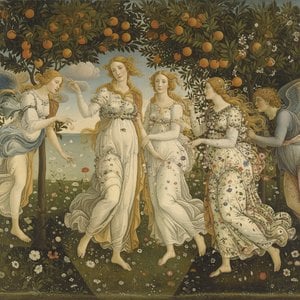
In the heart of the Italian Renaissance, few images capture the tension between mortal violence and divine grace as poignantly as Sandro Botticelli’s Judith with the Head of Holofernes. Painted around 1470, this masterpiece serves as a profound emblem of Florentine humanist ideals, where the grit of biblical narrative meets the ethereal beauty of the Early Renaissance. The painting recounts the legendary tale of Judith, the courageous Moabite widow who, moved by a sense of religious duty and divine providence, confronts the Assyrian general Holofernes. As she stands amidst the aftermath of her daring deed, the work transcends mere historical illustration to become a psychological study of resolve, capturing that breathless moment where destiny is decided by a single, decisive act of bravery.
The composition is a masterclass in balanced tension. Botticelli skillfully directs the viewer's eye through a carefully orchestrated scene, emphasizing Judith’s unwavering gaze and the gruesome trophy she holds aloft—the severed head of Holofernes. This stark symbol of triumph over tyranny is juxtaposed against a backdrop that suggests both the chaos of battle and the serenity of divine will. The presence of horses in the periphery adds a layer of kinetic energy to the piece, hinting at the larger conflict from which this intimate moment of victory emerged. For the discerning collector, this painting offers more than just a subject; it provides a window into a world where the line between the earthly and the divine is perpetually blurred.
The Elegance of Florentine Technique
To behold this work is to witness the pinnacle of the Florentine style, characterized by its refined elegance and luminous clarity. Botticelli utilized the tempera on panel technique, a method renowned for its durability and its ability to produce subtle, glowing gradations of color. This approach allows for a meticulous attention to detail that is nothing short of breathtaking—from the delicate folds of the drapery to the anatomical precision of the figures. The palette is a sophisticated arrangement of muted hues; pale yellows, soft greens, and gentle blues harmonize to create an otherworldly glow that softens the inherent brutality of the subject matter.
This stylistic choice is essential to the painting's emotional impact. Rather than relying on jarring, dramatic intensity, Botticelli employs a sense of grace and rhythmic beauty to convey the gravity of the event. The light seems to emanate from within the figures themselves, imbuing the scene with a spiritual luminosity that reflects the humanist fascination with observation and natural beauty. For interior designers and art enthusiasts alike, the painting’s harmonious color scheme and sophisticated textures make it an extraordinary centerpiece, capable of bringing a sense of historical depth and quiet majesty to any curated space.
A Timeless Legacy for the Modern Collector
Beyond its technical brilliance, Judith with the Head of Holofernes resonates deeply due to its enduring symbolism. It is a narrative of liberation, representing the triumph of justice over oppression and the strength found in faith. This duality—the gruesome reality of the decapitation paired with the graceful execution of the brushwork—creates a captivating intellectual friction that continues to engage audiences centuries after its creation. It is an artwork that demands contemplation, inviting viewers to reflect on themes of courage, sacrifice, and the transformative power of conviction.
For those seeking to adorn their homes or galleries with a piece of profound historical significance, a high-quality reproduction of this Botticelli masterpiece offers an unparalleled opportunity. Owning such a work is not merely about decoration; it is about preserving a fragment of the Renaissance spirit. The painting’s ability to anchor a room with its complex emotional layers and exquisite Florentine aesthetic makes it a timeless investment for any collection dedicated to the heights of human artistic achievement.



 Vorschau anzeigen
 Handgemalte Reproduktion bestellen
 Versenden
 Teilen
 Details anzeigen

 Herunterladen
 Ähnliche Objekte
 Röntgenaufnahme
 Diashow
 Statistiken

 Weiterlesen






































 Die Glasoption ist nur für Größen unter 110 cm verfügbar.