x
Vorschau anzeigenVorschau anzeigen In AR erlebenIn AR erleben Handgemalte Reproduktion bestellen Handgemalte Reproduktion bestellenBild kaufen Bild kaufen VersendenVersenden
Details anzeigenDetails anzeigen Zu Favoriten hinzufügen Zu Favoriten hinzufügen HerunterladenHerunterladen Ähnliche ObjekteÄhnliche Objekte RöntgenaufnahmeRöntgenaufnahme DiashowDiashow

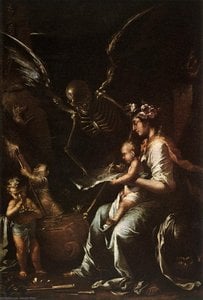
St. Francis in Ecstasy

Salvator Rosa's 'St. Francis in Ecstasy' captures the saint’s divine moment of revelation. A Baroque masterpiece featuring dramatic light, nature, and spiritual intensity.

Entdecken Sie Salvator Rosa (1615-1673), italienischen Barockmaler, Dichter & Grafiker! Dramatische Landschaften & philosophische Kunst mit rebellischem Geist. Meisterwerke entdecken!

Giclée / Kunstdruck

Giclée- oder Leinwanddruck in Museumsqualität mit schneller Produktion und flexiblen Veredelungsoptionen. (Handgemalte Reproduktion bestellen Handgemalte Reproduktion bestellenBild kaufen Bild kaufen)

P118B $10
P118H $10
P118W $10
P438Z $10
P508JH $12
P508YH $12
P805H $10
P805Z $10
P919BZ $10
P919G $10
P919XJ $10
P959ZH $10
P968JZ $12
W106C $8
W218G $10
W218JH $8
W218Y $10
W307PJ $10
W316G $10
W316PJ $8
W316Y $10
W398PJ $8
W4111J $10
W500HY $15
W500JH $15
W692G $12
W849H $8
W940BG $15
W953PJ $8

Standardformat
individuell anpassbar
CM
INCH

Wählen Sie aus unseren vordefinierten Formaten, die den ursprünglichen Proportionen des Kunstwerks entsprechen.

Breite
Höhe

Sie können Ihre eigenen Maße eingeben, um ein bestimmtes Format oder einen speziellen Platz einzupassen. Wenn das von Ihnen gewählte Format nicht den Proportionen des Originalbildes entspricht, werden wir das Kunstwerk entweder beschneiden oder das Bild mit einem gespiegelten oder einfarbigen Rand erweitern. Ein digitaler Entwurf wird Ihnen zur Genehmigung zugesandt, bevor die Produktion beginnt.
Bitte beachten Sie, dass die Vorschau auf dem Bildschirm nicht den tatsächlichen Zuschnitt oder die Erweiterung widerspiegelt. Nur der Entwurf zeigt die endgültige Komposition präzise an.
Obwohl Sondermaße verfügbar sind, empfehlen wir die Auswahl eines Maßes aus der vordefinierten Liste, um die ursprünglichen Proportionen zu bewahren.

Weltweiter Versand () innerhalb von 2 Wochen statt der üblichen 4/5 Wochen. (3 September)

why_choose_icon
Kostenloser weltweiter Expressversand
why_choose_icon
Hochwertige Leinenleinwand
why_choose_icon
Umfassender Versicherungsschutz beim Versand
why_choose_icon
Zollgebühren-Rückerstattungsgarantie
why_choose_icon
Garantie für exakte Farbtreue
why_choose_icon
60 Tage Rückgaberecht (nur bei Mängeln)
why_choose_icon
100% Geld-zurück-Garantie
why_choose_icon
Mengenrabatt verfügbar

Gesamtpreis

$ 68

reproduction

St. Francis in Ecstasy

Giclée / Kunstdruck

Format der Reproduktion

-

Gesamtpreis

$ 68

Eckdaten

  • Artistic style: Dramatic landscape
  • Movement: Baroque
  • Subject or theme: Religious ecstasy
  • Notable elements: Mystical light, tree
  • Medium: Oil on canvas
  • Influences:
    • Ribera
    • Poussin

Kunst-Quiz

Jede Frage hat nur eine richtige Antwort.

Frage 1:
What artistic movement is Salvator Rosa primarily associated with?
Frage 2:
In 'St. Francis in Ecstasy,' what is the primary source of light?
Frage 3:
Which of the following best describes the landscape in 'St. Francis in Ecstasy'?
Frage 4:
Salvator Rosa was known for his unconventional approach to painting. What is a key characteristic of this approach?
Frage 5:
What is the significance of the rocky cave in 'St. Francis in Ecstasy'?

Salvator Rosa’s “St. Francis in Ecstasy”: A Baroque Vision of Divine Connection

Salvator Rosa's "St. Francis in Ecstasy," painted circa 1647, isn’t merely a depiction of a saint; it’s a profound meditation on the intersection of earthly experience and divine revelation. This arresting work, currently residing within the Phillips Collection in Washington D.C., embodies the artist’s signature blend of dramatic landscape, intense emotion, and philosophical depth – hallmarks that cemented his place as a pivotal figure in the transition from Mannerism to Baroque painting. Rosa masterfully captures a moment of profound spiritual intensity, transforming a simple religious scene into a visually arresting exploration of faith and nature.

The composition immediately draws the eye to St. Francis himself, kneeling within a shadowed cave entrance. He’s not presented as an idealized figure of serene piety but rather as a man consumed by ecstatic fervor. His arms are outstretched, palms open towards a radiant light that streams down from above, piercing through the turbulent sky and illuminating the surrounding landscape. This dramatic use of chiaroscuro – the interplay of light and dark – is characteristic of Baroque painting and serves to heighten the emotional impact of the scene. The stark contrast between the darkness of the cave and the brilliance of the divine light underscores the transformative nature of Francis’s experience.

A Landscape as Theology: Rosa's Revolutionary Approach

What distinguishes “St. Francis in Ecstasy” is not simply its religious subject matter, but rather Rosa’s innovative approach to landscape painting. He moves beyond traditional depictions of pastoral beauty, instead presenting a rugged, almost hostile environment – a rocky hillside, tangled vegetation, and a distant mountain range – as the backdrop for this profound spiritual encounter. This wasn't merely an aesthetic choice; it reflected Rosa’s belief that nature itself was imbued with divine presence. He saw in the wildness of the landscape a reflection of God’s power and majesty, mirroring the intensity of Francis’s ecstatic experience.

Rosa’s technique is equally remarkable. He employs loose, expressive brushstrokes – a deliberate departure from the polished surfaces favored by many of his contemporaries – to convey a sense of movement and dynamism. The colors are rich and saturated, particularly in the depiction of the light, which seems to emanate from within the canvas itself. The layering of paint creates a palpable texture, inviting the viewer to engage with the work on a tactile level. Notice how he uses subtle variations in tone to suggest depth and atmosphere, creating a convincing illusion of space.

Symbolism and Spiritual Resonance

Beyond its visual impact, “St. Francis in Ecstasy” is laden with symbolic meaning. The cave itself represents the earthly realm, a place of solitude and introspection where Francis sought communion with God. The thorny crown, depicted amongst his possessions within the cave, symbolizes the stigmata – the wounds received by St. Francis as a sign of his identification with Christ’s suffering. The light streaming down from above signifies divine grace and redemption.

Rosa's choice to depict Francis *in* the act of ecstasy—not simply after it—is crucial. He captures the very moment of transformation, when the saint is enveloped in a state of heightened awareness and connection with the divine. The painting isn’t about depicting faith; it’s about illustrating its transformative power – a power that can be experienced through direct engagement with nature and a willingness to surrender oneself to the unknown.

A Legacy of Romantic Vision

“St. Francis in Ecstasy” stands as a pivotal work in the development of landscape painting, foreshadowing the rise of Romanticism. Rosa’s emphasis on emotional intensity, dramatic lighting, and the sublime beauty of nature paved the way for later artists who sought to capture the power of individual experience within the vastness of the natural world. Reproductions of this powerful image continue to resonate with viewers today, offering a glimpse into a profound spiritual vision—a testament to Rosa’s artistic genius and his enduring legacy.


Über den Künstler

Frühes Leben und Ausbildung

Salvator Rosa, ein italienischer Barockmaler, Dichter und Grafiker, wurde am 20. Juni oder 21. Juli 1615 in Arenella, Neapel, geboren. Seine Mutter, Giulia Greca Rosa, entstammte einer griechischen Familie aus Sizilien. Trotz seines Vaters Wunsches, dass er Jurist oder Priester wird, zeigte Salvator schon früh eine Vorliebe für die Künste.

Künstlerische Karriere

Salvators künstlerische Karriere war geprägt von seinem unkonventionellen und extravaganten Stil, der ihn von seinen Zeitgenossen abhob. Er war in Neapel, Rom und Florenz tätig und seine Arbeit wurde sowohl vom Naturalismus des Ribera als auch vom Klassizismus des Poussin beeinflusst. Dennoch weigerte er sich, sich an einen bestimmten Stil oder eine bestimmte Bewegung zu binden.
  • Pythagoras, der aus der Unterwelt hervorkommt (Kimbell Art Museum, Fort Worth, USA), eines seiner berühmtesten Werke, zeigt seine einzigartige Mischung aus philosophischen und künstlerischen Themen.
  • Seine Taufe des Eunuchen (Chrysler Museum of Art, Norfolk, USA) demonstriert seine Fähigkeit, selbst in kleinere biblische Geschichten dramatische Elemente einzufügen.

Einflüsse und Vermächtnis

Salvators Werk hatte einen bedeutenden Einfluss auf die Entwicklung der Barockkunst. Sein Einfluss ist in den Werken späterer Künstler wie Luca Giordano zu erkennen, der die Grenzen künstlerischen Ausdrucks weiter verschob. Wichtige Links: Salvator Rosas Profil auf WahooArt Wikipedia: Salvator Rosa Pythagoras, der aus der Unterwelt hervorkommt auf WahooArt

Entwicklung und Bedeutung

Salvator Rosa war ein Rebell gegen die Konventionen seiner Zeit. Seine Landschaften waren oft wild und ungezähmt, seine Figuren dramatisch dargestellt und seine Kompositionen dynamisch. Er schuf Werke, die sowohl religiöse als auch mythologische Themen behandelten, aber immer mit einer persönlichen Note der Rebellion und des Zweifelhaften. Er war ein Pionier in der Darstellung von Landschaften als eigenständige Elemente seiner Gemälde, nicht nur als Kulisse für Figuren. Seine Arbeiten spiegeln oft eine pessimistische Weltsicht wider, die sich in düsteren Farben und dramatischen Szenarien manifestiert.

Schlussfolgerung

Salvators Leben und Werk faszinieren Kunstliebhaber und Historiker gleichermaßen bis heute. Sein unkonventioneller Stil und seine ständige Rebellion gegen die Normen seiner Zeit haben seinen Platz in den Annalen der Barockkunst gefestigt. Als Maler, Dichter und Grafiker bleibt er eine enigmatische Figur, und seine Arbeit inspiriert weiterhin neue Generationen von Künstlern und Kunstenthusiasten. Kimbell Art Museum, Chrysler Museum of Art (Museumsnamen)
Salvator Rosa

Salvator Rosa

1615 - 1673 , Italien

Kurzinfos

  • Bemerkenswerte Kunstwerke:
    • Pythagoras entsteigt der Unterwelt
    • Die Taufe des Eunuchen
  • Geburtsdatum: 20./21. Juni 1615
  • Geburtsort (Stadt, Land): Arenella, Italien
  • Künstler Oder Bewegungen, Die Von Diesem Künstler Beeinflusst Wurden: ['Luca Giordano']
  • Künstler, Die Diesen Künstler Beeinflussten:

    • Ribera
    • Poussin
  • Künstlerische Bewegung/Stil: Barockmalerei
  • Nationalität: Italienisch
  • Sterbedatum: 1673
  • Vollständiger Name: Salvator Rosa
Entdecken Sie Kunstwerke, die nach Themen, Stilen und Merkmalen sortiert sind.