In echtem Maßstab anzeigen In AR an der Wand sehen Zum Druck wechseln Zum digitalen Bild wechseln Versenden als Grußkarte
Details anzeigen Leitfaden Zu Favoriten hinzufügen Herunterladen Ähnliche Objekte Röntgenaufnahme Diashow Besucherstatistiken

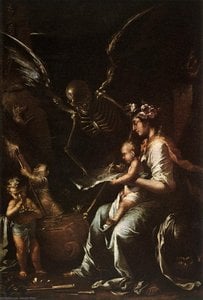
Democritus in Meditation

Salvator Rosa's 'Democritus in Meditation' captures the philosopher contemplating mortality amidst a somber landscape. A poignant etching reflecting on life’s transience, part of a series exploring human vanity and nature's power.

Entdecken Sie Salvator Rosa (1615-1673), italienischen Barockmaler, Dichter & Grafiker! Dramatische Landschaften & philosophische Kunst mit rebellischem Geist. Meisterwerke entdecken!

Handgefertigte Ölreproduktion

Handgemaltes Ölgemälde auf Leinwand in Ihrer Wunschgröße und mit Rahmen, auf Bestellung von unseren Künstlern angefertigt. ( Zum Druck wechseln Zum digitalen Bild wechseln)

P118B $10
P118H $10
P118W $10
P438Z $10
P508JH $12
P508YH $12
P805H $10
P805Z $10
P919BZ $10
P919G $10
P919XJ $10
P959ZH $10
P968JZ $12
W106C $8
W218G $10
W218JH $8
W218Y $10
W307PJ $10
W316G $10
W316PJ $8
W316Y $10
W398PJ $8
W4111J $10
W500HY $15
W500JH $15
W692G $12
W849H $8
W940BG $15
W953PJ $8

Standardformat
individuell anpassbar
CM
INCH

Wählen Sie aus unseren vordefinierten Formaten, die den ursprünglichen Proportionen des Kunstwerks entsprechen.

Breite
Höhe

Sie können Ihre eigenen Maße eingeben, um einen bestimmten Rahmen oder Platz auszufüllen. Wenn die gewählte Größe nicht den Proportionen des Originalbildes entspricht, werden wir das Kunstwerk entweder beschneiden oder das Gemälde durch zusätzliche, handgemalte Elemente erweitern. Ein digitales Mockup wird Ihnen zur Genehmigung zugesandt, bevor die Produktion beginnt.
Bitte beachten Sie, dass die Bildschirmvorschau nicht die tatsächliche Beschneidung oder Erweiterung widerspiegelt. Nur das Mockup zeigt die endgültige Komposition exakt an.
Obwohl Sondermaße verfügbar sind, empfehlen wir, eine Größe aus der vordefinierten Liste zu wählen, um die ursprünglichen Proportionen beizubehalten.

Beispiele für Anpassungsmöglichkeiten: Gesicht durch Kundenfoto ersetzen; Haustier hinzufügen (z. B. Katze durch Hund ersetzen); eine versteckte Nachricht im Hintergrund einfügen; Hintergrundlandschaft oder -elemente ändern.
Nach der Bestellung wird das WahooArt.com-Team dem Kunden Anweisungen per E-Mail zusenden und eine Mockup-Vorschau bereitstellen.

Weltweiter Versand () in nur 3 bis 4 Wochen statt der üblichen 5 Wochen. (23 September). Keine Kompromisse bei der Qualität.

why_choose_icon
Kostenloser weltweiter Expressversand
why_choose_icon
Hochwertige Leinenleinwand
why_choose_icon
Vollständiger Versicherungsschutz beim Versand
why_choose_icon
Zollgebühren-Rückerstattungsgarantie
why_choose_icon
Garantie für exakte Farbtreue
why_choose_icon
100-tägiges Rückgaberecht (nur bei Mängeln)
why_choose_icon
100% Geld-zurück-Garantie
why_choose_icon
Angebot für Mengenrabatt

Gesamtpreis

$ 272

reproduction

Democritus in Meditation

Reproduktionsmedium

Format der Reproduktion

-

Gesamtpreis

$ 272

Kurzübersicht

  • Influences:
    • Ribera
    • Poussin
  • Movement: Baroque
  • Year: 1662
  • Subject or theme: Philosophy, mortality
  • Notable elements: Philosopher, setting
  • Title: Democritus in Meditation
  • Artist: Salvator Rosa

Kunst-Quiz

Jede Frage hat nur eine richtige Antwort.

Frage 1:
What is the primary subject depicted in Salvator Rosa’s ‘Democritus in Meditation’?
Frage 2:
The painting is considered a companion piece to which other work by Rosa?
Frage 3:
According to the description, what is Democritus doing in the painting?
Frage 4:
What historical period does Salvator Rosa’s work primarily represent?
Frage 5:
Based on the image description, what elements contribute to the painting’s atmosphere?

Salvator Rosa’s “Democritus in Meditation”: A Portrait of Philosophical Doubt

Salvator Rosa's "Democritus in Meditation," painted around 1650-1651, is more than just a portrait; it’s a profound meditation on the nature of existence itself. This captivating work, now housed within the Metropolitan Museum of Art, offers a rare glimpse into the mind of the ancient Greek philosopher Democritus, rendered with Rosa's signature blend of dramatic realism and brooding introspection. The painting immediately draws the viewer in with its stark setting – a desolate landscape dominated by weathered stone, skeletal remains, and the looming presence of death. Democritus, seated upon a simple block, embodies a quiet despair, his head bowed as if wrestling with the fundamental questions of life and mortality. He’s not engaged in lively debate or philosophical discourse, but rather lost in solitary contemplation, a visual representation of the philosopher's core belief: that all things are ultimately composed of atoms moving randomly through an empty void.

A Masterpiece of Baroque Drama and Technique

Rosa’s masterful technique is evident throughout “Democritus in Meditation.” The artist employs a rich, dark palette—deep browns, grays, and blacks—to create a sense of somberness and decay. The lighting is dramatic, casting long shadows that emphasize the figure's isolation and vulnerability. Notice the meticulous detail with which Rosa renders the textures of the stone, the folds of Democritus’ cloak, and even the scattered bones – each element contributing to the painting’s overall sense of realism and weight. The use of etching with drypoint adds a subtle textural quality, enhancing the feeling of age and decay. Rosa's skill in capturing both the physical form and the psychological state of his subject is truly remarkable.

Symbolism and Philosophical Resonance

The painting’s symbolism is layered and deeply resonant. The setting itself—a graveyard or a desolate landscape—represents the inevitable passage of time and the fragility of human existence, directly reflecting Democritus' atomistic philosophy. The scattered bones serve as a stark reminder of mortality, while the discarded helmet and books suggest the futility of worldly pursuits. Even the bird soaring above Democritus can be interpreted symbolically – perhaps representing freedom from earthly concerns or simply an indifferent observer of human suffering. Rosa deliberately chose this subject matter to explore themes of skepticism, materialism, and the limitations of human knowledge—ideas central to Democritus’ thought.

Context within Rosa's Artistic World

“Democritus in Meditation” is part of a larger body of work by Salvator Rosa that often explored themes of moral philosophy, skepticism, and the relationship between humanity and nature. Rosa was known for his unconventional approach to art, frequently incorporating elements of satire, allegory, and even melodrama into his paintings. He deliberately challenged conventional artistic norms, rejecting the idealized beauty favored by many of his contemporaries. This painting is particularly interesting in relation to Rosa’s other works depicting Diogenes throwing away his bowl – a seemingly contradictory image that highlights the artist's complex relationship with both worldly success and philosophical detachment. Rosa himself was a man of contradictions—a flamboyant personality who often engaged in scandalous behavior, yet also possessed a deep sense of moral seriousness.

Today, “Democritus in Meditation” continues to captivate viewers with its powerful depiction of human doubt and the enduring questions of philosophy. It’s a testament to Rosa's artistic genius and his ability to infuse his paintings with profound psychological depth. WahooArt offers high-quality reproductions that allow you to experience this iconic work of art in your own home or office, bringing a touch of philosophical contemplation to any space.


Biografie des Künstlers

Frühes Leben und Ausbildung

Salvator Rosa, ein italienischer Barockmaler, Dichter und Grafiker, wurde am 20. Juni oder 21. Juli 1615 in Arenella, Neapel, geboren. Seine Mutter, Giulia Greca Rosa, entstammte einer griechischen Familie aus Sizilien. Trotz seines Vaters Wunsches, dass er Jurist oder Priester wird, zeigte Salvator schon früh eine Vorliebe für die Künste.

Künstlerische Karriere

Salvators künstlerische Karriere war geprägt von seinem unkonventionellen und extravaganten Stil, der ihn von seinen Zeitgenossen abhob. Er war in Neapel, Rom und Florenz tätig und seine Arbeit wurde sowohl vom Naturalismus des Ribera als auch vom Klassizismus des Poussin beeinflusst. Dennoch weigerte er sich, sich an einen bestimmten Stil oder eine bestimmte Bewegung zu binden.
  • Pythagoras, der aus der Unterwelt hervorkommt (Kimbell Art Museum, Fort Worth, USA), eines seiner berühmtesten Werke, zeigt seine einzigartige Mischung aus philosophischen und künstlerischen Themen.
  • Seine Taufe des Eunuchen (Chrysler Museum of Art, Norfolk, USA) demonstriert seine Fähigkeit, selbst in kleinere biblische Geschichten dramatische Elemente einzufügen.

Einflüsse und Vermächtnis

Salvators Werk hatte einen bedeutenden Einfluss auf die Entwicklung der Barockkunst. Sein Einfluss ist in den Werken späterer Künstler wie Luca Giordano zu erkennen, der die Grenzen künstlerischen Ausdrucks weiter verschob. Wichtige Links: Salvator Rosas Profil auf WahooArt Wikipedia: Salvator Rosa Pythagoras, der aus der Unterwelt hervorkommt auf WahooArt

Entwicklung und Bedeutung

Salvator Rosa war ein Rebell gegen die Konventionen seiner Zeit. Seine Landschaften waren oft wild und ungezähmt, seine Figuren dramatisch dargestellt und seine Kompositionen dynamisch. Er schuf Werke, die sowohl religiöse als auch mythologische Themen behandelten, aber immer mit einer persönlichen Note der Rebellion und des Zweifelhaften. Er war ein Pionier in der Darstellung von Landschaften als eigenständige Elemente seiner Gemälde, nicht nur als Kulisse für Figuren. Seine Arbeiten spiegeln oft eine pessimistische Weltsicht wider, die sich in düsteren Farben und dramatischen Szenarien manifestiert.

Schlussfolgerung

Salvators Leben und Werk faszinieren Kunstliebhaber und Historiker gleichermaßen bis heute. Sein unkonventioneller Stil und seine ständige Rebellion gegen die Normen seiner Zeit haben seinen Platz in den Annalen der Barockkunst gefestigt. Als Maler, Dichter und Grafiker bleibt er eine enigmatische Figur, und seine Arbeit inspiriert weiterhin neue Generationen von Künstlern und Kunstenthusiasten. Kimbell Art Museum, Chrysler Museum of Art (Museumsnamen)
Salvator Rosa

Salvator Rosa

1615 - 1673 , Italien

Eckdaten zum Künstler

  • Bemerkenswerte Kunstwerke:
    • Pythagoras entsteigt der Unterwelt
    • Die Taufe des Eunuchen
  • Geburtsdatum: 20./21. Juni 1615
  • Geburtsort (Stadt, Land): Arenella, Italien
  • Künstler Oder Bewegungen, Die Von Diesem Künstler Beeinflusst Wurden: ['Luca Giordano']
  • Künstler, Die Diesen Künstler Beeinflussten:
    • Ribera
    • Poussin
  • Künstlerische Bewegung/Stil: Barockmalerei
  • Nationalität: Italienisch
  • Sterbedatum: 1673
  • Vollständiger Name: Salvator Rosa
Entdecken Sie Kunstwerke, die nach Themen, Stilen und Merkmalen sortiert sind.