Salvador Dalí: Ein Leben im Surrealismus
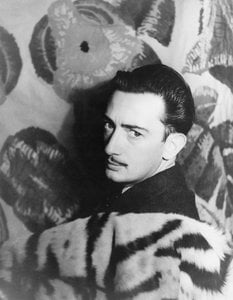
Salvador Domingo Felipe Jacinto Dalí i Domènech, Marquis de Dalí de Púbol, bekannt weltweit als Salvador Dalí, war ein spanischer surrealistischer Maler, der am 11. Mai 1904 in Figueres, Spanien, geboren wurde. Er starb am 23. Januar 1989 und hinterließ ein Vermächtnis, das weiterhin die Aufmerksamkeit und Herausforderung von Publikum auf der ganzen Welt erregt.
Frühes Leben und Ausbildung
Dalís frühes Leben war durch eine komplexe Beziehung zu seinem Vater geprägt, die seine künstlerischen Themen und sein Persona maßgeblich beeinflusste. Er zeigte bereits in jungen Jahren künstlerisches Talent und erhielt eine formale Ausbildung an der San Fernando Academy of Fine Arts in Madrid. Ein entscheidender Moment ereignete sich im Alter von 16 Jahren, als er moderne Malerei entdeckte, was ein intensives Interesse auslöste, das zu seiner ersten öffentlichen Ausstellung im Jahr 1919 führte.
Künstlerische Entwicklung und Einflüsse
Dalís künstlerischer Weg war eine dynamische Entwicklung, die von mehreren Schlüsselinflüssen geprägt war:
- Kubismus: Lieferte eine Grundlage für die Dekonstruktion von Formen und Perspektiven.
- Dada: Einführung in die Prinzipien der Anti-Kunst und die Herausforderung konventioneller Ästhetik.
- Pablo Picasso: Eine verehrte Persönlichkeit, mit der er in Paris traf und die seine künstlerische Richtung maßgeblich beeinflusste.
Seine Reise nach Paris im Jahr 1926 erwies sich als entscheidend und tauchte ihn ein in den aufkeimenden Surrealismus und verband ihn mit führenden Künstlern seiner Zeit. Er wurde schnell zu einer zentralen Figur innerhalb der Gruppe.
Der Aufstieg des Surrealismus und Dalís einzigartiger Stil
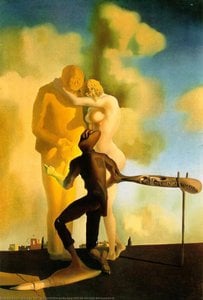
Dalís Beitrag zum Surrealismus war nicht nur Teilnahme, sondern eine radikale Neudefinition seiner Möglichkeiten. Er entwickelte seine Signaturmethode „paranoïa-kritische Methode“, die das selbstinduzierte Erleben von Paranoia beinhaltete, um unbewusste Bilder freizusetzen und sie in Kunst zu übersetzen. Dieser Ansatz ermöglichte es ihm, bizarre, traumartige Landschaften zu schaffen, die von schmelzenden Uhren, verzerrten Figuren und symbolischen Objekten bevölkert sind – Markenzeichen seines sofort erkennbaren Stils.
Die Persistenz der Erinnerung (1931) ist wahrscheinlich Dalís berühmtestes Werk, das die surrealistische Erforschung von Zeit, Gedächtnis und Verfall durch seine ikonischen Bilder verkörpert.
Wichtige Werke und künstlerische Themen
Dalís produktives Leben produzierte einen umfangreichen Werkschatz, der Malerei, Skulptur, Film (Zusammenarbeit mit Alfred Hitchcock und Walt Disney) und Design umfasst. Einige bemerkenswerte Werke sind:
- Juliet's Tomb – Eine tiefgreifende persönliche Auseinandersetzung mit Verlust und Erinnerung.
- Mannequin (Barcelona Mannequin) - Reflektiert seine Faszination für Künstlichkeit und Identität.
- Landschaft mit Fliegen – Eine beunruhigende Darstellung von Verfall und Sterblichkeit.
- Studie für 'Woman Undressing' – Erkundet Themen der Sexualität und Wahrnehmung.
- Der Engelschor von Gala - Zeigt meisterhafte Technik und symbolische Sprache.
Wiederkehrende Themen in Dalís Kunst sind: Zeit, Gedächtnis, Verfall, Sexualität, Religion, Wissenschaft und der Unterbewusstsein. Seine Werke zeigen oft Ameisen, Eier, Krücken, Schubladen und schmelzende Objekte – alles mit persönlicher und symbolischer Bedeutung versehen.
Spätere Jahre und Vermächtnis
Dalí setzte seine Schaffenskraft und Ausstellungen sein Leben lang fort, doch seine späteren Jahre waren von zunehmender Exzentrik und kommerziellen Unternehmungen geprägt. Er heiratete Gala Éluard im Jahr 1934, eine Beziehung, die seinen Kunstschaffen tiefgreifend beeinflusste und ihm unerschütterliche Unterstützung bot. Gala diente als Muse und Geschäftsmanagerin.
Dalí starb 1989 im Alter von 84 Jahren. Sein Vermächtnis ist immens. Er gilt weiterhin als einer der bekanntesten und einflussreichsten Künstler des 20. Jahrhunderts und hat Mode, Film, Werbung und Populärkultur beeinflusst. Das Salvador Dalí Museum in St. Petersburg, Florida, beherbergt eine umfangreiche Sammlung, die sein dauerhaftes Ansehen widerspiegelt.
Historische Bedeutung
Salvador Dalí überstieg die Grenzen der Kunst und wurde zu einem kulturellen Idol. Seine Erforschung des Unterbewusstseins, kombiniert mit seiner technischen Meisterschaft und seiner auffälligen Persönlichkeit, festigte seinen Platz als wahrer Visionär und Meister des Surrealismus. Er inspiriert weiterhin Künstler und fesselt das Publikum auf der ganzen Welt.



 In echtem Maßstab anzeigen
 Handgemalte Reproduktion kaufen
 Versenden als Grußkarte
 Teilen
 Details anzeigen

 Herunterladen
 Ähnliche Objekte
 Röntgenaufnahme
 Diashow
 Besucherstatistiken

 Mehr anzeigen






































 Die Glasoption ist nur für Größen unter 110 cm verfügbar.