In echtem Maßstab anzeigen In AR an der Wand sehen Zum Druck wechseln Zum digitalen Bild wechseln Versenden als Grußkarte
Details anzeigen Leitfaden öffnen Zu Favoriten hinzufügen Herunterladen Ähnliche Objekte Röntgenaufnahme Diashow Besucherstatistiken

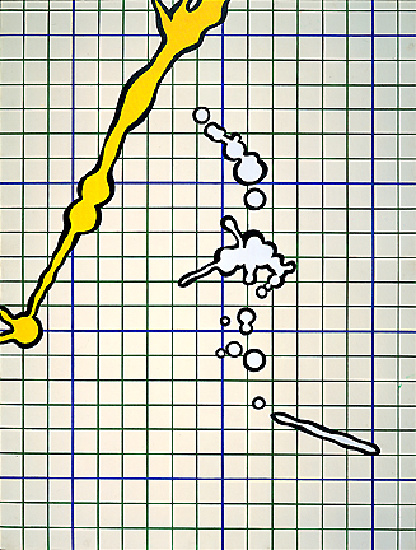
Yellow and withe drip

Bold Pop Art by Roy Lichtenstein captures a striking yellow drip against a white canvas—a vibrant testament to American art history. Explore this iconic 1966 masterpiece and bring its playful aesthetic into your home.

Roy Lichtenstein (1923-1997) war eine einflussreiche amerikanische Pop-Art-Figur, bekannt für seine ikonischen Gemälde im Stil von Comic-Büchern, die Konsumismus und Fine Art erforschen. Entdecken Sie 'Whaam!', 'Drowning Girl' und mehr.

Die auf dieser Seite dargestellten Kunstwerke sind urheberrechtlich geschützt, was bedeutet, dass wir keine identische Reproduktion rechtmäßig erstellen oder verkaufen dürfen. Dieser Schutz wird durch internationale Abkommen wie die Berner Übereinkunft und durch nationale Gesetze, einschließlich derer, die von den ... festgelegt wurden US-Urheberrecht – Titel 17.

Als respektvolle und rechtlich einwandfreie Alternative bieten wir individuelle, handgemalte Kunstwerke an, die vom Original inspiriert sind. Unsere geschickten und professionellen Künstler studieren sorgfältig den Stil, die Stimmung und das künstlerische Wesen des Originals, um ein neues, einzigartiges Werk zu schaffen, das dasselbe Gefühl hervorruft – während es zugleich eine eigenständige Originalschöpfung bleibt.

Diese Methode entspricht vollumfänglich den Urheberrechtsbestimmungen, da sie keine Kopie oder Vervielfältigung des geschützten Kunstwerks darstellt. Stattdessen handelt es sich um eine kreative Neuinterpretation – ein neues Gemälde, das vom Original inspiriert, aber nicht identisch mit ihm ist.

Handgefertigte Ölreproduktion

Handgemaltes Ölgemälde auf Leinwand in Ihrer Wunschgröße und mit Rahmen, auf Bestellung von unseren Künstlern angefertigt. ( Zum Druck wechseln Zum digitalen Bild wechseln)

Corner sample of the P118B picture frame: moulded polystyrene, 5 cm wide and 3 cm thick
P118B 10
Corner sample of the P118H picture frame: moulded polystyrene, 5 cm wide and 3 cm thick
P118H 10
Corner sample of the P118W picture frame: moulded polystyrene, 5 cm wide and 3 cm thick
P118W 10
Corner sample of the P438Z picture frame: moulded polystyrene, 5.5 cm wide and 3.5 cm thick
P438Z 10
Corner sample of the P508JH picture frame: moulded polystyrene, 7 cm wide and 3.5 cm thick
P508JH 12
Corner sample of the P508YH picture frame: moulded polystyrene, 7 cm wide and 3.5 cm thick
P508YH 12
Corner sample of the P805H picture frame: moulded polystyrene, 5 cm wide and 3.5 cm thick
P805H 10
Corner sample of the P805Z picture frame: moulded polystyrene, 5 cm wide and 3.5 cm thick
P805Z 10
Corner sample of the P919BZ picture frame: moulded polystyrene, 7 cm wide and 3.5 cm thick
P919BZ 10
Corner sample of the P919G picture frame: moulded polystyrene, 7 cm wide and 3.5 cm thick
P919G 10
Corner sample of the P919XJ picture frame: moulded polystyrene, 7 cm wide and 3.5 cm thick
P919XJ 10
Corner sample of the P959ZH picture frame: moulded polystyrene, 5 cm wide and 3 cm thick
P959ZH 10
Corner sample of the P968JZ picture frame: moulded polystyrene, 6 cm wide and 4 cm thick
P968JZ 12
Corner sample of the W106C picture frame: solid wood, 5 cm wide and 3 cm thick
W106C 8
Corner sample of the W218G picture frame: solid wood, 5 cm wide and 3 cm thick
W218G 10
Corner sample of the W218JH picture frame: solid wood, 5 cm wide and 3 cm thick
W218JH 8
Corner sample of the W218Y picture frame: solid wood, 5 cm wide and 3 cm thick
W218Y 10
Corner sample of the W307PJ picture frame: solid wood, 6 cm wide and 3 cm thick
W307PJ 10
Corner sample of the W316G picture frame: solid wood, 6 cm wide and 3 cm thick
W316G 10
Corner sample of the W316PJ picture frame: solid wood, 6 cm wide and 3 cm thick
W316PJ 8
Corner sample of the W316Y picture frame: solid wood, 6 cm wide and 3 cm thick
W316Y 10
Corner sample of the W398PJ picture frame: solid wood, 5 cm wide and 3 cm thick
W398PJ 8
Corner sample of the W4111J picture frame: solid wood, 6.5 cm wide and 3.5 cm thick
W4111J 10
Corner sample of the W500HY picture frame: solid wood, 7 cm wide and 5 cm thick
W500HY 15
Corner sample of the W500JH picture frame: solid wood, 7 cm wide and 5 cm thick
W500JH 15
Corner sample of the W692G picture frame: solid wood, 8 cm wide and 4 cm thick
W692G 12
Corner sample of the W849H picture frame: solid wood, 5 cm wide and 3 cm thick
W849H 8
Corner sample of the W940BG picture frame: solid wood, 7.5 cm wide and 4.5 cm thick
W940BG 15
Corner sample of the W953PJ picture frame: solid wood, 6 cm wide and 3.5 cm thick
W953PJ 8

Standardformat
individuell anpassbar
CM
INCH

Wählen Sie aus unseren vordefinierten Formaten, die den ursprünglichen Proportionen des Kunstwerks entsprechen.

Breite
Höhe

Sie können Ihre eigenen Maße eingeben, um einen bestimmten Rahmen oder Platz auszufüllen. Wenn die gewählte Größe nicht den Proportionen des Originalbildes entspricht, werden wir das Kunstwerk entweder beschneiden oder das Gemälde durch zusätzliche, handgemalte Elemente erweitern. Ein digitales Mockup wird Ihnen zur Genehmigung zugesandt, bevor die Produktion beginnt.
Bitte beachten Sie, dass die Bildschirmvorschau nicht die tatsächliche Beschneidung oder Erweiterung widerspiegelt. Nur das Mockup zeigt die endgültige Komposition exakt an.
Obwohl Sondermaße verfügbar sind, empfehlen wir, eine Größe aus der vordefinierten Liste zu wählen, um die ursprünglichen Proportionen beizubehalten.

Beispiele für Anpassungsmöglichkeiten: Gesicht durch Kundenfoto ersetzen; Haustier hinzufügen (z. B. Katze durch Hund ersetzen); eine versteckte Nachricht im Hintergrund einfügen; Hintergrundlandschaft oder -elemente ändern.
Nach der Bestellung wird das WahooArt.com-Team dem Kunden Anweisungen per E-Mail zusenden und eine Mockup-Vorschau bereitstellen.

Weltweiter Versand () in nur 3 bis 4 Wochen statt der üblichen 5 Wochen. (10 Oktober). Keine Kompromisse bei der Qualität.

Kostenloser weltweiter Expressversand
Hochwertige Leinenleinwand
Vollständiger Versicherungsschutz beim Versand
Zollgebühren-Rückerstattungsgarantie
Garantie für exakte Farbtreue
100-tägiges Rückgaberecht (nur bei Mängeln)
100% Geld-zurück-Garantie
Angebot für Mengenrabatt

Gesamtpreis

€ 234

Yellow and withe drip

Reproduktionsmedium

Format der Reproduktion

-

Gesamtpreis

€ 234

Kurzübersicht

  • Year: 1966
  • Movement: Pop Art
  • Artistic style: Pop Art / Commercial Illustration
  • Subject or theme: Rejection of academic conventions
  • Title: Yellow and White Drip

A Bold Statement Against Tradition: The Vibrancy of Lichtenstein’s Vision

In the mid-1960s, the art world stood at a precipice, caught between the heavy, emotional shadows of Abstract Expressionism and the bright, neon-soaked reality of a burgeoning consumer culture. It was within this electric tension that Roy Lichtenstein unveiled "Yellow and White Drip," a work that would become a cornerstone of the Pop Art movement. Created in 1966, this painting is far more than a mere visual experiment; it is a deliberate, masterful rejection of academic conventions. Where previous generations sought depth through meticulous brushwork and soulful realism, Lichtenstein looked toward the mechanical, the commercial, and the everyday. He invited the viewer to find beauty not in the sublime, but in the graphic precision of the printing press and the ubiquitous language of mass media.

The composition itself serves as a striking dialogue between order and spontaneity. At first glance, the eye is drawn to the vibrant, energetic splash of yellow that cuts across the pristine white expanse. This "drip" suggests a moment of sudden movement, yet it is rendered with a calculated, almost clinical stillness. Interspersed within this landscape are geometric elements—green squares that ground the composition, providing a rhythmic structure that prevents the eye from wandering too far from the central motif. For the collector or interior designer, this piece offers a sophisticated balance; it possesses the raw energy of an action painting while maintaining the clean, structured aesthetic essential for modern, high-end decor.

The Alchemy of the Halftone: Technique and Visual Language

To truly appreciate "Yellow and White Drip," one must look closer at the skin of the painting. Lichtenstein’s genius lay in his ability to mimic the industrial processes of advertising and comic strips, elevating "low" culture to the status of fine art. He utilized the halftone print technique—a method of using tiny, varying densities of dots to simulate shading and texture. This choice was a revolutionary act of deconstruction. By replacing the artist's unique hand with a simulated mechanical dot, he challenged the very notion of the "original" masterpiece. The resulting effect is remarkably flat and stylized, creating a surface that feels both incredibly modern and timelessly iconic.

This technical precision creates a fascinating emotional paradox. While the subject matter—a simple drip and geometric shapes—appears minimalist, the execution is dense with cultural meaning. The stark contrast between the saturated yellow and the clinical white background amplifies the visual impact, making the work an ideal focal point for any curated space. It demands attention through its clarity and brightness, yet it does not overwhelm; rather, it provides a crisp, intellectual energy that can transform a room from a mere living space into a gallery of contemporary thought.

A Legacy of Pop: Symbolism and Contemporary Appeal

Beyond the pigments and dots, "Yellow and White Drip" embodies the anxieties and aspirations of the mid-century landscape. It reflects a world becoming increasingly interconnected through mass production and shared visual symbols. Lichtenstein’s work acts as a mirror to our own era of digital saturation, where the boundaries between reality and mediated imagery continue to blur. The painting symbolizes a liberation from elitist hierarchies, suggesting that art can be found in the most commonplace fragments of our visual landscape.

For those seeking to bring a piece of art history into their homes or professional design projects, a high-quality reproduction of this masterpiece offers an unparalleled opportunity. It is a work that speaks to the bold, the brave, and the aesthetically discerning. Whether placed in a minimalist loft or a vibrant contemporary office, "Yellow and White Drip" serves as a constant reminder of the moment when art stopped looking inward at the soul and started looking outward at the electric, pulsating reality of modern life.

Fragen & Antworten

Sind die Farben von "Yellow and withe drip" von Roy Lichtenstein leuchtend oder gedämpft?

Die Farben von "Yellow and withe drip" von Roy Lichtenstein weisen eine Muted Sättigung mit einer Balanced Intensität auf.

Kann ich Augmented Reality nutzen, um "Yellow and withe drip" von Roy Lichtenstein in meinem Raum zu sehen?

"Yellow and withe drip" von Roy Lichtenstein kann mithilfe der AR-Vorschau-Seite des Kunstwerks in Ihrem eigenen Raum mit Augmented Reality auf einem kompatiblen Gerät an Ihrer Wand vorab betrachtet werden.

Wie lässt sich "Yellow and withe drip" von Roy Lichtenstein in der Inneneinrichtung verwenden?

"Yellow and withe drip" von Roy Lichtenstein wird für Accent empfohlen, idealerweise in einem Living Room. Verwendung und Raumgestaltung geben gemeinsam Aufschluss darüber, wo eine Reproduktion am besten zur Geltung kommt.

In welchem Jahr wurde "Yellow and withe drip" von Roy Lichtenstein geschaffen?

Die Entstehung von "Yellow and withe drip" von Roy Lichtenstein wird auf 1966 datiert.

Wer ist der Künstler hinter "Yellow and withe drip"?

"Yellow and withe drip" wurde von Roy Lichtenstein geschaffen. Die Informationen auf dieser Seite beschreiben das Originalwerk von Roy Lichtenstein.

Wie alt war Roy Lichtenstein, als „Yellow and withe drip“ geschaffen wurde?

Als "Yellow and withe drip" im Jahr 1966 entstand, war Roy Lichtenstein – geboren 1923 – 43 Jahre alt.

Für welchen Raum wird "Yellow and withe drip" von Roy Lichtenstein empfohlen?

"Yellow and withe drip" von Roy Lichtenstein wird für ein Living Room empfohlen. Dieser Vorschlag basiert auf dem Motiv, den Farben und der Stimmung des Werkes.


Biografie des Künstlers

frühes Leben und Ausbildung

Roy Fox Lichtenstein, ein prominenter amerikanischer Pop-Künstler, wurde am 27. Oktober 1923 in New York City geboren. Er wuchs in einer wohlhabenden jüdischen Familie auf, mit seinem Vater als Immobilienmakler und seiner Mutter als Hausfrau. Lichtensteins Interesse an Kunst und Design begann während seiner Schulzeit als Hobby.

Künstlerische Karriere

Nach Abschluss seiner Schulausbildung am Dwight School im Jahr 1940 besuchte Lichtenstein die Art Students League of New York unter der Anleitung von Reginald Marsh. Er studierte anschließend einen Abschluss in Fine Arts an der Ohio State University, der durch eine dreijährige Verlegung in das Militär während des Zweiten Weltkriegs unterbrochen wurde.
  • Look Mickey (1961, National Gallery of Art, Washington, D.C.), eines von Lichtensteins frühesten Pop-Kunstwerke, markierte den Beginn seiner einflussreichen Karriere.
  • Seine Arbeit war stark von Werbe- und Comic-Stilen beeinflusst, darunter bedeutende Werke wie Wham!, Drowning Girl und Oh, Jeff...I Love You Too...But...
  • Lichtensteins teuerstes Werk, Masterpiece, wurde im Januar 2017 für 165 Millionen Dollar verkauft.

Lehre und Einflüsse

Lichtenstein lehrte an verschiedenen Institutionen, darunter die State University of New York at Oswego und die Rutgers University. Seine Arbeit war von Allan Kaprow beeinflusst, einem Kollegen an der Rutgers University, der sein Interesse an proto-Pop-Bildern wiederbelebte. Bekannte Ausstellungen:
  • The Museum Chambre de Commerce (Toulouse, Frankreich), das verschiedene Kunstwerke aus der Pop-Art-Bewegung zeigte.
  • Lichtensteins Werk wurde in der Leo Castelli Gallery in New York City ausgestellt, wobei seine erste Einzelausstellung 1962 vor der Eröffnung vollständig von einflussreichen Sammlern gekauft wurde.

Vermächtnis und Einfluss

Roy Lichtenstein starb am 29. September 1997 und hinterließ ein Vermächtnis als eine führende Figur in der Pop-Art-Bewegung. Seine Arbeit wird weiterhin für ihre innovative Verschmelzung von Hoch- und Populärkultur gefeiert, wodurch sie einem breiteren Publikum zugänglich gemacht wird. Referenzen:
Roy Lichtenstein

Roy Lichtenstein

1923 - 1997 , Vereinigte Staaten von Amerika

Eckdaten zum Künstler

  • Beeinflusste Künstler:
    • Reginald Marsh
    • Allan Kaprow
  • Bemerkenswerte Werke:
    • Look Mickey
    • Whaam!
    • Drowning Girl
    • Masterpiece
  • Geburtsdatum: 27. Oktober 1923
  • Geburtsort: Manhattan, USA
  • Künstlerische Richtung: Pop Art
  • Nationalität: Amerikanisch
  • Todatum: 29. September 1997
  • Vollständiger Name: Roy Lichtenstein
Entdecken Sie Kunstwerke, die nach Themen, Stilen und Merkmalen sortiert sind.