Mary Altarpiece by Rogier van der Weyden: A Window Into Burgundian Spirituality
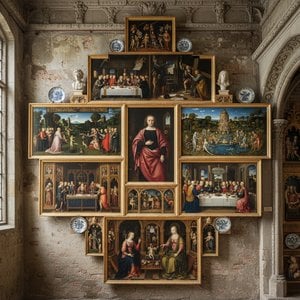
Rogier van der Weyden’s “Mary Altarpiece,” completed in 1445, stands as a monumental achievement of Early Netherlandish painting and embodies the profound spiritual convictions that characterized the Burgundian court. More than just a depiction of biblical narrative, it's an immersive experience designed to evoke contemplation and reverence—a testament to Van der Weyden’s unparalleled mastery of detail and emotional expression.
Composition & Style: The altarpiece comprises four panels meticulously crafted from oak wood and adorned with vibrant oil pigments. Its formal structure adheres to the conventions of Gothic art, prioritizing clarity and hierarchy. Each panel presents a distinct scene from Jesus’s life—his birth, crucifixion, ascension, and visitation—creating a chronological journey for the viewer's eye. Van der Weyden skillfully employs geometric principles to guide the gaze, emphasizing the central figure of Mary within each composition.
Technique & Detail: What distinguishes “Mary Altarpiece” is Van der Weyden’s revolutionary approach to realism. Unlike preceding artists who relied on stylized representations, he painstakingly recreated textures and fabrics with astonishing accuracy—from the delicate folds of Mary's robe to the rough surface of Jerusalem stone. The artist achieved this level of detail through layering thin glazes of pigment upon each other, a technique known as glazing, which allowed for subtle gradations of color and luminosity. This meticulous attention to craftsmanship speaks volumes about Van der Weyden’s dedication to capturing not merely what he saw but also what he felt.
Historical Context & Symbolism: Created during the reign of Philip the Good—a staunch supporter of humanist ideals—the altarpiece reflects the broader cultural landscape of its time. The Burgundian court embraced a renewed interest in classical art and philosophy, influencing artistic sensibilities. Within the biblical narrative itself, “Mary Altarpiece” operates on multiple symbolic levels. Mary embodies humility, compassion, and maternal devotion—qualities considered paramount virtues during the medieval period. Her serene countenance and graceful posture convey an aura of spiritual purity, inviting viewers to contemplate themes of faith and redemption.
Emotional Impact: Viewing “Mary Altarpiece” today evokes a powerful sense of awe and wonder. The artist’s masterful rendering of human emotion—particularly Mary's sorrowful gaze during the Pietà panel—resonates across centuries, demonstrating Van der Weyden’s ability to transcend mere visual representation and communicate profound spiritual truths. It remains an enduring symbol of Christian piety and artistic excellence—a masterpiece that continues to inspire admiration and contemplation.
- Key Features: Four panels depicting Jesus's life cycle
- Medium: Oil on Oak Panel
- Artist: Rogier van der Weyden (1400-1464)
- Location: Gemäldegalerie, Berlin
- Style: Early Netherlandish Painting
Explore high-quality reproductions of “Mary Altarpiece” at WahooArt.com and elevate your interior design with this iconic artwork.



 In echtem Maßstab anzeigen
 Zum Druck wechseln
 Versenden als Grußkarte
 Teilen
 Details anzeigen
 Leitfaden

 Herunterladen
 Ähnliche Objekte
 Röntgenaufnahme
 Diashow
 Besucherstatistiken


 Mehr anzeigen






































 Die Glasoption ist nur für Größen unter 110 cm verfügbar.