Vorschau anzeigen In AR ansehen Handgemalte Reproduktion bestellen Zum digitalen Bild wechseln Versenden
Details anzeigen Leitfaden Zu Favoriten hinzufügen Herunterladen Ähnliche Objekte Röntgenaufnahme Diashow Fragen & Antworten Presentation Statistiken

Peter Verleugnet Christus

Abmessungen
154.0 x 169.0 cm

Erleben Sie Rembrandts 'Peter Verleugnet Christus'! Ein dramatisches Barock-Meisterwerk, das intensive Emotionen und meisterhafte Lichtstufung zeigt. Entdecken Sie dieses ikonische niederländische Goldäuge Gemälde.

Erkunden Sie Rembrandt van Rijn (1606-1669), den niederländischen Barockmeister des Lichts und der Schatten! Entdecken Sie ikonische Selbstporträts, biblische Szenen und bahnbrechende Radierungen. Erleben Sie die goldene Ära der Niederlande.

Giclée / Kunstdruck

Giclée- oder Leinwanddruck in Museumsqualität mit schneller Produktion und flexiblen Veredelungsoptionen. ( Handgemalte Reproduktion bestellen Zum digitalen Bild wechseln)

Corner sample of the P118B picture frame: formgepresstes Polystyrol, 5 cm wide and 3 cm thick
P118B €10
Corner sample of the P118H picture frame: formgepresstes Polystyrol, 5 cm wide and 3 cm thick
P118H €10
Corner sample of the P118W picture frame: formgepresstes Polystyrol, 5 cm wide and 3 cm thick
P118W €10
Corner sample of the P438Z picture frame: formgepresstes Polystyrol, 5.5 cm wide and 3.5 cm thick
P438Z €10
Corner sample of the P508JH picture frame: formgepresstes Polystyrol, 7 cm wide and 3.5 cm thick
P508JH €12
Corner sample of the P508YH picture frame: formgepresstes Polystyrol, 7 cm wide and 3.5 cm thick
P508YH €12
Corner sample of the P805H picture frame: formgepresstes Polystyrol, 5 cm wide and 3.5 cm thick
P805H €10
Corner sample of the P805Z picture frame: formgepresstes Polystyrol, 5 cm wide and 3.5 cm thick
P805Z €10
Corner sample of the P919BZ picture frame: formgepresstes Polystyrol, 7 cm wide and 3.5 cm thick
P919BZ €10
Corner sample of the P919G picture frame: formgepresstes Polystyrol, 7 cm wide and 3.5 cm thick
P919G €10
Corner sample of the P919XJ picture frame: formgepresstes Polystyrol, 7 cm wide and 3.5 cm thick
P919XJ €10
Corner sample of the P959ZH picture frame: formgepresstes Polystyrol, 5 cm wide and 3 cm thick
P959ZH €10
Corner sample of the P968JZ picture frame: formgepresstes Polystyrol, 6 cm wide and 4 cm thick
P968JZ €12
Corner sample of the W106C picture frame: Massivholz, 5 cm wide and 3 cm thick
W106C €8
Corner sample of the W218G picture frame: Massivholz, 5 cm wide and 3 cm thick
W218G €10
Corner sample of the W218JH picture frame: Massivholz, 5 cm wide and 3 cm thick
W218JH €8
Corner sample of the W218Y picture frame: Massivholz, 5 cm wide and 3 cm thick
W218Y €10
Corner sample of the W307PJ picture frame: Massivholz, 6 cm wide and 3 cm thick
W307PJ €10
Corner sample of the W316G picture frame: Massivholz, 6 cm wide and 3 cm thick
W316G €10
Corner sample of the W316PJ picture frame: Massivholz, 6 cm wide and 3 cm thick
W316PJ €8
Corner sample of the W316Y picture frame: Massivholz, 6 cm wide and 3 cm thick
W316Y €10
Corner sample of the W398PJ picture frame: Massivholz, 5 cm wide and 3 cm thick
W398PJ €8
Corner sample of the W4111J picture frame: Massivholz, 6.5 cm wide and 3.5 cm thick
W4111J €10
Corner sample of the W500HY picture frame: Massivholz, 7 cm wide and 5 cm thick
W500HY €15
Corner sample of the W500JH picture frame: Massivholz, 7 cm wide and 5 cm thick
W500JH €15
Corner sample of the W692G picture frame: Massivholz, 8 cm wide and 4 cm thick
W692G €12
Corner sample of the W849H picture frame: Massivholz, 5 cm wide and 3 cm thick
W849H €8
Corner sample of the W940BG picture frame: Massivholz, 7.5 cm wide and 4.5 cm thick
W940BG €15
Corner sample of the W953PJ picture frame: Massivholz, 6 cm wide and 3.5 cm thick
W953PJ €8

Standardformat
individuell anpassbar
CM
INCH

Wählen Sie aus unseren vordefinierten Formaten, die den ursprünglichen Proportionen des Kunstwerks entsprechen.

Breite
Höhe

Geben Sie die benötigte Breite und Höhe an, damit der Druck perfekt in Ihren Rahmen oder an Ihre Wand passt. Ein Druck kann nur beschnitten, aber niemals größer als das Originalbild angefertigt werden; daher verliert ein Format mit anderen Proportionen einen Teil des Bildes. Wir senden Ihnen ein digitales Mockup zur Freigabe, bevor wir den Druck ausführen. Das auf dieser Seite gezeigte Bild zeigt nicht den tatsächlichen Beschnitt – dies ist nur im Mockup ersichtlich.

Weltweiter Versand () innerhalb von 2 Wochen statt der üblichen 4/5 Wochen. (5 November)

Kostenloser weltweiter Expressversand
Hochwertige Leinenleinwand
Umfassender Versicherungsschutz beim Versand
Zollgebühren-Rückerstattungsgarantie
Garantie für exakte Farbtreue
100 Tage Rückgaberecht (nur bei Mängeln)
100% Geld-zurück-Garantie
Mengenrabatt verfügbar

Gesamtpreis

€ 62

Peter Verleugnet Christus

Giclée / Kunstdruck

Format der Reproduktion

-

Endpreis

€ 62

Eckdaten

  • Medium: Öl auf Leinwand
  • Artist: Rembrandt Harmenszoon van Rijn
  • Title: Peter denouncing Christ
  • Subject or theme: Biblischer Bericht; Glaubensprüfung
  • Artistic style: Psychologisch Realismus
  • Notable elements or techniques: Chiaroscuro; Impasto

Kunst-Quiz

Jede Frage hat nur eine richtige Antwort.

Frage 1:
¿Quién pintó esta obra maestra?
Frage 2:
¿En qué museo se encuentra actualmente "La Denuncia de Pedro"?
Frage 3:
¿Qué técnica artística predominante utiliza Rembrandt en esta pintura?
Frage 4:
¿Cuál es el significado simbólico de los dos pájaros presentes en la obra?
Frage 5:
¿En qué período histórico fue creada esta pintura?

A Moment of Crisis: Unveiling Rembrandt’s “Peter Denouncing Christ”

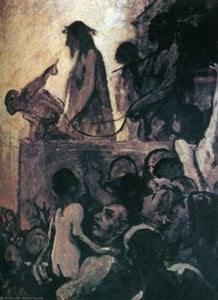
Rembrandt van Rijn's 1660 masterpiece, *Peter Denouncing Christ*, is a powerful and psychologically complex depiction of a pivotal biblical moment. Housed in the Rijksmuseum, this large-scale oil painting (154 x 169 cm) transcends mere illustration to become a profound exploration of faith, betrayal, and human fallibility. It captures the dramatic scene where Saint Peter, one of Jesus’s closest apostles, denies knowing Christ three times before the cock crows – as prophesied by Jesus himself. Rembrandt doesn't focus on grand spectacle; instead, he presents an intensely intimate and emotionally charged confrontation. Peter is shown vehemently pointing away from a calmly resolute Jesus, surrounded by a diverse group of onlookers. Their reactions range from shocked disbelief to indifferent curiosity, creating a palpable sense of tension and moral ambiguity. The composition isn’t about glorifying faith but dissecting the fragility of human conviction under pressure.

Rembrandt's Masterful Technique

This work is quintessential Rembrandt, showcasing his unparalleled mastery of chiaroscuro – the dramatic interplay of light and shadow. Light doesn’t simply illuminate; it *models* form and directs our gaze, highlighting the emotional turmoil etched on each face. The brushwork is loose and expressive, particularly in the drapery and surrounding figures, contributing to a sense of immediacy and realism. Rembrandt's technique isn’t about precise detail but about capturing the essence of emotion and psychological truth. The impasto – thick application of paint – adds texture and physicality, making the scene almost tangible. It is this remarkable textural quality that distinguishes Rembrandt from many other painters of his time.

Symbolism Woven into the Canvas

Rembrandt subtly imbues the painting with symbolic meaning. Two birds are present: one near the top right corner and another towards the bottom left. These have been interpreted as representing spiritual observers witnessing this crucial moment of human weakness. A cup placed at the lower center is often linked to the Last Supper, a poignant reminder of the events leading up to Peter’s denial and Christ's impending sacrifice. The details aren’t overt but add layers of depth for those who seek them—a testament to Rembrandt’s intellectual engagement with biblical narratives and his desire to convey profound spiritual truths.

Historical Context & Artistic Legacy

Created during the later period of Rembrandt’s life – a time marked by personal tragedy and financial hardship – *Peter Denouncing Christ* reflects a mature artistic vision. It exemplifies the Dutch Golden Age's focus on realism, psychological depth, and religious narrative. Rembrandt moved away from purely idealized depictions towards portraying human figures with all their flaws and vulnerabilities. This painting influenced generations of artists who sought to capture not just what they *saw*, but what they *felt*. Its enduring power lies in its ability to confront viewers with uncomfortable questions about faith, doubt, and the consequences of betrayal—themes that continue to resonate powerfully today.

Emotional Resonance & Interior Design

*Peter Denouncing Christ* is more than a historical or religious artwork; it’s a powerful meditation on the human condition. The painting evokes feelings of anxiety, betrayal, and moral conflict, prompting viewers to confront their own beliefs and vulnerabilities. Its dramatic composition and rich color palette make it a striking focal point for any interior space. The somber tones lend themselves well to libraries, studies, or dining rooms seeking an atmosphere of contemplative elegance. A high-quality reproduction would bring the emotional weight and artistic brilliance of Rembrandt’s masterpiece into any home or office—a timeless symbol of human struggle and redemption.
  • Consider pairing this work with reproductions of Rembrandt's self-portraits to explore his introspective approach.
  • *Rembrandt’s Son Titus in a Monk’s Habit* (1660), also at the Rijksmuseum, offers a contrasting study in quiet contemplation and familial devotion.
  • Exploring other works depicting biblical scenes from the Dutch Golden Age will provide further context for Rembrandt's unique style.
This painting is a testament to Rembrandt’s genius – his ability to transform a biblical narrative into a universal story of human struggle and redemption.

Fragen & Antworten

Wie bekannt ist "Peter Verleugnet Christus" von Rembrandt van Rijn?

"Peter Verleugnet Christus" von Rembrandt van Rijn weist ein Ikonisch Popularitätsniveau auf. Diese Klassifizierung spiegelt die weite Verbreitung und Bekanntheit des Werkes wider.

Zählt "Peter Verleugnet Christus" von Rembrandt van Rijn zu den begehrten Kunstwerken der Barock-Epoche?

"Peter Verleugnet Christus" wird im Katalog als Ikonisch unter den Werken der Barock geführt.

Wie kann ich eine Vorschau einer Reproduktion von "Peter Verleugnet Christus" von Rembrandt van Rijn aufrufen?

Auf der Vorschau im Raum-Seite von „Peter Verleugnet Christus“ können Sie das Kunstwerk vor der Bestellung in einer Vorschau betrachten.


Künstlerbiografie

Rembrandt van Rijn: Leben & Erbe

Frühes Leben und Ausbildung (1606-1625)

  • Rembrandt Harmenszoon van Rijn wurde am 15. Juli 1606 in Leiden, Niederlande – einem geschäftigen Zentrum der Holländischen Republik im Goldenen Zeitalter – geboren.
  • Sein Vater, Harmen Gerritszoon van Rijn, war Müller, und seine Mutter, Neeltgen Willemsdochter van Zuytbrouck, stammte aus einer Familie von Bäckerinnen. Dies ermöglichte Rembrandt den Zugang zur Bildung an der Lateinschule in Leiden.
  • Um 1620 begann er eine Lehre bei Jacob van Swanenburg in Leiden.
  • Ein entscheidender sechsmonatiger Zeitraum (1624) wurde unter Pieter Lastman in Amsterdam verbracht, dessen dramatische Verwendung von Licht und Schatten Rembrandts frühe Arbeit nachhaltig beeinflusste.
  • Nach seiner Rückkehr nach Leiden gründete er um 1625 sein eigenes Atelier, das er mit dem Künstler Jan Lievens teilte.

Früher Karriere und Umzug nach Amsterdam (1625-1642)

  • Rembrandt erlangte schnell in Leiden Anerkennung für seine historischen Gemälde und Porträts.
  • Im Jahr 1629 profitierte er vom Gönnertum von Constantijn Huygens und erhielt Aufträge vom Haagischen Hof – ein Wendepunkt in seiner Karriere.
  • Er zog 1631 nach Amsterdam und wurde als erfolgreicher Porträtist tätig, der wohlhabende Kunden anzog.
  • Im Jahr 1634 heiratete er Saskia van Uylenburgh, die Tochter eines einflussreichen Juristen und Bürgermeisters, wodurch er gesellschaftlichen Einfluss und anfängliche finanzielle Stabilität erlangte.

Künstlerische Entwicklung und Stil

  • Rembrandts künstlerische Entwicklung war durch ständige Experimente gekennzeichnet. Er ging von idealisierten Formen ab zu realistischen und emotional ausdrucksstarken Darstellungen.
  • Frühes Zeitalter (ca. 1625-1635): Geprägt von detaillierter Realismus und dem Einfluss von Lastman.
  • Reifes Zeitalter (ca. 1635-1650er): Charakterisiert durch die meisterhafte Verwendung von *Chiaroscuro* – dramatischem Licht und Schatten, das psychische Tiefe erzeugt. Seine Pinselstrichführung wurde lockerer und vermittelte Textur und Emotion.
  • Spätes Zeitalter (ca. 1650er-1669): Eine Rückkehr zu einer gedämpfteren Farbpalette, die sich auf intime Porträts und biblische Szenen konzentrierte, die persönliche Kämpfe und spirituelle Reflexionen widerspiegeln.

Wichtige Werke und Leistungen

  • Die Anatomie-Vorlesung von Dr. Nicolaes Tulp (1632): Pionierhaftes Gruppenporträt, das menschliche Anatomie und Persönlichkeit zeigt.
  • Belshazzars Festmahl (1635): Dramatische biblische Szene, die meisterhafte Verwendung von Licht, Schatten und Komposition demonstriert.
  • Die Wache (1642) – offiziell Militärkompanie des Bezirks II unter dem Kommando von Kapitän Frans Banninck Cocq: Ein dynamisches Gruppenporträt, das das Genre mit innovativer Komposition und Beleuchtung neu definierte.
  • Selbstporträts: Ungefähr 40 Selbstporträts, die ein einzigartiges visuelles Zeugnis seines Alterns und seiner künstlerischen Vision bieten.

Einflüsse und Vermächtnis

  • Italienische Meister: Studierte Werke von Titian, Caravaggio durch Drucke und Reproduktionen.
  • Caravaggio: Die dramatische Verwendung von Licht und Schatten hatte einen tiefgreifenden Einfluss auf Rembrandts Stil.
  • Niederländische und flämische Künstler: Von zeitgenössischen Künstlern beeinflusst, die in der Holländischen Republik und Flandern wirkten.
  • Rembrandt revolutionierte das Porträtmalerei, erhob die Radierung zu einer Kunstform von Rang und erforschte tiefgründige psychologische Themen.
  • Trotz persönlicher Tragödien und finanzieller Schwierigkeiten dauerte sein Ruf an. Er gilt heute als Eckpfeiler der holländischen Kunst und als universelles Symbol des künstlerischen Genies.

Historische Bedeutung

  • Rembrandts Werk spiegelt den Geist der Holländischen Goldenen Zeit wider – wirtschaftliche Prosperität, intellektuelles Aufblühen und künstlerische Innovation.
  • Er erfasste die Essenz dieser Epoche durch Porträts, biblische Szenen, die bei den Zuschauern Anklang fanden, und die Erforschung universeller menschlicher Emotionen.
  • Seine Lebensgeschichte – geprägt von Erfolg und Widrigkeiten – hat ihn zu einer faszinierenden Figur in der Kunstgeschichte gemacht. Er bleibt ein dauerhaftes Symbol für Hingabe zum Handwerk, selbst inmitten persönlicher Herausforderungen. Rembrandts Einfluss auf nachfolgende Generationen von Künstlern ist unermesslich.
Rembrandt van Rijn

Rembrandt van Rijn

1606 - 1669 , Niederlande

Kurzinfos

  • Beeinflusste Künstler:
    • Pieter Lastman
    • Caravaggio
    • Italienische Meister
  • Bemerkenswerte Werke:
    • Anatomie-Vorlesung Dr. Tulp
    • Belshazzars Festmahl
    • Die Nachtwache
    • Selbstporträts
  • Geburtsdatum: 15. Juli 1606
  • Geburtsort: Leiden, Niederlande
  • Künstlerische Richtung: Barockmalerei
  • Nationalität: Niederländisch
  • Sterbedatum: 1669
  • Vollständiger Name: Rembrandt van Rijn
Entdecken Sie Kunstwerke, die nach Themen, Stilen und Merkmalen sortiert sind.