In echtem Maßstab anzeigen In AR an der Wand sehen Zum Druck wechseln Handgemalte Reproduktion kaufen Versenden als Grußkarte
Details anzeigen Leitfaden Zu Favoriten hinzufügen Herunterladen Ähnliche Objekte Röntgenaufnahme Diashow Besucherstatistiken

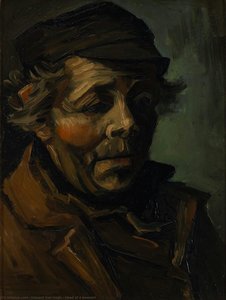
Selbst mit gelbem Hut

Explore Rainer Fetting’s ‘Selbst mit gelbem Hut’ – a vibrant Neo-Expressionist portrait bursting with color & emotion. Thick impasto, bold yellows, & urban energy. A captivating piece for art collectors.

Rainer Fetting (geb. 1949) ist ein führender deutscher Neo-Expressionist Maler und Bildhauer, bekannt für lebendige figurative Werke, die die Energie und Stadtszenen Berlins widerspiegeln. Eine Schlüsselperson der 'Junge Wilde' Bewegung.

Erwerben Sie ein hochauflösendes, optimiertes digitales Bild, das der Online-Vorschau weit überlegen ist.

Jede Datei wird von unseren hauseigenen Spezialisten mit modernsten Werkzeugen und fachmännischer manueller Retusche sorgfältig vorbereitet. Wir stellen sicher, dass jedes Bild eine außergewöhnliche Klarheit, präzise Farbgenauigkeit und feinste Details aufweist.

Die endgültige Datei wird innerhalb von 72 Stunden per E-Mail zugestellt und ist für den sofortigen Einsatz in professionellen, redaktionellen und Druckumgebungen optimiert. Es handelt sich um dieselbe Qualität, der führende Designstudios, Verlage und Galerien vertrauen.

Digitales Bild

Laden Sie eine hochauflösende Datei für die persönliche Präsentation, den Druck und kreative Projekte herunter. ( Zum Druck wechseln Handgemalte Reproduktion kaufen)

Gesamtpreis

$ 24,90

In jeder Bestellung digitaler Bilder enthalten

Professionelle digitale Bereitstellung, garantiert

Wenn Sie sich für WahooArt.com entscheiden, erhalten Sie nicht nur ein Bild – Sie erhalten ein professionell aufbereitetes digitales Kunstwerk, das mit höchster Präzision erstellt und durch eine Zufriedenheitsgarantie abgesichert wird. Hier ist alles, was automatisch mit Ihrer Bestellung geliefert wird:

shipping_icon
Schnelle E-Mail-Zustellung

Ihre hochauflösende digitale Bilddatei wird Ihnen innerhalb von 72 Stunden nach der Bestellung per E-Mail zugestellt – bereit zur sofortigen Verwendung.

canvas_icon
KI-optimierte digitale Datei

Ihre Kunstwerke werden professionell mithilfe fortschrittlicher KI-Tools und manueller Bearbeitung optimiert, um maximale Detailtreue, Klarheit und Farbgenauigkeit zu gewährleisten.

insurance_icon
Kostenloser lebenslanger Neudruckservice

Datei versehentlich gelöscht oder verloren? Keine Sorge – wir senden sie Ihnen jederzeit kostenlos erneut zu.

tax_icon
Keine Einfuhrgebühren – jemals

Genießen Sie Ihr Kunstwerk sofort ohne Zollgebühren, Einfuhrabgaben oder Versandkosten – digitale Downloads sind immer steuerfrei.

color_icon
Garantierte Farbtreue

Wir garantieren, dass Ihr digitales Bild mithilfe professioneller Werkzeuge und Farbmanagement die Originalfarben so präzise wie möglich wiedergibt.

return_icon
100-Tage-Zufriedenheitsgarantie

Sollten Sie mit Ihrem digitalen Bild nicht zufrieden sein, werden wir es überarbeiten oder 100% innerhalb von 100 Tagen erstatten – ohne Wenn und Aber.

guarantee_icon
100% Geld-zurück-Garantie

Nicht zufrieden? Erhalten Sie innerhalb von 100 Tagen nach Erhalt Ihrer digitalen Datei eine vollständige Rückerstattung – ohne Wenn und Aber.

discount_icon
Rabatte bei Großbestellungen

3 Bilder kaufen, 10% sparen – 5 Bilder kaufen, 15% sparen – Ab 10 Bildern 20% sparen. Ideal für kreative Projekte, Galerien und Agenturen.

Kurzübersicht

  • Notable elements or techniques: Thick impasto, bold colors, gestural lines
  • Year: 1982
  • Movement: Neo-Expressionism
  • Artist: Rainer Fetting
  • Artistic style: Expressionism / Fauvism
  • Subject or theme: Self-portrait with yellow hat

A Burst of Neo-Expressionist Energy

In the vibrant landscape of late 20th-century German art, few works capture the raw, pulsating spirit of West Berlin quite like Rainer Fetting’s Selbst mit gelbem Hut. This striking self-portrait is not merely a likeness of the artist; it is an explosion of color and texture that embodies the restless energy of the "Junge Wilde" movement. Upon first encounter, the viewer is swept up in a whirlwind of saturated yellows, deep blues, and fiery oranges, all applied with a visceral intensity that demands attention. The subject, centered within the frame, gazes out through a bold yellow hat, his presence anchored by thick, rhythmic brushstrokes that transform the canvas into a living, breathing entity.

The technique employed here is a masterclass in the impasto style. Fetting does not simply paint; he sculpts with pigment. Each stroke of the brush leaves behind a raised ridge of oil paint, creating a topographical surface that catches the light and casts subtle shadows across the face and torso. This heavy application of paint lends the work a profound sense of movement, as if the colors themselves are still in the process of colliding on the canvas. The lines are loose and gestural, eschewing the rigid precision of traditional portraiture in favor of an organic, freeform aesthetic that prioritizes emotional truth over anatomical accuracy.

The Soul of the Urban Avant-Garde

To understand Selbst mit gelbem Hut, one must look to the streets of Berlin in the late 1970s and early 80s. As a pivotal figure in the Neo-Expressionist resurgence, Fetting’s work is deeply intertwined with the urban pulse of a divided city. The painting reflects a rejection of the cool, detached minimalism that dominated much of the previous decade, opting instead for a return to figurative painting characterized by subjectivity and passion. There is an inherent theatricality in the composition—perhaps a nod to Fetting's early training as a stage designer—where the dramatic lighting and flattened perspective create a sense of immediate, almost confrontational, intimacy.

Symbolically, the bright yellow hat serves as more than just a sartorial choice; it acts as a beacon of light amidst the darker, more turbulent tones of the background. It represents a spark of individual identity and defiance within the chaotic urban landscape. While there is an undeniable intensity to the piece, a subtle hint of melancholy lingers in the shadows that contour the face, suggesting the complex emotional duality of life in a burgeoning counter-culture scene. For the collector or interior designer, this artwork offers more than just visual splendor; it provides a profound psychological depth that can serve as a commanding focal point in any sophisticated space.

A Timeless Addition to the Modern Collection

For those seeking to curate a collection defined by character and movement, a high-quality reproduction of this masterpiece offers an unparalleled opportunity. The painting’s bold palette and tactile quality make it an extraordinary choice for contemporary interiors, where it can breathe life into minimalist settings or add a layer of historical gravity to modern decor. It is a piece that invites conversation, prompting viewers to contemplate the intersection of personal identity and the broader social currents of history.

Owning a tribute to Fetting’s vision means bringing the electric atmosphere of Berlin's most transformative era into one's own home. Whether placed in a sunlit gallery or a moody study, Selbst mit gelbem Hut remains an enduring testament to the power of expressionism—a vivid, textured reminder that art is at its most potent when it dares to be loud, colorful, and unapologetically human.


Künstlerbiografie

A Berlin Energy: The Life and Art of Rainer Fetting

Rainer Fetting, born December 31, 1949, in Wilhelmshaven, Germany, stands as a monumental figure within the Neo-Expressionist movement—a reaction against the prevailing minimalist trends of the late 20th century that championed raw emotion and bold visual language. His artistic journey began far from the polished studios of academic art; instead, he honed his craft initially as a carpenter and stage designer for the Landesbühne Niedersachsen Nord in Wilhelmshaven—experiences that instilled in him a foundational understanding of form, space, and narrative – elements which would later become central to his distinctive artistic vision. Moving to Berlin in the early 1970s, Fetting enrolled at the Hochschule für Bildende Künste (Academy of Fine Arts), studying under Hans Jaenisch—a pivotal encounter that shaped his intellectual trajectory and cemented his connection to a burgeoning countercultural milieu.

Early Influences and Artistic Formation

Fetting’s formative years were marked by an immersion in Berlin's vibrant artistic landscape, where he absorbed the energy of Expressionist painters like Ernst Ludwig Kirchner and Franz Marc—artists who prioritized emotional intensity over formal precision. This influence is palpable in his early works—primarily depictions of Berlin cityscapes—which capture the gritty textures and fractured perspectives of a rapidly changing urban environment. These paintings weren’t merely representations; they were visceral responses to the anxieties and contradictions inherent in post-war Germany, reflecting the pervasive sense of division that characterized the Cold War era. Simultaneously, he pursued stage design, developing skills in spatial composition and theatrical storytelling—skills that would prove invaluable as he transitioned into painting and sculpture.

The Galerie am Moritzplatz and The ‘Junge Wilde’ Movement

In 1977, Fetting established the Galerie am Moritzplatz alongside Helmut Middendorf, Bernd Zimmer, Salomé, Anne Jud, and Berthold Schepers—a daring initiative that would become a cornerstone of the ‘Junge Wilde’ (Young Wild Ones) movement. This gallery served as a crucible for a cohort of young artists who rejected the intellectual sterility of Conceptual Art and embraced expressive figuration—characterized by bold colors, dynamic brushstrokes, and an uncompromising commitment to emotional honesty. The Galerie am Moritzplatz fostered a spirit of experimentation and collaboration, nurturing a generation of artists determined to forge their own path away from established conventions. Fetting’s involvement in this movement solidified his reputation as a rebellious innovator—a figure who championed artistic freedom and challenged the prevailing aesthetic sensibilities of his time.

Style Evolution: From Berlin to New York

Fetting's stylistic evolution mirrored the broader shifts occurring within German art during the 1980s. Initially, his paintings focused on capturing the atmosphere of Berlin—the stark contrasts between light and shadow, the towering buildings, and the palpable tension of political division. He employed a technique reminiscent of Vincent van Gogh—characterized by thick impasto brushstrokes and vibrant hues—to convey emotion and immediacy. However, Fetting’s artistic vision expanded beyond the confines of Berlin as he embarked on a transformative journey to New York in 1978—a residency funded by DAAD that exposed him to American art and culture and profoundly influenced his subsequent work. During this period, he experimented with assemblage techniques—incorporating driftwood and other natural materials into his canvases—adding textural complexity and reflecting an interest in confronting the materiality of existence.

Sculptural Achievements and Legacy

Beyond painting, Fetting achieved considerable renown as a sculptor—primarily working in bronze—creating monumental works that explore themes of human form and psychological depth. His most celebrated sculpture is Willy Brandt House’s centerpiece—a towering figure embodying resilience and moral courage—representing a testament to his artistic ambition and intellectual engagement. Furthermore, he undertook commissions for prominent cultural institutions—including Henri Nannen Press Award and Helmut Schmidt—demonstrating his versatility as an artist and cementing his place within the canon of contemporary sculpture. Rainer Fetting’s enduring legacy resides in his unwavering commitment to expressive figuration—a stylistic choice that defied prevailing trends and championed artistic freedom—leaving an indelible mark on German art history and inspiring generations of artists to come. His paintings continue to resonate with viewers today, capturing the essence of a time marked by both upheaval and creativity—a testament to Fetting’s singular vision and enduring influence.
Rainer Fetting

Rainer Fetting

1949 - , Deutschland

Kurzprofil

  • Artistic Movement Or Style: Neo-Expressionismus
  • Artists Who Influenced This Artist:
    • Vincent van Gogh
    • Ernst Ludwig Kirchner
  • Date Of Birth: 31. Dezember 1949
  • Full Name: Rainer Fetting
  • Nationality: Deutsch
  • Notable Artworks:
    • Selbst mit Palette
    • Ilko sitzend
    • Martin in Fabrik
  • Place Of Birth: Wilhelmshaven, Deutschland