Vorschau anzeigen In AR ansehen Handgemalte Reproduktion bestellen Zum digitalen Bild wechseln Versenden
Details anzeigen Leitfaden Zu Favoriten hinzufügen Herunterladen Ähnliche Objekte Röntgenaufnahme Diashow Statistiken

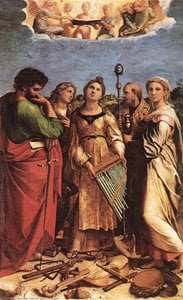
St. Cecilia (Detail)

Raphaels Meisterwerk: St. Cecilia (Detail). Eine detailreiche Darstellung der Heiligen, umgeben von Musikinstrumenten und heiligen Figuren. Ein beeindruckendes Kunstwerk des Frührenaissance.

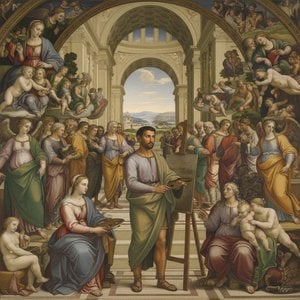
Entdecken Sie Raffael (1483-1520), den italienischen Meister der Hochrenaissance, der für seine Anmut, Klarheit und harmonischen Kompositionen bekannt ist. Erkunden Sie ikonische Werke wie 'Die Akademie der Künste', Madonnen und Fresken, die klassische Schönheit definieren. #Hochrenaissance #Italien

Giclée / Kunstdruck

Giclée- oder Leinwanddruck in Museumsqualität mit schneller Produktion und flexiblen Veredelungsoptionen. ( Handgemalte Reproduktion bestellen Zum digitalen Bild wechseln)

Corner sample of the P118B picture frame: formgepresstes Polystyrol, 5 cm wide and 3 cm thick
P118B €10
Corner sample of the P118H picture frame: formgepresstes Polystyrol, 5 cm wide and 3 cm thick
P118H €10
Corner sample of the P118W picture frame: formgepresstes Polystyrol, 5 cm wide and 3 cm thick
P118W €10
Corner sample of the P438Z picture frame: formgepresstes Polystyrol, 5.5 cm wide and 3.5 cm thick
P438Z €10
Corner sample of the P508JH picture frame: formgepresstes Polystyrol, 7 cm wide and 3.5 cm thick
P508JH €12
Corner sample of the P508YH picture frame: formgepresstes Polystyrol, 7 cm wide and 3.5 cm thick
P508YH €12
Corner sample of the P805H picture frame: formgepresstes Polystyrol, 5 cm wide and 3.5 cm thick
P805H €10
Corner sample of the P805Z picture frame: formgepresstes Polystyrol, 5 cm wide and 3.5 cm thick
P805Z €10
Corner sample of the P919BZ picture frame: formgepresstes Polystyrol, 7 cm wide and 3.5 cm thick
P919BZ €10
Corner sample of the P919G picture frame: formgepresstes Polystyrol, 7 cm wide and 3.5 cm thick
P919G €10
Corner sample of the P919XJ picture frame: formgepresstes Polystyrol, 7 cm wide and 3.5 cm thick
P919XJ €10
Corner sample of the P959ZH picture frame: formgepresstes Polystyrol, 5 cm wide and 3 cm thick
P959ZH €10
Corner sample of the P968JZ picture frame: formgepresstes Polystyrol, 6 cm wide and 4 cm thick
P968JZ €12
Corner sample of the W106C picture frame: Massivholz, 5 cm wide and 3 cm thick
W106C €8
Corner sample of the W218G picture frame: Massivholz, 5 cm wide and 3 cm thick
W218G €10
Corner sample of the W218JH picture frame: Massivholz, 5 cm wide and 3 cm thick
W218JH €8
Corner sample of the W218Y picture frame: Massivholz, 5 cm wide and 3 cm thick
W218Y €10
Corner sample of the W307PJ picture frame: Massivholz, 6 cm wide and 3 cm thick
W307PJ €10
Corner sample of the W316G picture frame: Massivholz, 6 cm wide and 3 cm thick
W316G €10
Corner sample of the W316PJ picture frame: Massivholz, 6 cm wide and 3 cm thick
W316PJ €8
Corner sample of the W316Y picture frame: Massivholz, 6 cm wide and 3 cm thick
W316Y €10
Corner sample of the W398PJ picture frame: Massivholz, 5 cm wide and 3 cm thick
W398PJ €8
Corner sample of the W4111J picture frame: Massivholz, 6.5 cm wide and 3.5 cm thick
W4111J €10
Corner sample of the W500HY picture frame: Massivholz, 7 cm wide and 5 cm thick
W500HY €15
Corner sample of the W500JH picture frame: Massivholz, 7 cm wide and 5 cm thick
W500JH €15
Corner sample of the W692G picture frame: Massivholz, 8 cm wide and 4 cm thick
W692G €12
Corner sample of the W849H picture frame: Massivholz, 5 cm wide and 3 cm thick
W849H €8
Corner sample of the W940BG picture frame: Massivholz, 7.5 cm wide and 4.5 cm thick
W940BG €15
Corner sample of the W953PJ picture frame: Massivholz, 6 cm wide and 3.5 cm thick
W953PJ €8

Standardformat
individuell anpassbar
CM
INCH

Wählen Sie aus unseren vordefinierten Formaten, die den ursprünglichen Proportionen des Kunstwerks entsprechen.

Breite
Höhe

Geben Sie die benötigte Breite und Höhe an, damit der Druck perfekt in Ihren Rahmen oder an Ihre Wand passt. Ein Druck kann nur beschnitten, aber niemals größer als das Originalbild angefertigt werden; daher verliert ein Format mit anderen Proportionen einen Teil des Bildes. Wir senden Ihnen ein digitales Mockup zur Freigabe, bevor wir den Druck ausführen. Das auf dieser Seite gezeigte Bild zeigt nicht den tatsächlichen Beschnitt – dies ist nur im Mockup ersichtlich.

Weltweiter Versand () innerhalb von 2 Wochen statt der üblichen 4/5 Wochen. (26 Oktober)

Kostenloser weltweiter Expressversand
Hochwertige Leinenleinwand
Umfassender Versicherungsschutz beim Versand
Zollgebühren-Rückerstattungsgarantie
Garantie für exakte Farbtreue
100 Tage Rückgaberecht (nur bei Mängeln)
100% Geld-zurück-Garantie
Mengenrabatt verfügbar

Gesamtpreis

€ 60

St. Cecilia (Detail)

Giclée / Kunstdruck

Format der Reproduktion

-

Endpreis

€ 60

Eckdaten

  • Notable elements: Musikinstrumente, Musikthemen
  • Medium: Fresco
  • Movement: Renaissance
  • Subject: St. Cecilia, Musikerinnen
  • Location: Sistine Chapel
  • Influences:
    • Perugino
    • Leonardo

Kunst-Quiz

Jede Frage hat nur eine richtige Antwort.

Frage 1:
Welche der folgenden Aussagen beschreibt am besten die Hauptfigur in dem Gemälde "St. Cecilia (Detail) von Raphael"?
Frage 2:
Welche Instrumente sind in dem Gemälde deutlich erkennbar?
Frage 3:
Welche Epoche kennzeichnet die künstlerische Arbeit von Raphael?
Frage 4:
Was ist die Hauptthematik des Gemäldes "St. Cecilia (Detail) von Raphael"?
Frage 5:
Welche Bedeutung hat die Anordnung der Instrumente im Gemälde?

Raphaels ‘St. Cecilia’: A Symphony of Faith and Form

Raphael’s “St. Cecilia,” a detail from one of his most celebrated works, offers more than just a portrait; it's an immersive experience—a visual meditation on devotion, music, and the ethereal realm. Painted around 1512 during his formative years in Rome, this piece exemplifies Raphael’s burgeoning mastery of composition, color, and the delicate balance between realism and idealized beauty. The painting depicts St. Cecilia, a Roman martyr renowned for her musical piety, surrounded by an array of instruments and figures that speak to both earthly pleasures and divine grace.

The scene unfolds within a richly textured interior, bathed in a warm, diffused light—a hallmark of Raphael’s technique. At the heart of the composition stands St. Cecilia herself, rendered with a serene dignity. Her pose is graceful yet active, her hands gesturing towards the heavens as if conducting an invisible orchestra. Notice the subtle details: the delicate folds of her garments, the gentle curve of her neck, and the expression of quiet contemplation on her face—all indicative of Raphael’s meticulous attention to anatomical accuracy and psychological depth. Around her, a constellation of musicians – violins, cellos, a guitar – are arranged in a dynamic tableau, suggesting the vibrant life that surrounded St. Cecilia's devotion.

The Language of Instruments: Symbolism and Musical Devotion

Beyond its aesthetic beauty, “St. Cecilia” is profoundly symbolic. The instruments themselves aren’t merely decorative elements; they are carefully chosen to convey specific meanings rooted in the saint’s life and her connection to music. The violins, particularly prominent, represent the joyful melodies she heard in her heart while resisting worldly temptations. The cello, with its deep resonant tones, symbolizes a more solemn and contemplative aspect of musical expression. The inclusion of instruments like the lute and guitar speaks to the earthly pleasures that were present during Cecilia’s life, yet are ultimately subservient to her spiritual devotion.

Crucially, note the arrangement—instruments scattered around her, not dominating the scene. This subtly reinforces the idea that music is a gift from God, a conduit for divine inspiration rather than a source of earthly gratification. The instruments themselves appear almost suspended in mid-air, further enhancing the painting’s ethereal quality and suggesting a realm beyond the material world.

A Renaissance Masterpiece: Context and Influences

Raphael's “St. Cecilia” was created during a period of immense artistic innovation in Florence and Rome—the High Renaissance. He drew inspiration from the works of his predecessors, particularly Leonardo da Vinci and Michelangelo, but he developed his own distinctive style characterized by clarity, harmony, and a profound sense of grace. The painting reflects the humanist ideals of the era, which emphasized the importance of human beauty, intellect, and moral virtue.

The subject matter itself—a devout virgin martyr associated with music—was popular during this time. St. Cecilia was seen as a model for women seeking to balance earthly pleasures with spiritual devotion. Furthermore, Raphael’s patron, Pope Leo X, was a great admirer of music and commissioned numerous works celebrating its power to uplift the soul. This commission likely played a significant role in shaping the composition and subject matter of “St. Cecilia.”

Bringing ‘St. Cecilia’ Home: A Reproduction for Your Space

WahooArt offers meticulously crafted, hand-painted reproductions of Raphael's "St. Cecilia," allowing you to bring this iconic masterpiece into your home or office. Our skilled artisans replicate the painting’s intricate details and vibrant colors with exceptional precision, ensuring that your reproduction captures the essence of Raphael’s genius. Whether you are an art enthusiast, a collector, or simply seeking to add a touch of timeless elegance to your surroundings, our reproductions provide a beautiful and authentic representation of this enduring work of art.

Consider how the painting's serene atmosphere and symbolic richness can enhance your space—a reminder of faith, beauty, and the transformative power of music. Explore our range of sizes and canvas options to find the perfect reproduction for your individual style and needs.

Fragen & Antworten

Ist "St. Cecilia (Detail)" ein berühmtes Werk der High Renaissance-Epoche?

"St. Cecilia (Detail)" von Raffael wird als Ikonisch klassifiziert und gehört zur High Renaissance-Strömung.

Welche Farbe dominiert in "St. Cecilia (Detail)" von Raffael?

Die Farbe, die in „St. Cecilia (Detail)“ am stärksten hervorsticht, ist Phthalogrün (#271613). Die dominante Farbe ist hilfreich, um ein Kunstwerk auf eine Inneneinrichtung abzustimmen.

Kann "St. Cecilia (Detail)" in Augmented Reality vorab betrachtet werden?

„St. Cecilia (Detail)“ verfügt über eine Augmented-Reality-Vorschau: Die AR-Vorschau-Seite des Kunstwerks zeigt es auf einem kompatiblen Gerät in Ihrem eigenen Raum.


Künstlerbiografie

**frühes Leben und Ausbildung**

Raphael (Raffaello Sanzio da Urbino), ein renommierter italienischer Maler und Architekt, wurde zwischen dem 28. März und dem 6. April 1483 in der kleinen, aber kulturell bedeutenden Stadt Urbino geboren. Sein Vater, Giovanni Santi, war Hofmaler des Herzogs und vermittelte Raphael von Anfang an eine frühe Auseinandersetzung mit der künstlerischen Welt. Nach dem Tod seines Vaters im Alter von elf Jahren betrieb Raphael wahrscheinlich die Familienwerkstatt weiter, was seine künstlerische Grundlage festigte.

**Künstlerischer Werdegang und Einflüsse**

Raphaels künstlerischer Weg lässt sich in drei verschiedene Phasen einteilen, jede mit einem einzigartigen Stil gekennzeichnet:
  • Frühe Jahre in Umbrien: Charakterisiert durch den Einfluss seines Vaters und die kulturelle Atmosphäre von Urbino.
  • Florentinische Periode (1504-1508): Aufnahme der künstlerischen Traditionen Florenz, die seinen Stil maßgeblich prägte.
  • Römische Periode (1508-1520): Arbeitete für zwei Päpste und ihre Mitarbeiter und schuf einige seiner bekanntesten Werke, darunter die Schule der Athene in der Vatikanische Stanza della Segnatura.

**Bekannte Werke und Vermächtnis**

Einige der bekannten Werke von Raphael sind:

**Einfluss und Vermächtnis**

Raphaels Einfluss auf die Kunst ist tiefgreifend, wobei sein Werk ein Eckpfeiler der Hochrenaissance darstellt. Sein ruhiger und harmonischer Stil war ein Vorbild für die neoklassische Malerei, wie von Kunsthistoriker Johann Joachim Winckelmann bemerkt. Trotz des späteren Einflusses von Michelangelos Stil bleibt Raphael einer der verehrtesten Künstler in der Geschichte. ansicht des Profils von Raphael auf WahooArt
Raffael

Raffael

1483 - 1520 , Italien

Kurzinfos

  • Beeinflusste Künstler:
    • Giovanni Santi
    • Pietro Perugino
  • Bemerkenswerte Werke:
    • Das Urteil des Salomon
    • Esterházy-Madonna
    • Die Schule der Athener
    • St. Sebastian
    • La Donna Velata
  • Einfluss Auf Kunst: Neoklassische Malerei
  • Geburtsdatum: 1483
  • Geburtsort: Urbino, Italien
  • Künstlerischer Stil: Hochrenaissance
  • Nationalität: Italienisch
  • Todatum: 1520
  • Vollständiger Name: Raffaello Sanzio da Urbino
  • Von Künstlern Beeinflusst:
    • Leonardo da Vinci
    • Michelangelo
Entdecken Sie Kunstwerke, die nach Themen, Stilen und Merkmalen sortiert sind.