

Giclée- oder Leinwanddruck in Museumsqualität mit schneller Produktion und flexiblen Veredelungsoptionen. ( Handgemalte Reproduktion bestellen Zum digitalen Bild wechseln)





























Wählen Sie aus unseren vordefinierten Formaten, die den ursprünglichen Proportionen des Kunstwerks entsprechen.

Geben Sie die benötigte Breite und Höhe an, damit der Druck perfekt in Ihren Rahmen oder an Ihre Wand passt. Ein Druck kann nur beschnitten, aber niemals größer als das Originalbild angefertigt werden; daher verliert ein Format mit anderen Proportionen einen Teil des Bildes. Wir senden Ihnen ein digitales Mockup zur Freigabe, bevor wir den Druck ausführen. Das auf dieser Seite gezeigte Bild zeigt nicht den tatsächlichen Beschnitt – dies ist nur im Mockup ersichtlich.
Weltweiter Versand () innerhalb von 2 Wochen statt der üblichen 4/5 Wochen. (13 November)
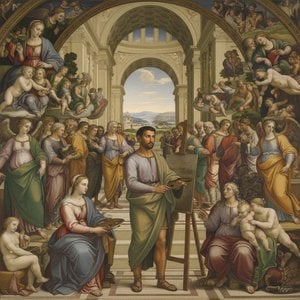
Die Transfiguration (Detail)
Format der Reproduktion
Painted at the apex of the Italian Renaissance—a period marked by intellectual curiosity, artistic innovation, and humanist revival—*The Transfiguration* reflects the broader cultural landscape of its time. Raphael’s work aligns seamlessly with the prevailing fascination for classical ideals and biblical narratives, demonstrating a desire to elevate human experience through contemplation of divine beauty. The painting's placement within the cathedral of S. Giusto in Narbonne underscores its significance as a devotional artwork intended to inspire awe and reverence.
The pervasive luminescence dominating *The Transfiguration* serves as a central symbol—representing divine illumination and spiritual enlightenment. Moses and Elijah, figures revered for their prophetic roles in Jewish tradition, stand alongside Christ, symbolizing law and prophecy respectively – representing the Old Testament and New Testament faiths united. The birds perched atop Mount Tabor are interpreted as emblems of freedom and divine grace, furthering the painting’s overarching message of redemption and spiritual ascension.
*The Transfiguration* continues to captivate viewers with its breathtaking beauty and profound emotional resonance. Raphael's masterful manipulation of color—particularly the golden hues illuminating Christ—evokes feelings of serenity, majesty, and spiritual contemplation. The painting’s enduring appeal lies in its ability to convey a timeless narrative of faith, hope, and divine revelation—a masterpiece that secures Raphael’s place among the greatest artists of all time.
For a deeper understanding of *The Transfiguration* and its artistic legacy, explore resources such as Wikipedia (
Die aufgezeichneten Werte für "Die Transfiguration (Detail)" von Raffael sind: tiefste Schattenwerte Helligkeit, Dunkel Luminanz.
"Die Transfiguration (Detail)" von Raffael besticht durch eine Ausgewogene Harmonie Farbharmonie.
Die Farbpalette von "Die Transfiguration (Detail)" von Raffael wird als Erdig beschrieben. Es handelt sich um eine kompakte Beschreibung der Farben des Werkes.

Raffael, in der Geschichte unter verschiedenen Namen bekannt, darunter Raffaello Sanzio, Raffaello Santi und Raffaello Sanzio da Urbino, war eine zentrale Gestalt der italienischen Hochrenaissance. Sein Leben war geprägt von einer dualen Meisterschaft in der Malerei und der Architektur – eine Vielseitigkeit, die es ihm ermöglichte, sich nahtlos zwischen dem intimen Maßstab eines Porträts und den monumentalen Anforderungen päpstlicher Bauvorhaben zu bewegen. Er wurde am 6. April 1483 in Urbino, Italien, in eine Welt voller intellektueller und künstlerischer Dynamik hineingeboren.
Seine Karriere war durch eine immense Produktivität gekennzeichnet, die die Leitung einer großen Werkstatt erforderte, um den hohen Ansprüchen seiner Mäzene gerecht zu werden. Diese professionelle Leistungsfähigkeit wurde von einer sozialen Anmut begleitet, die es ihm erlaubte, sich in den höchsten Kreisen des päpstlichen Hofes zu bewegen. Er zog durch die bedeutendsten künstlerischen Zentren Italiens und ließ sich schließlich in Rom nieder, wo sein Einfluss auf die physische und visuelle Landschaft der Stadt von tiefer Bedeutung war. Er war ein Mann von bedeutendem gesellschaftlichem Status, der oft mit den politischen und religiösen Führern seiner Zeit in Austausch stand.
Der Lebensweg des Künstlers wurde in Rom, in den päpstlichen Staaten, jäh unterbrochen. Er starb am 6. April 1520 im Alter von nur 37 Jahren. Sein Ableben wurde am päpstischen Hof tief empfunden und markierte das Ende einer Karriere, die bereits die Maßstäbe der klassischen Komposition und des architektonischen Entwurfs neu definiert hatte. Er hinterließ ein gewaltiges Werk, das bis heute als primäre Referenz für das Studium der Ideale der Renaissance dient.
Die stille, intellektuelle Atmosphäre von Urbino bildete das Fundament für den jungen Raffaello Sanzio. Er wurde in eine Welt höfischer Raffinesse hineingeboren, als Sohn von Giovanni Santi und Magia di Battista Ciarla. Sein Vater, ein Maler des Herzogs, sorgte dafür, dass die frühen Jahre des Jungen tief in den humanistischen Traditionen der italienischen Höfe verwurzelt waren. Dieses Umfeld bot weit mehr als nur ein Zuhause; es war ein Fenster zu den fortschrittlichen künstlerischen Ideen, die durch das Zentrum Italiens flossen. Als das Schicksal im Jahr 1494 zuschlug und sein Vater verstarb, war der Junge erst elf Jahre alt. Dieser Verlust zwang ihn zu einer vorzeitigen Reife, da er sich plötzlich mit der Aufgabe der Leitung der familieneigenen Werkstatt wiederfand.
Seine formale künstlerische Ausbildung führte ihn in die Werkstatt von Pietro Perugino nach Perugia. Unter diesem Meister sog er den umbrischen Stil in sich auf – eine Methode, die durch sanfte Modellierung und serene, religiöse Szenen definiert war. Die Ausbildung war streng und äußerst effektiv. Als er um das Jahr 1500 als eigenständiger Meister anerkannt wurde, zeigte seine Hand bereits eine ganz besondere Klarheit und Leichtigkeit. Er zog durch die Städte Norditaliens und sammelte Wissen wie ein Reisender, der Münzen aufsammelt, bevor der Sog der großen künstlerischen Zentren begann, seine Vision grundlegend neu zu gestalten.
Mit seiner Ankunft in Florenz im Jahr 1504 trat der junge Maler in eine Stadt ein, die von der Präsenz wahrer Giganten geprägt war. Er existierte nicht bloß neben den Meisterwerken von Leonardo da Vinci und Michelangelo; er sog sie förmlich in sich auf. Seine künstlerische Entwicklung wurde durch das tiefgründige Studium ihrer so unterschiedlichen Herangehensweisen geformt, ergänzt durch die Einflüsse von Fra Bartolommeo und Masaccio. Diese Ära war weniger ein Bruch mit seinen umbrischen Wurzeln als vielmehr eine hochgradig raffinierte Synthese des florentinischen Stils. Er nahm die anatomische Präzision und die dramatische Wucht seiner Zeitgenossen auf und webte sie in eine ausgewogenere, klarere visuelle Sprache ein.
In dieser Zeit verfeinerte er seine Fähigkeit, die menschliche Präsenz sowohl durch religiöse als auch durch weltliche Augen zu erfassen. Zwischen 1504 und 1507 schuf er eine Serie von Madonnen, die eine wachsende Meisterschaft in Komposition und emotionaler Klarheit offenbarten. In diesen Jahren etablierte er sich zudem als renommierter Porträtist, der weit über die bloße Ähnlichkeit hinausging, um den Dargestellten eine tiefe Würde zu verleihen. Sein Werk aus dieser Epoche spiegelt den Übergang von den sanfteren Traditionen seiner Lehrzeit hin zu jener monumentalen Klarheit wider, die später seine glorreiche Karriere in Rom definieren sollte.
Der Ruf von Papst Julius II. im Jahr 1508 veränderte den Lebensweg von Raffael grundlegend und zog ihn aus der wettbewerbsorientierten Atmosphäre Florenz in die monumentale Pracht Roms. Er erreichte die Ewige Stadt nicht bloß als Maler, sondern als eine zentrale Gestalt in der visuellen Sprache des Papsttums. Seine Zeit im Vatikan war von einer immensen Produktivität geprägt, die ihn zum bevorzugten Künstler Roms machte. Ihm wurde die Dekoration der päpstlichen Gemächer übertragen – eine verantwortungsvolle Aufgabe, die es erforderte, intime,Andacht gebende Sujets mit grandiosen, historischen Erzählungen in Einklang zu bringen. In dieser Epoche löste er sich von der bloßen Staffelei und übernahm bedeutende architektonische Aufgaben. Nach dem Tod von Donato Bramante im Jahr 1514 wurde er zum Architekten für den Petersdom ernannt – eine Position, die das immense Vertrauen widerspiegelte, das man in seine Fähigkeit setzte, komplexe Großprojekte zu organisieren und zu vollenden.
Sein Einfluss erstreckte sich über die Regierungszeiten aufeinanderfolgender Päpste, einschließlich Leo X, während er sich geschickt durch die komplizierten sozialen und politischen Hierarchien des päpstlichen Hofes bewegte. Das Ausmaß seiner Aufträge wuchs stetig mit seinem Ruf und erforderte die Leitung einer ungewöhnlich großen Werkstatt, um den hohen Ansprüchen seiner Mäzene gerecht zu werden. Während seine frühen Jahre durch das Streben nach Anmut definiert waren, zeichneten sich seine römischen Jahre durch das Streben nach Ordnung und monumentaler Erhabenheit aus. Er wurde zu einer festen Größe im Vatikan, dessen Handschrift in der Struktur der heiligsten Räume der Stadt allgegenwärtig war.
Raffael besaß die seltene Gabe, die unterschiedlichen Innovationen seiner Zeitgenossen zu einer einzigen, kohärenten Sprache zu verschmelzen. Er imitierte die Meister, denen er in Florenz begegnete, nicht einfach nur; vielmehr destillierte er deren Stärken. Von Leonardo da Vinci übernahm er die subtilen Abstufungen des sfumato, während die anatomische Präzision und die Muskulatur Michelangelos sein Verständnis der menschlichen Form maßgeblich beeinflussten. Diese Synthese erlaubte es ihm, über die bloße Nachahmung hinauszugehen und einen Stil zu erschaffen, der durch Klarheit der Form und eine mühelose Leichtigkeit der Komposition bestach. Seine Figuren beleben ihre Räume mit einer natürlichen Anmut und vermeiden dabei die schwere Spannung, die bisweilen die Werke seiner Zeitgenossen charakterisierte.
Seine Ästhetik war tief im neoplatonischen Ideal der menschlichen Erhabenheit verwurzelt, mit dem Bestreben, die Würde des Individuums durch ausgewogene Proportionen und leuchtende Farben darzustellen. Er nutzte das chiaroscuro, um Tiefe und Volumen zu erzeugen, bewahrte jedoch stets ein Gefühl der Ordnung, das verhinderte, dass seine Szenen in Chaos versanken. Dieses Gleichgewicht zwischen Licht und Schatten, zwischen dem Physischen und dem Idealen, verlieh seinem Werk eine Aura himmlischer Ruhe. Selbst in seinen komplexesten historischen oder religiösen Kompositionen ist eine spürbare Harmonie vorhanden, die das Auge sanft durch die Erzählung führt.
Dieses Streben nach Perfektion wurde in seinen verschiedenen Darstellungen der Madonna deutlich, in denen er mütterliche Wärme mit einer strukturierten, geometrischen Anmut in Einklang brachte. Seine Fähigkeit, die wissenschaftliche Beobachtung des Lichts mit einem idealisierten Schönheitsideal zu vereinen, stellte sicher, dass sich seine Kompositionen sowohl in der Realität verwurzelt als auch vom Geist erhoben anfühlten. Er erreichte eine visuelle Stabilität, die zum Standard für die Hochrenaissance wurde, indem er sich auf die stille Kraft eines wohlplatzierte Blicks oder den präzisen Faltenwurf eines Gewandes konzentrierte, um tiefe menschliche Emotionen zu vermitteln.
Das Ausmaß von Raffaels römischer Karriere erforderte ein Maß an Organisation, das weit über das traditionelle Atelier-Modell hinausging. Um den immensen Anforderungen des päpstlichen Hofes gerecht zu werden, leitete er eine ungewöhnlich große Werkstatt – ein geschäftiges Zentrum der Produktion, das mit der Präzision eines kleinen Unternehmens funktionierte. Während seine eigene Hand die bedeutendsten Kompositionen leitete, fiel ein Großteil der physischen Ausführung seiner Vision seinen Assistenten zu. Diese geschickten Schüler fertigten oft Werke direkt nach seinen Vorzeichnungen an, was eine stilistische Konsistenz über eine Vielzahl von Projekten hinweg sicherstellte. Dieses System ermöglichte es ihm, eine enorme Produktivität aufrechtzuerhalten, selbst als seine Verantwortlichkeiten in die Bereiche der Architektur und der Stadtplanung expandierten.
Sein Einfluss innerhalb des Vatikans war sowohl weitreichend als auch tiefgreifend. Ihm wurden eine Reihe wichtiger Aufträge zur Dekoration der päpstlichen Gemächer anvertraut, doch seine Autorität reichte weit über die Leinwand hinaus. Raffael wurde mit der Leitung aller päpstlichen Projekte betraut, die Architektur, Malerei, Dekoration und die Bewahrung von Antiquitäten umfassten. Diese facettenreiche Rolle machte ihn zu einer zentralen Figur bei der physischen und ästhetischen Gestaltung der päpstlichen Residenz. Seine Entwürfe beschränkten sich nicht nur auf Wände und Decken; er lieferte auch Entwürfe für Wandteppiche, die für den päpstlichen Hof bestimmt waren, und integrierte so seine Ästhetik in das eigentliche Gefüge des höfischen Lebens.
Die enorme Bandbreite seines Schaffens lässt sich vielleicht am besten durch seine zahlreichen Madonnen verstehen – jene Werke, die die visuelle Sprache mütterlicher Anmut maßgeblich definierten. Diese Gemälde strahlten oft eine menschliche Wärme und ein Gefühl von heiterem Gleichgewicht aus, das zu einem Markenzeichen seines Stils wurde. In Florenz erreichte sein Experimentieren mit diesem Thema mit La belle jardinière, vollendet im Jahr 1507, einen bedeutenden Höhepunkt. Dieses Werk spiegelt den Übergang von seiner frühen umbrischen Ausbildung hin zu den anspruchsvolleren Kompositionen wider, die später seine römische Periode prägen sollten.
In Rom erreichten seine Aufträge im Vatikan ein monumentales Ausmaß. Ihm wurde die Dekoration der Stanza della Segnatura übertragen, wo er weitläufige Freskenzyklen schuf, die klassische Philosophie mit religiösen Themen verschmolzen. Unter diesen bleibt die Schule von Athen sein berühmtestes Werk – eine gewaltige Komposition, die die großen Denker der Antike in einem einzigen, harmonischen Raum vereinte. Diese Errungenschaft demonstrierte seine Fähigkeit, komplexe, groß angelegte Erzählungen durch präzise Perspektive und Ordnung zu meistern.
Seine letzten Lebensjahre waren von einer immensen Produktivität geprägt, die auch sein größtes Leinwandwerk einschloss, die Verklärung Christi, die 1517 in Auftrag gegeben wurde. Dieses Gemälde, an dem er bis zu seinem Tod arbeitete, stellt den Höhepunkt seines technischen Könnens und seiner Fähigkeit dar, dramatische, großformatige Sujets zu behandeln. Seine Gabe, solch intensive menschliche Emotionen mit klassischer Struktur in Einklang zu bringen, blieb ein konstantes Element durch seine gesamte künstlerische Laufbahn.
Raffael nahm in der Hochrenaissance eine singuläre Stellung ein und bildete zusammen mit Leonardo da Vinci und Michelangelo ein Triumvirat kreativer Giganten. Während seine Zeitgenossen oft divergente Pfade der wissenschaftlichen Beobachtung oder der muskulären Spannung verfolgten, kultivierte Raffael einen Stil der Klarheit und des Gleichgewichts, der zum Standard für die akademische Tradition wurde. Dieses Gleichgewicht war nicht nur eine persönliche Errungenschaft, sondern auch eine pädagogische; seine enorme Produktivität erforderte ein hochgradig organisiertes Atelier, um den gewaltigen Anforderungen seiner päpstlichen Aufträge gerecht zu werden.
Die Leitung dieses Workshops war ein zentraler Bestandteil seines Berufslebens. Seine Schüler waren nicht bloß Assistenten, sondern wurden darin geschult, die spezifische Ästhetik seiner Schule zu bewahren. Unter ihnen kristallisierte sich Giulio Romano als eine bedeutende Figur heraus, der oft die Ausführung von Werken auf Basis der Originalzeichnungen Raffaels übertragen wurde. Romanos eigener Stil sollte den Einfluss des Künstlers schließlich in neue Richtungen tragen und dabei häufig die Kompositionen und Formen widerspiegeln, die im Vatikan etabliert worden waren. Diese Abstammungslinie stellte sicher, dass der Name Raffael noch lange nach seinem Tod ein Synonym für eine ganz besondere Form von Anmut und Ordnung blieb.
Trotz seines immensen Erfolgs wurde seine Karriere vom Schatten seines großen Rivalen Michelangelo begleitet. Die Spannung zwischen ihren unterschiedlichen Ansätzen – der eine bevorzugte harmonische Proportionen, der andere dramatische anatomische Kraft – prägte einen Großteil des künstlerischen Diskurses dieser Ära. Obwohl Raffaels Einfluss tiefgreifend war, übertraf das Gewicht von Michelangelos stilistische Wirkung in den Augen nachfolgender Generationen, insbesondere im 18. und 19. Jahrhundert, oft den seinen. Dieser Wettbewerb zwischen zwei distinkten Visionen menschlicher Erhabenheit half dabei, die Entwicklung der westlichen Malerei über Jahrhunderte hinweg maßgeblich zu formen.
Der Aufstieg einer Karriere, die die höchsten Sphären des päpstlichen Wohlwollens erreicht hatte, wurde mit erschütternder Plötzlichkeit gestoppt. Am 6. April 1520, dem Tag seines siebenunddreißigsten Geburtstags, verstarb Raffael unerwartet in Rom. Sein Tod wurde am päpstischen Hof als ein tiefer Verlust empfunden; sein Einfluss war so untrennbar mit dem Gefüge des religiösen und bürgerlichen Lebens verwoben, dass der Papst beabsichtigt hatte, ihn in den Rang eines Kardinals zu erheben. Doch der Mann, der zur visuellen Stimme des Papsttums geworden war, war bereits von der Welt gerissen, bevor solche Ehren ihm zuteilwerden konnten.
Zum Zeitpunkt seines Todes arbeitete er noch mit Hochdruck an seinem monumentalen Meisterwerk, der großformatigen Leinwand der Verklärung. Dieses Werk blieb im Moment seines Ablebens unvollendet – ein letztes, nachhallendes Fragment eines Lebens, das durch eine immense Produktivität definiert war. Sein plötzlicher Abschied hinterließ im Vatikan und in der Kunstszene Roms einen Zustand der Trauer und markierte ein stilles Ende einer Epoche intensiver schöpferischer Kraft.
Seine Gebeine wurden im Pantheon in Rom, Italien, beigesetzt, einem Ort von immenser historischer und architektonischer Bedeutung. Diese letzte Ruhestätte spiegelte die Würde seines Standes und die hohe Wertschätzung wider, in der er von den Autoritäten der Päpstlichen Staaten stand. Er hinterließ ein gewaltiges Werk, das durch eine hochgradig organisierte Werkstatt entstanden war und sicherstellte, dass seine Präsenz in der Geschichte der Hochrenaissance unvergessen bleibt.
Die physischen Zeugnisse seines unermüdlichen Schaffens sind über die bedeutendsten Zentren der europäischen Kunstwelt verteilt. In Rom ist ein Großteil seines wichtigsten Schaffens im Vatikanpalast geborgen, wo seine Fresken noch heute die visuelle Sprache der päpstlichen Gemächer definieren. Diese Meisterwerke, darunter die berühmte Schule der Athene, schmücken genau jene Räume, die er während seiner produktivsten Jahre in der Ewigen Stadt mitgestaltet hat.
Doch auch über den Vatikan hinaus ist seine Präsenz in den großen Galerien des Kontinents spürbar. Der Louvre in Paris beherbergt mehrere seiner Gemälde, während die National Gallery of Art in Washington seine Werke für ein modernes Publikum bewahrt. In Florenz bewahrt die Galleria degli Uffizi viele seiner Porträts auf und gewährt uns so einen intimen Einblick in die Gesichter des Renaissance-Adels, die er mit solcher Meisterschaft darstellte. Die Uffizien beherbergen zudem weitere bedeutende Stücke, die sicherstellen, dass sein Einfluss fest in der italienischen Tradition verwurzelt bleibt.

1483 - 1520 , Italien

Erleben Sie die vollendete Harmonie der Hochrenaissance: Entdecken Sie die 25 bedeutendsten Meisterwerke von Raffael. Von göttlicher Grazie bis zu meisterhafter Technik – finden Sie Inspiration und exklusive Ölgemälde-Reproduktionen auf WahooArt.com.
Elevate your home with the sublime harmony of Raphael’s masterpieces. Explore iconic High Renaissance works, from St. George to The School of Athens, and discover how premium, hand-painted reproductions can transform your space into a sanctuary of classical elegance and timeless beauty.
 Vorschau anzeigen
 Versenden
 Teilen
 Details anzeigen
 Leitfaden

 Herunterladen
 Ähnliche Objekte
 Röntgenaufnahme
 Diashow
 Fragen & Antworten
 Statistiken

 Weiterlesen









 Die Glasoption ist nur für Größen unter 110 cm verfügbar.


![Stanze Vaticane - Das Feuer im Borgo (Detail) [01]](/media/artworks/images-thumb/76/f6/76f6220ba33c4e1d9790e47ace4c7148.jpg)
