Vorschau anzeigenVorschau anzeigen In AR erlebenIn AR erleben Handgemalte Reproduktion bestellen Handgemalte Reproduktion bestellenZum digitalen Bild wechseln Zum digitalen Bild wechseln VersendenVersenden
Details anzeigenDetails anzeigen Zu Favoriten hinzufügen Zu Favoriten hinzufügen HerunterladenHerunterladen Ähnliche ObjekteÄhnliche Objekte RöntgenaufnahmeRöntgenaufnahme DiashowDiashow StatistikenStatistiken

not identified

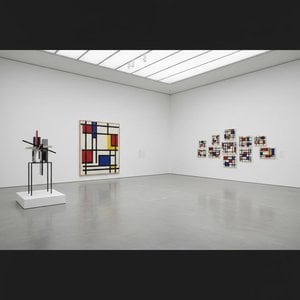
Explore Piet Mondrian’s iconic geometric abstraction in this captivating depiction of a Dutch clock tower building—a testament to the artist's pioneering style and enduring influence during the early 20th century. Discover the beauty of simplicity and commission your own exquisite reproduction.

Erkunden Sie die Kunst von Piët Mondrian (1872-1944), einem Pionier der abstrakten Kunst und der De Stijl Bewegung. Entdecken Sie seine ikonischen geometrischen Gemälde, seinen Neoplastischen Stil und seinen bleibenden Einfluss auf modernes Design, Architektur und 20. Jahrhundert Kunst.

Giclée / Kunstdruck

Giclée- oder Leinwanddruck in Museumsqualität mit schneller Produktion und flexiblen Veredelungsoptionen. (Handgemalte Reproduktion bestellen Handgemalte Reproduktion bestellenZum digitalen Bild wechseln Zum digitalen Bild wechseln)

P118B $10
P118H $10
P118W $10
P438Z $10
P508JH $12
P508YH $12
P805H $10
P805Z $10
P919BZ $10
P919G $10
P919XJ $10
P959ZH $10
P968JZ $12
W106C $8
W218G $10
W218JH $8
W218Y $10
W307PJ $10
W316G $10
W316PJ $8
W316Y $10
W398PJ $8
W4111J $10
W500HY $15
W500JH $15
W692G $12
W849H $8
W940BG $15
W953PJ $8

Standardformat
individuell anpassbar
CM
INCH

Wählen Sie aus unseren vordefinierten Formaten, die den ursprünglichen Proportionen des Kunstwerks entsprechen.

Breite
Höhe

Sie können Ihre eigenen Maße eingeben, um ein bestimmtes Format oder einen speziellen Platz einzupassen. Wenn das von Ihnen gewählte Format nicht den Proportionen des Originalbildes entspricht, werden wir das Kunstwerk entweder beschneiden oder das Bild mit einem gespiegelten oder einfarbigen Rand erweitern. Ein digitaler Entwurf wird Ihnen zur Genehmigung zugesandt, bevor die Produktion beginnt.
Bitte beachten Sie, dass die Vorschau auf dem Bildschirm nicht den tatsächlichen Zuschnitt oder die Erweiterung widerspiegelt. Nur der Entwurf zeigt die endgültige Komposition präzise an.
Obwohl Sondermaße verfügbar sind, empfehlen wir die Auswahl eines Maßes aus der vordefinierten Liste, um die ursprünglichen Proportionen zu bewahren.

Weltweiter Versand () innerhalb von 2 Wochen statt der üblichen 4/5 Wochen. (11 September)

why_choose_icon
Kostenloser weltweiter Expressversand
why_choose_icon
Hochwertige Leinenleinwand
why_choose_icon
Umfassender Versicherungsschutz beim Versand
why_choose_icon
Zollgebühren-Rückerstattungsgarantie
why_choose_icon
Garantie für exakte Farbtreue
why_choose_icon
100-Tage-Rückgaberecht (nur bei Mängeln)
why_choose_icon
100% Geld-zurück-Garantie
why_choose_icon
Mengenrabatt verfügbar

Gesamtpreis

$ 68

reproduction

not identified

Giclée / Kunstdruck

Format der Reproduktion

-

Gesamtpreis

$ 68

Eckdaten

  • Artist: Piet Mondrian
  • Notable elements or techniques: Geometric abstraction
  • Influences:
    • Hague School
    • Dutch Impressionism
  • Artistic style: Neoplasticism
  • Subject or theme: Architecture
  • Movement: Post-Impressionism

A Symphony of Structure and Spirit

In the vast landscape of modern art, few names resonate with as much transformative power as Piet Mondrian. His work, often characterized by a radical departure from the visible world, seeks to uncover a deeper, more universal truth hidden beneath the surface of reality. In this captivating piece, we encounter a moment of profound stillness—a quiet reflection on form and color that invites the viewer into a meditative state. While the painting may initially present as a stately architectural scene, featuring a prominent clock tower and figures poised in observation, it serves as a gateway to the artist's evolving philosophy of Neo-Plasticism. It is not merely a depiction of urban grandeur, but an exploration of the equilibrium between the physical structure we inhabit and the spiritual energy that animates it.

The composition is a masterclass in controlled tension and geometric precision. Executed with meticulous care in oil on canvas, the artwork utilizes the strength of orthogonal lines—the steadfast horizontal and vertical—to construct a sense of permanence and order. This grid-like framework does more than just define the building's silhouette; it creates a rhythmic pulse that guides the eye across the canvas. The color palette is intentionally disciplined, relying on the primal impact of primary hues. Splashes of red, yellow, and blue are applied with surgical accuracy within the intersections of the grid, providing a striking visual contrast against the more muted, earthy tones of the architecture. This technique transforms the canvas from a mere window into a scene into a complex tapestry of light and mathematical harmony.

The Architecture of the Soul

To understand this work is to understand the historical currents that shaped Mondrian’s vision during the mid-20th century. Emerging from a period of immense global upheaval, his art reflects a profound desire for stability amidst chaos. The influence of the Bauhaus movement and the principles of De Stijl are palpable here, as the artist strips away the unnecessary to reveal the essential. Every line and every block of color is a deliberate choice, intended to mirror the underlying mathematical order of the universe. For the discerning collector or interior designer, this piece offers more than just aesthetic beauty; it provides a focal point of intellectual depth and structural integrity.

Beyond its formal qualities, the painting carries a heavy symbolic weight. The grid represents the rationality and structure of human thought, acting as a necessary counterbalance to the unpredictable nature of human emotion. The primary colors are not merely decorative; they symbolize a spiritual vitality that transcends the material world. When placed within a contemporary living space or a sophisticated gallery setting, this reproduction evokes a sense of calm detachment and contemplative peace. It is an invitation to slow down, to look past the superficial layers of our environment, and to find beauty in the fundamental balance of existence. For those seeking to infuse their surroundings with a sense of timelessness and grace, Mondrian’s vision remains an unparalleled source of inspiration.


Über den Künstler

**frühes Leben und Karriere in den Niederlanden (1872–1911)**

pieter cornelis mondriaan, bekannt ab 1911 als piet mondrian, war ein niederländischer Maler und Kunsttheoretiker, geboren am 7. März 1872 in Amersfoort, Niederlande. Er begann seine Karriere als Lehrer an der Grundschule und betrieb gleichzeitig Malerei, zunächst im Stil der Haag School des niederländischen Impressionismus.
  • Sein frühes Werk, das von naturalistischen Landschaften geprägt ist, kann in Gemälden wie the red mill und trees in moonrise zu sehen ist, die im kunstmuseum den haag ausgestellt wurden.
  • Mondrians Suche nach einem persönlichen Stil führte ihn dazu, verschiedene künstlerische Bewegungen zu erkunden, darunter Pointillismus und Fauvismus.
  • Seine erste Ausstellung im Jahr 1893 markierte den Beginn seiner produktiven Karriere.

**Die Entwicklung des Stils von Mondrian**

Von figurativ zu abstrakt Mondrians künstlerische Richtung verschob sich hin zu einem zunehmend abstrakten Stil, der in eine nicht-repräsentative Form mündete, die er Neoplasticismus nannte. Diese „reine plastische Kunst“ zielte darauf ab, „universelle Schönheit“ zu schaffen und seinen formalen Wortschatz auf Primärfarben (Rot, Blau und Gelb), Werte (Schwarz, Weiß und Grau) und Richtungen (horizontal und vertikal) zu beschränken.

**Vermächtnis und Einfluss**

Mondrians Vermächtnis erstreckt sich über sein eigenes Werk hinaus und beeinflusst wichtige Stile und Bewegungen wie Farbflächenmalerei, abstrakten Expressionismus und Minimalismus. Kunsthistoriker stephen bayley stellte fest, dass Mondrian zum Totem für alles geworden ist, was der Modernismus zu sein versuchte.
  • Entdecken Sie mehr von Mondrians Werk unter WahooArt.com.
  • Erfahren Sie mehr über die De Stijl-Bewegung und ihren Einfluss auf die moderne Kunst auf wikipedia.
  • Entdecken Sie andere einflussreiche Künstler wie vincent van gogh und ihre Auswirkungen auf die Kunstwelt.

**Wichtige Werke und Ausstellungen**

* piet mondrian: apple blossom (Cubismus) (ansicht auf WahooArt.com) * piet mondrian: still life with vase of spices ii (Cubismus) (ansicht auf WahooArt.com) * piet mondrian: passionflower (73 x 48 cm, Kunstmuseum Den Haag, Postimpressionismus, Aquarell) (ansicht auf WahooArt.com)
Piët Mondrian

Piët Mondrian

1872 - 1944 , Niederlande

Kurzinfos

  • Beeinflusste Künstler:
    • Hague School
    • Pointillismus
    • Fauvismus
    • Kubismus
  • Bemerkenswerte Werke:
    • Komposition mit Rot, Gelb und Blau
    • Broadway Boogie Woogie
    • Tableau Nr. 2 Komposition V
    • Rhythmus der schwarzen Linien
  • Geburtsdatum: 7. März 1872
  • Geburtsort: Amersfoort, Niederlande
  • Künstlerische Bewegung: De Stijl, Neoplasticismus
  • Nationalität: Niederländisch
  • Sterbedatum: 1944
  • Vollständiger Name: Piët Mondriaan
  • Von Künstlern Beeinflusst:
    • Farbfeldmalerei
    • Abstrakter Expressionismus
    • Minimalismus
Entdecken Sie Kunstwerke, die nach Themen, Stilen und Merkmalen sortiert sind.