In echtem Maßstab anzeigen In AR an der Wand sehen Handgemalte Reproduktion kaufen Zum digitalen Bild wechseln Versenden als Grußkarte
Details anzeigen Zu Favoriten hinzufügen Herunterladen Ähnliche Objekte Röntgenaufnahme Diashow Besucherstatistiken

Komposition mit Rot, Gelb und Blau

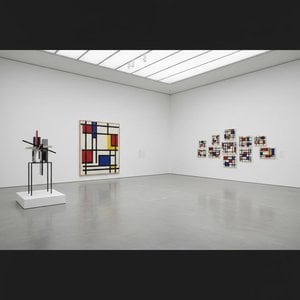
Entdecken Sie Piet Mondrians ‚Komposition mit Rot, Gelb und Blau‘ (1922). Ein revolutionäres neoplastisches Meisterwerk aus Primärfarben und geometrischen Formen – ein Eckpfeiler der Moderne. Jetzt hochwertige Reproduktionen kaufen!

Erkunden Sie die Kunst von Piët Mondrian (1872-1944), einem Pionier der abstrakten Kunst und der De Stijl Bewegung. Entdecken Sie seine ikonischen geometrischen Gemälde, seinen Neoplastischen Stil und seinen bleibenden Einfluss auf modernes Design, Architektur und 20. Jahrhundert Kunst.

Giclée / Kunstdruck

Giclée- oder Leinwanddruck in Museumsqualität mit schneller Produktion und flexiblen Veredelungsoptionen. ( Handgemalte Reproduktion kaufen Zum digitalen Bild wechseln)

P118B $10
P118H $10
P118W $10
P438Z $10
P508JH $12
P508YH $12
P805H $10
P805Z $10
P919BZ $10
P919G $10
P919XJ $10
P959ZH $10
P968JZ $12
W106C $8
W218G $10
W218JH $8
W218Y $10
W307PJ $10
W316G $10
W316PJ $8
W316Y $10
W398PJ $8
W4111J $10
W500HY $15
W500JH $15
W692G $12
W849H $8
W940BG $15
W953PJ $8

Standardformat
individuell anpassbar
CM
INCH

Wählen Sie aus unseren vordefinierten Formaten, die den ursprünglichen Proportionen des Kunstwerks entsprechen.

Breite
Höhe

Sie können Ihre eigenen Maße eingeben, um ein bestimmtes Format oder einen speziellen Platz einzupassen. Wenn das von Ihnen gewählte Format nicht den Proportionen des Originalbildes entspricht, werden wir das Kunstwerk entweder beschneiden oder das Bild mit einem gespiegelten oder einfarbigen Rand erweitern. Ein digitaler Entwurf wird Ihnen zur Genehmigung zugesandt, bevor die Produktion beginnt.
Bitte beachten Sie, dass die Vorschau auf dem Bildschirm nicht den tatsächlichen Zuschnitt oder die Erweiterung widerspiegelt. Nur der Entwurf zeigt die endgültige Komposition präzise an.
Obwohl Sondermaße verfügbar sind, empfehlen wir die Auswahl eines Maßes aus der vordefinierten Liste, um die ursprünglichen Proportionen zu bewahren.

Weltweiter Versand () innerhalb von 2 Wochen statt der üblichen 4/5 Wochen. (17 September)

why_choose_icon
Kostenloser weltweiter Expressversand
why_choose_icon
Hochwertige Leinenleinwand
why_choose_icon
Vollständiger Versicherungsschutz beim Versand
why_choose_icon
Zollgebühren-Rückerstattungsgarantie
why_choose_icon
Garantie für exakte Farbtreue
why_choose_icon
100-tägiges Rückgaberecht (nur bei Mängeln)
why_choose_icon
100% Geld-zurück-Garantie
why_choose_icon
Angebot für Mengenrabatt

Gesamtpreis

$ 68

reproduction

Komposition mit Rot, Gelb und Blau

Giclée / Kunstdruck

Format der Reproduktion

-

Gesamtpreis

$ 68

Kurzübersicht

  • Movement: Neoplasticism
  • Title: Composition with Red, Blue & Yellow
  • Notable elements or techniques: Geometric abstraction; Primary colors
  • Dimensions: 16 x 19 cm
  • Year: 1922
  • Medium: Oil on Canvas
  • Influences: Theosophy

Kunst-Quiz

Jede Frage hat nur eine richtige Antwort.

Frage 1:
What art movement is Piet Mondrian’s ‘Composition with Red, Yellow and Blue’ associated with?
Frage 2:
In what year was ‘Composition with Red, Yellow and Blue’ created?
Frage 3:
What are the primary colors prominently featured in this painting?
Frage 4:
The painting utilizes geometric shapes. Which of these shapes are most evident?
Frage 5:
What philosophical influence is suggested by Mondrian's exploration of universal language through art?

The Essence of Pure Form: A Journey into Mondrian’s Geometric Revelation

In the quiet evolution of modernism, few works possess the radical clarity of Piet Mondrian’s Composition with Red, Yellow and Blue. Created in 1922, this masterpiece serves as a profound window into the soul of Neoplasticism, a movement that sought to strip away the distractions of the physical world to reveal a deeper, universal truth. While many artists of his era were still tethered to the representational beauty of landscapes and figures, Mondrian embarked on a daring intellectual voyage. He moved beyond the lush textures of Dutch Impressionism toward a visual language composed of nothing but the most fundamental elements: straight lines, primary colors, and a rigorous sense of equilibrium.

To gaze upon this canvas is to witness a deliberate distillation of reality. The painting does not attempt to mimic the organic chaos of nature; instead, it constructs an architectural meditation on order. Through a masterful use of horizontal and vertical black lines, Mondrian establishes a structural grid that anchors the viewer’s eye. Within this framework, the vibrant pulses of red, yellow, and blue emerge not as mere decorations, but as elemental forces. There is a rhythmic tension at play here—a silent dialogue between the weight of the bold color blocks and the airy lightness of the white spaces, creating a sense of dynamic stability that feels both ancient and avant-garde.

A Symphony of Primary Truths

The technical brilliance of this work lies in its deceptive simplicity. Though the palette is strictly limited to the primary triad, the emotional resonance is vast. For the discerning collector or interior designer, this piece offers a timeless sophistication that transcends fleeting trends. The use of primary colors—red for energy, yellow for light, and blue for depth—mirrors the philosophical pursuits of Theosophy, which heavily influenced Mondrian’s search for spiritual harmony through geometric purity. Every intersection of line and color is calculated to achieve a state of "relational opposites," where asymmetry provides a much more complex and engaging balance than traditional symmetry ever could.

For those looking to infuse a contemporary space with intellectual depth, a high-quality reproduction of this composition acts as a focal point of clarity. It brings an atmosphere of structured calm and modern elegance to any room, whether it be a minimalist gallery setting or a vibrant, eclectic living area. The painting does not merely occupy space; it organizes it. By introducing such a disciplined aesthetic, the artwork invites contemplation, encouraging the viewer to find beauty in the essential and strength in the simple.

The Legacy of Neoplasticist Vision

Understanding this work requires acknowledging the transformative era from which it emerged. Mondrian’s transition from the soft, atmospheric studies of his youth to this uncompromising abstraction represents one of the most significant shifts in art history. This 1922 composition stands as a pivotal moment where the artist successfully translated complex philosophical inquiries into a visual shorthand that remains legible and powerful over a century later. It is an invitation to look past the surface of things and appreciate the underlying geometry of existence.

Owning or displaying such a piece is more than a decorative choice; it is an engagement with the very foundations of 20th-century modernism. As a cornerstone of the De Stijl spirit, this artwork continues to inspire architects, designers, and art lovers alike, proving that true innovation does not require complexity, but rather the courage to find perfection in the most basic building blocks of our visual world.


Biografie des Künstlers

**frühes Leben und Karriere in den Niederlanden (1872–1911)**

pieter cornelis mondriaan, bekannt ab 1911 als piet mondrian, war ein niederländischer Maler und Kunsttheoretiker, geboren am 7. März 1872 in Amersfoort, Niederlande. Er begann seine Karriere als Lehrer an der Grundschule und betrieb gleichzeitig Malerei, zunächst im Stil der Haag School des niederländischen Impressionismus.
  • Sein frühes Werk, das von naturalistischen Landschaften geprägt ist, kann in Gemälden wie the red mill und trees in moonrise zu sehen ist, die im kunstmuseum den haag ausgestellt wurden.
  • Mondrians Suche nach einem persönlichen Stil führte ihn dazu, verschiedene künstlerische Bewegungen zu erkunden, darunter Pointillismus und Fauvismus.
  • Seine erste Ausstellung im Jahr 1893 markierte den Beginn seiner produktiven Karriere.

**Die Entwicklung des Stils von Mondrian**

Von figurativ zu abstrakt Mondrians künstlerische Richtung verschob sich hin zu einem zunehmend abstrakten Stil, der in eine nicht-repräsentative Form mündete, die er Neoplasticismus nannte. Diese „reine plastische Kunst“ zielte darauf ab, „universelle Schönheit“ zu schaffen und seinen formalen Wortschatz auf Primärfarben (Rot, Blau und Gelb), Werte (Schwarz, Weiß und Grau) und Richtungen (horizontal und vertikal) zu beschränken.

**Vermächtnis und Einfluss**

Mondrians Vermächtnis erstreckt sich über sein eigenes Werk hinaus und beeinflusst wichtige Stile und Bewegungen wie Farbflächenmalerei, abstrakten Expressionismus und Minimalismus. Kunsthistoriker stephen bayley stellte fest, dass Mondrian zum Totem für alles geworden ist, was der Modernismus zu sein versuchte.
  • Entdecken Sie mehr von Mondrians Werk unter WahooArt.com.
  • Erfahren Sie mehr über die De Stijl-Bewegung und ihren Einfluss auf die moderne Kunst auf wikipedia.
  • Entdecken Sie andere einflussreiche Künstler wie vincent van gogh und ihre Auswirkungen auf die Kunstwelt.

**Wichtige Werke und Ausstellungen**

* piet mondrian: apple blossom (Cubismus) (ansicht auf WahooArt.com) * piet mondrian: still life with vase of spices ii (Cubismus) (ansicht auf WahooArt.com) * piet mondrian: passionflower (73 x 48 cm, Kunstmuseum Den Haag, Postimpressionismus, Aquarell) (ansicht auf WahooArt.com)
Piët Mondrian

Piët Mondrian

1872 - 1944 , Niederlande

Eckdaten zum Künstler

  • Beeinflusste Künstler:
    • Hague School
    • Pointillismus
    • Fauvismus
    • Kubismus
  • Bemerkenswerte Werke:
    • Komposition mit Rot, Gelb und Blau
    • Broadway Boogie Woogie
    • Tableau Nr. 2 Komposition V
    • Rhythmus der schwarzen Linien
  • Geburtsdatum: 7. März 1872
  • Geburtsort: Amersfoort, Niederlande
  • Künstlerische Bewegung: De Stijl, Neoplasticismus
  • Nationalität: Niederländisch
  • Sterbedatum: 1944
  • Vollständiger Name: Piët Mondriaan
  • Von Künstlern Beeinflusst:
    • Farbfeldmalerei
    • Abstrakter Expressionismus
    • Minimalismus
Entdecken Sie Kunstwerke, die nach Themen, Stilen und Merkmalen sortiert sind.