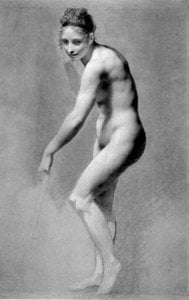
Oil On CanvasWallArtRomanticism
 180819th Century
 55.0 x 46.0 cm
Handgemaltes Ölgemälde auf Leinwand in Ihrer Wunschgröße und mit Rahmen, auf Bestellung von unseren Künstlern angefertigt. ( Druck bestellen Bild kaufen)





























Wählen Sie aus unseren vordefinierten Formaten, die den ursprünglichen Proportionen des Kunstwerks entsprechen.

Sie können Ihre eigenen Maße eingeben, um einen bestimmten Rahmen oder Platz auszufüllen. Wenn die gewählte Größe nicht den Proportionen des Originalbildes entspricht, werden wir das Kunstwerk entweder beschneiden oder das Gemälde durch zusätzliche, handgemalte Elemente erweitern. Ein digitales Mockup wird Ihnen zur Genehmigung zugesandt, bevor die Produktion beginnt.
Bitte beachten Sie, dass die Bildschirmvorschau nicht die tatsächliche Beschneidung oder Erweiterung widerspiegelt. Nur das Mockup zeigt die endgültige Komposition exakt an.
Obwohl Sondermaße verfügbar sind, empfehlen wir, eine Größe aus der vordefinierten Liste zu wählen, um die ursprünglichen Proportionen beizubehalten.
Weltweiter Versand () in nur 3 bis 4 Wochen statt der üblichen 5 Wochen. (6 September). Keine Kompromisse bei der Qualität.


David Jonston
Format der Reproduktion
In the quiet depths of Pierre-Paul Prud'hon’s 1808 masterpiece, David Jonston, viewers are invited into a private moment of profound contemplation. This exquisite oil on canvas serves as a quintessential window into the heart of the Romantic era, capturing far more than a mere likeness of a young man. Through his masterful command of the medium, Prud'hon presents a subject whose gaze, directed slightly away from the viewer, suggests a soul lost in thought, perhaps reflecting on the fleeting nature of youth or the weight of personal destiny. The portrait is not simply a record of a face, but an exploration of the internal landscape, where a subtle, enigmatic smile dances on the lips, hinting at a hidden narrative known only to the sitter.
The technical brilliance of the work lies in Prud'hon’s sophisticated use of chiaroscuro, a technique that defines much of his celebrated legacy. By emerging from an indistinct, shadowy background, the figure of David Jonston gains a remarkable three-dimensionality, as if he were stepping forward from the darkness into the light of the viewer's presence. The soft, diffused lighting plays delicately across the subject’s fair skin and the intricate textures of his attire, creating a sense of palpable realism. This interplay of light and shadow does more than provide depth; it imbues the painting with a melancholic, dreamy atmosphere that is the hallmark of Prud'hon’s unique transition from Neoclassical precision to Romantic emotion.
Every detail within the frame contributes to the painting's aura of refined elegance. The subject is dressed in the formal fashion of the early 19th century, featuring a high-collared black coat that frames his face with stark, dignified contrast. Beneath this, the delicate ruffles of a white shirt add a touch of softness and aristocratic grace, showcasing the artist's ability to render varied textures—from the heavy weight of fine wool to the light, airy quality of linen. These sartorial elements do not merely ground the portrait in its historical moment; they serve as symbols of status and the structured social graces of the era, even as the subject's expression suggests a departure from such rigid formalities.
For the discerning collector or interior designer, David Jonston offers an unparalleled opportunity to introduce a sense of historical gravity and emotional depth into a space. As a high-quality reproduction, this piece brings the prestige of the French Romantic movement into the modern home, acting as a sophisticated focal point that sparks conversation and invites quiet reflection. Whether placed in a curated gallery wall or standing alone as a statement piece in a study, the painting’s ability to evoke nostalgia and timeless beauty makes it an enduring treasure for those who appreciate art that speaks to the complexities of the human spirit.

Pierre-Paul Prud’hon war eine zentrale Figur in der französischen Kunst und überbrückte den Übergang vom Neoklassizismus zur Romantik. Geboren in Cluny, Saône-et-Loire, Frankreich, spiegelt seine künstlerische Reise die sich verändernde ästhetische Landschaft Europas im späten 18. und frühen 19. Jahrhundert wider. Er wird sowohl für seine allegorischen Gemälde als auch für Porträts gefeiert und demonstriert eine Meisterschaft des Chiaroscuro und des Realismus, die das Publikum fesselte und nachfolgende Generationen beeinflusste.
Prud'hon übte einen beträchtlichen Einfluss auf nachfolgende Generationen französischer Künstler aus. Seine Meisterschaft des Chiaroscuro, seine Fähigkeit, Porträts mit psychologischer Tiefe zu versehen, und seine Synthese von neoklassizistischen und romantischen Stilen machten ihn zu einer hoch angesehenen Figur in der Kunstwelt. Künstler wie Théodore Géricault und Eugène Delacroix erkannten seinen Einfluss an und ließen sich von seinen dramatischen Kompositionen und emotionaler Ausdruckskraft inspirieren. Stendhal, Millet und Baudelaire erkannten ebenfalls Prud'hons künstlerische Verdienste, was seine Position in der französischen Kulturgeschichte weiter festigte.

1758 - 1823 , Frankreich

Entdecken Sie das faszinierende Werk von Pierre Paul Prud’hon! Unsere Expertenanalyse beleuchtet den Übergang vom Klassizismus zur Romantik, seine innovativen Techniken und seinen Einfluss auf die Kunstgeschichte. Jetzt lesen!
Entdecken Sie die 25 schönsten Meisterwerke von Pierre-Auguste Renoir! Tauchen Sie ein in die Welt des Impressionismus, erleben Sie berühmte Gemälde wie 'Bal au moulin de la Galette' und finden Sie hochwertige Kunstdrucke für Ihr Zuhause. Jetzt auf WahooArt.com!

Entdecken Sie die 25 Meisterwerke von Paul Klee! Tauchen Sie ein in seine abstrakte Welt, voller Expressionismus und Bauhaus-Einflüsse. Hochwertige Kunst für Ihr Zuhause – jetzt bei WahooArt entdecken!
Entdecken Sie die 25 Meisterwerke von Paul Cézanne! Tauchen Sie ein in die Welt des Impressionismus und Postimpressionismus. Erfahren Sie mehr über seine Stillleben, Landschaften & berühmten Gemälde – jetzt hochwertige Kunstdrucke auf WahooArt.com.

Explore 10 defining masterpieces of Romantic Realism! Discover Courbet, Millet & Daumier's powerful paintings—capturing emotion and social realities. Find museum-quality reproductions for your home at WahooArt.com.

 Vorschau anzeigen
 Versenden
 Teilen
 Details anzeigen

 Herunterladen
 Ähnliche Objekte
 Röntgenaufnahme
 Diashow
 Weiterlesen







 Die Glasoption ist nur für Größen unter 110 cm verfügbar.