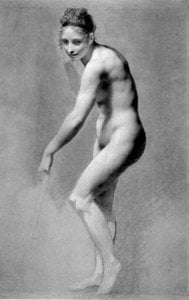
A Masterpiece of Shadow and Soul
In the profound stillness of Pierre-Paul Prud'hon’s Crucifixion, viewers are invited into a moment of unparalleled spiritual intensity. Created in 1822, this monumental work serves as a breathtaking bridge between the disciplined grace of Neoclassicism and the raw, emotive power of the burgeoning Romantic movement. The painting does not merely depict a historical event; it captures the very essence of human suffering and divine sacrifice. Through a masterful command of light and shadow, Prud'hon directs our gaze toward the central figure of Christ, whose vulnerability is laid bare against an abyss of dark, undefined space. This use of tenebrism—a dramatic technique where light emerges sharply from deep shadows—creates a spotlight effect that isolates the subject, forcing an intimate encounter between the observer and the divine agony on display.
The composition is a study in deliberate imbalance, designed to evoke a sense of cosmic upheaval. While Christ dominates the upper verticality of the canvas, his form hanging heavily from the cross, the lower right corner holds smaller, more detailed figures who gaze upward in mourning. This asymmetrical arrangement prevents the eye from resting, instead pulling the viewer upward through the strong vertical lines of the cross, mirroring a spiritual ascent. The color palette is intentionally restrained, relying on earthy browns, muted creams, and delicate flesh tones to maintain a somber atmosphere. Yet, within this limited range, there is a remarkable richness; subtle hints of red on the figures below provide just enough warmth to ground the scene in human emotion, contrasting with the ethereal, luminous quality of the light hitting Christ’s torso.
Technique and the Language of Light
For the discerning collector or interior designer, the technical brilliance of this piece offers endless layers of fascination. Prud'hon was a virtuoso of chiaroscuro, employing a sophisticated layering of oil paints to achieve subtle gradations of tone that mimic the softness of skin and the weight of heavy drapery. The artist’s ability to render texture is nothing short of extraordinary; one can almost feel the contrast between the smooth, idealized musculature of Christ’s body and the rough, tactile reality of the wooden cross and the parched ground below. These fine details are achieved through delicate glazes that allow light to penetrate the upper layers of paint, creating a glow that seems to emanate from within the canvas itself.
Beyond its aesthetic splendor, the Crucifixion is a profound vessel of symbolism. Every element is laden with meaning: the cross stands as an eternal emblem of faith and redemption, while the encroaching darkness symbolizes the isolation and despair inherent in the moment of death. The soft, blended lines used to define the anatomy contribute to a sense of pathos, softening the harshness of the execution to emphasize the tenderness of the sacrifice. For those seeking to incorporate a piece of this magnitude into a curated space, it offers more than just decoration; it provides a focal point of deep contemplation and historical gravity, making it an incomparable addition to any collection dedicated to the heights of European fine art.



 In echtem Maßstab anzeigen
 Zum Druck wechseln
 Versenden als Grußkarte
 Teilen
 Details anzeigen

 Herunterladen
 Ähnliche Objekte
 Röntgenaufnahme
 Diashow
 Besucherstatistiken


 Mehr anzeigen






































 Die Glasoption ist nur für Größen unter 110 cm verfügbar.