Biografie des Künstlers
Ein Meister von Brügge: Das Leben und die Kunst Petrus Christi
Petrus Christus, ein Name, der vielleicht nicht so sofort präsent ist wie seine Zeitgenossen Jan van Eyck oder Rogier van der Weyden, nimmt dennoch eine zentrale Stellung in der Entwicklung der frühen niederländischen Malerei ein. Geboren um 1465 in Baarle-Hertog, einem kleinen Herzogtum an der Grenze zwischen Belgien und den Niederlanden, trat Christus als einer der führenden Künstler hervor, der in Brügge während einer Zeit beispielloser künstlerischer Innovation tätig war. Obwohl biografische Details rar sind – ein häufiges Schicksal vieler Maler dieser Ära –, sprechen seine erhaltenen Werke Bände über sein technisches Können, seine intellektuelle Neugier und sein tiefes Verständnis sowohl für religiöses Symbolik als auch für die aufkeimenden Möglichkeiten der Ölmalerei. Er war nicht bloß ein Nachahmer in den Fußstapfen von Van Eyck; er war ein Innovator, der subtil und doch signifikant die Grenzen des Realismus und der Perspektive verschob und damit einen unvergesslichen Eindruck in die künstlerische Landschaft des 15. Jahrhunderts hinterließ.
Frühe Karriere und künstlerische Grundlagen
Christus taucht erstmals in historischen Aufzeichnungen im Jahr 1444 als Meistermaler in Brügge auf, was darauf hindeutet, dass er eine gründliche Ausbildung absolvierte – auch wenn die Identität seines Lehrers unbekannt geblieben ist. Was jedoch klar ist, ist, dass er sich schnell in der blühenden Kunstgemeinschaft der Stadt etablierte. Nach dem Tod von Jan van Eyck im Jahr 1441 füllte Christus eine Lücke und wurde zu einem der begehrtesten Künstler in Brügge. Seine frühen Werke zeugen von einem scharfen Bewusstsein für Van Eycks Techniken – die akribische Detailgenauigkeit, die leuchtende Qualität der Ölfarbe und der symbolische Reichtum, der in scheinbar alltäglichen Objekten verborgen lag. Doch er imitierte seinen Vorgänger nicht einfach. Christus begann, einen unverwechselbaren Stil zu entwickeln, der durch eine größere Betonung von Klarheit, architektonischen Umgebungen und ein zunehmend raffiniertes Verständnis linearer Perspektive gekennzeichnet war. Er nahm auch Einflüsse von Rogier van der Weyden auf, besonders in seiner Fähigkeit, emotionale Tiefe und spirituelle Intensität zu vermitteln.
Innovationen in Perspektive und Realismus
Christus' bedeutendster Beitrag liegt in seinem meisterhaften Umgang mit der linearen Perspektive. Während Van Eyck bereits einen Grad an räumlicher Verkürzung in seinen Werken angewandt hatte, ging Christus noch weiter und schuf Gemälde mit einem bemerkenswert überzeugenden Gefühl von Tiefe und Dreidimensionalität. Dies ist besonders deutlich in Werken wie der Madonna mit Kind, die heute in der National Gallery zu sehen ist, wo sich der architektonische Hintergrund mit mathematischer Präzision in die Ferne zurückzieht. Er schuf nicht einfach nur realistische Räume; er nutzte die Perspektive, um den Betrachter *in* die Szene hineinzuziehen und so eine intimere Verbindung zum Motiv zu fördern. Dies war nicht bloß eine technische Übung; es diente dazu, die spirituelle Wirkung des Gemäldes zu steigern und zur Kontemplation und Andacht einzuladen. Seine akribische Technik – das Schichten dünner Ölfarbglasuren, um einen unvergleichlichen Glanz und Detailreichtum zu erzielen – verstärkte dieses Gefühl von Realismus zusätzlich. Jede Textur, vom Faltenwurf des Stoffes bis zum Glanz des Metalls, wird mit erstaunlicher Genauigkeit wiedergegeben.
Hauptwerke und symbolische Sprache
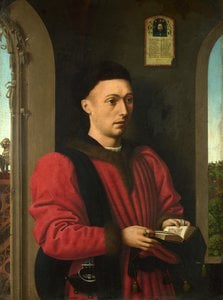
Über die Madonna mit Kind hinaus schuf Christus eine Reihe weiterer bemerkenswerter Werke, die sein künstlerisches Können und seine intellektuelle Tiefe zeigen. Das Porträt eines jungen Mannes, das sich derzeit im Museo Thyssen-Bornemisza befindet, ist ein besonders eindringliches Beispiel für seine Fähigkeit, den menschlichen Charakter einzufangen. Der Blick des Dargestellten ist direkt und fesselnd und vermittelt ein Gefühl von Intelligenz und Selbstbewusstsein. Das Gemälde offenbart auch Christus subtilen Einsatz von Symbolik – die einzelne brennende Kerze mag Christus als Licht der Welt darstellen, während die Orange auf dem Fensterbrett auf Reinheit und Tugend verweisen könnte. Er integrierte solche symbolischen Elemente häufig in seine Gemälde, wodurch deren Bedeutung über das rein Visuelle hinaus angereichert wurde. Ein weiteres wichtiges Werk ist Das letzte Gericht, eine komplexe Komposition, die sein Geschick beim Darstellen mehrerer Figuren in einem dynamischen Raum demonstriert.
Vermächtnis und historische Bedeutung
Petrus Christus starb 1476 in Brügge und hinterließ ein relativ kleines, aber tiefgreifend einflussreiches Werk. Seine Innovationen mit der linearen Perspektive und der akribischen Technik hatten einen nachhaltigen Einfluss auf nachfolgende Generationen von Malern. Obwohl er kein großes Atelier gründete oder zahlreiche Anhänger gewann, wurde sein Stil von anderen Künstlern in der Region aufgenommen und trug so zur weiteren Entwicklung der nordeuropäischen Renaissance bei. Er schloss die Lücke zwischen dem Stil des Internationalen Gotik und den naturalistischen Tendenzen des 15. Jahrhunderts und ebnete damit den Weg für Künstler wie Hans Memling und Hugo van der Goes. Heute wird Petrus Christus als Schlüsselfigur der frühen niederländischen Kunst anerkannt – ein Meisterhandwerker, dessen Gemälde die Betrachter mit ihrer Schönheit, ihrem Realismus und ihrer intellektuellen Tiefe weiterhin fesseln. Sein Werk bietet ein einzigartiges Fenster in die künstlerische und religiöse Welt des 15. Jahrhunderts in Brügge und erinnert uns an die Kraft der Malerei, sowohl unsere Wahrnehmung zu spiegeln als auch zu formen.



 In echtem Maßstab anzeigen
 Handgemalte Reproduktion kaufen
 Versenden als Grußkarte
 Teilen
 Details anzeigen
 Leitfaden öffnen

 Herunterladen
 Ähnliche Objekte
 Röntgenaufnahme
 Diashow
 Besucherstatistiken


 Mehr anzeigen






































 Die Glasoption ist nur für Größen unter 110 cm verfügbar.