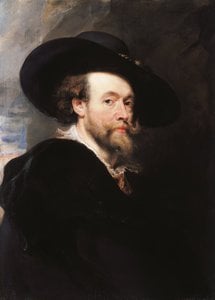
Portrait of Peter Van Hecke: A Baroque Masterpiece
“Portrait of a Man, Probably Peter Van Hecke” by Peter Paul Rubens stands as a testament to the grandeur and sophistication of the Flemish Baroque. Painted around 1630, this oil on canvas artwork measures 90.2 x 114.9 centimeters and resides within the Mauritshuis museum in The Hague, Netherlands—a venue dedicated to showcasing exceptional artistic treasures.
An Examination of Rubens’ Style and Influences
Peter Paul Rubens (1577-1640) was undeniably one of the most influential artists of his era. His distinctive style, rooted in Renaissance ideals yet propelled forward by Caravaggio's dramatic realism, prioritized movement, color intensity, and sensual representation. Rubens’ approach wasn’t merely about depicting a subject; it was about conveying emotion and capturing the essence of human character—a hallmark of Baroque art.
Detailed Analysis: Composition and Technique
The painting’s composition is meticulously crafted to draw the viewer's eye directly into the figure’s gaze. Rubens skillfully employs *tenebrism*, a technique characterized by stark contrasts between light and dark, creating an atmosphere of drama and highlighting the man’s facial features with luminous illumination. The drapery—particularly the prominent red curtain—serves as a visual anchor, adding depth and richness to the scene.
- Color Palette: Rubens utilized vibrant hues – reds, golds, blacks – reflecting the opulent tastes of his time and enhancing the painting’s emotional impact.
- Brushwork: His energetic brushstrokes contribute to a palpable sense of movement, conveying dynamism and vitality.
- Lighting: The dramatic chiaroscuro emphasizes the contours of the figure and creates an illusion of three-dimensionality.
Historical Context and Symbolism
Rubens’ work reflects the broader cultural landscape of 17th-century Europe, particularly the Catholic Counter Reformation. Portraits like “Portrait of Peter Van Hecke” served as symbols of status and piety—demonstrating wealth and conveying moral virtue. The subject's dignified posture and gaze embody ideals of nobility and contemplation.
Why Choose a Reproduction?
For art enthusiasts and collectors alike, owning a high-quality reproduction of “Portrait of Peter Van Hecke” offers an unparalleled opportunity to experience the beauty and artistry of Rubens’ masterpiece firsthand. Visit Artchive to explore more about Peter Paul Rubens and his enduring legacy!



 Vorschau anzeigen
 Handgemalte Reproduktion bestellen
 Versenden
 Teilen
 Details anzeigen

 Herunterladen
 Ähnliche Objekte
 Röntgenaufnahme
 Diashow
 Statistiken


 Weiterlesen






































 Die Glasoption ist nur für Größen unter 110 cm verfügbar.