In echtem Maßstab anzeigen In AR an der Wand sehen Zum Druck wechseln Zum digitalen Bild wechseln Versenden als Grußkarte
Details anzeigen Leitfaden Zu Favoriten hinzufügen Herunterladen Ähnliche Objekte Röntgenaufnahme Diashow Besucherstatistiken

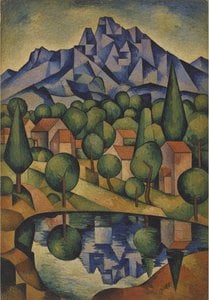
Pine Tree in the Arc Valley

Experience Paul Cézanne's "Pine Tree in the Arc Valley" (1885). This iconic watercolor captures Provençal beauty with innovative brushstrokes, bridging Impressionism and Cubism. A masterpiece of modern art.

Erkunden Sie die revolutionäre Kunst von Paul Cézanne (1839–1906), einem Postimpressionisten, der Impressionismus und Kubismus miteinander verband. Entdecken Sie seine geometrischen Formen, seine einzigartigen Pinselstriche, Stilllebenmalereien und seinen bleibenden Einfluss auf die moderne Kunst. #Cézanne #PostImpressionismus

Handgefertigte Ölreproduktion

Handgemaltes Ölgemälde auf Leinwand in Ihrer Wunschgröße und mit Rahmen, auf Bestellung von unseren Künstlern angefertigt. ( Zum Druck wechseln Zum digitalen Bild wechseln)

P118B $10
P118H $10
P118W $10
P438Z $10
P508JH $12
P508YH $12
P805H $10
P805Z $10
P919BZ $10
P919G $10
P919XJ $10
P959ZH $10
P968JZ $12
W106C $8
W218G $10
W218JH $8
W218Y $10
W307PJ $10
W316G $10
W316PJ $8
W316Y $10
W398PJ $8
W4111J $10
W500HY $15
W500JH $15
W692G $12
W849H $8
W940BG $15
W953PJ $8

Standardformat
individuell anpassbar
CM
INCH

Wählen Sie aus unseren vordefinierten Formaten, die den ursprünglichen Proportionen des Kunstwerks entsprechen.

Breite
Höhe

Sie können Ihre eigenen Maße eingeben, um einen bestimmten Rahmen oder Platz auszufüllen. Wenn die gewählte Größe nicht den Proportionen des Originalbildes entspricht, werden wir das Kunstwerk entweder beschneiden oder das Gemälde durch zusätzliche, handgemalte Elemente erweitern. Ein digitales Mockup wird Ihnen zur Genehmigung zugesandt, bevor die Produktion beginnt.
Bitte beachten Sie, dass die Bildschirmvorschau nicht die tatsächliche Beschneidung oder Erweiterung widerspiegelt. Nur das Mockup zeigt die endgültige Komposition exakt an.
Obwohl Sondermaße verfügbar sind, empfehlen wir, eine Größe aus der vordefinierten Liste zu wählen, um die ursprünglichen Proportionen beizubehalten.

Beispiele für Anpassungsmöglichkeiten: Gesicht durch Kundenfoto ersetzen; Haustier hinzufügen (z. B. Katze durch Hund ersetzen); eine versteckte Nachricht im Hintergrund einfügen; Hintergrundlandschaft oder -elemente ändern.
Nach der Bestellung wird das WahooArt.com-Team dem Kunden Anweisungen per E-Mail zusenden und eine Mockup-Vorschau bereitstellen.

Weltweiter Versand () in nur 3 bis 4 Wochen statt der üblichen 5 Wochen. (24 September). Keine Kompromisse bei der Qualität.

why_choose_icon
Kostenloser weltweiter Expressversand
why_choose_icon
Hochwertige Leinenleinwand
why_choose_icon
Vollständiger Versicherungsschutz beim Versand
why_choose_icon
Zollgebühren-Rückerstattungsgarantie
why_choose_icon
Garantie für exakte Farbtreue
why_choose_icon
100-tägiges Rückgaberecht (nur bei Mängeln)
why_choose_icon
100% Geld-zurück-Garantie
why_choose_icon
Angebot für Mengenrabatt

Gesamtpreis

$ 272

reproduction

Pine Tree in the Arc Valley

Reproduktionsmedium

Format der Reproduktion

-

Gesamtpreis

$ 272

Kurzübersicht

  • Location: Albertina, Vienna
  • Title: Pine Tree in the Arc Valley
  • Artist: Paul Cézanne
  • Influences: Cézanne
  • Artistic style: Landscapes
  • Notable elements: Loose brushstrokes
  • Subject or theme: Nature scene

Kunst-Quiz

Jede Frage hat nur eine richtige Antwort.

Frage 1:
What is the primary subject of Paul Cézanne’s "Pine Tree in the Arc Valley"?
Frage 2:
In what year was "Pine Tree in the Arc Valley" painted?
Frage 3:
The painting utilizes which technique to create a sense of depth and form?
Frage 4:
The Arc Valley depicted in the painting is located in which region?
Frage 5:
Considering Cézanne’s artistic development, what movement does "Pine Tree in the Arc Valley" most closely align with?

The Serene Majesty of “Pine Tree in the Arc Valley”

Paul Cézanne’s “Pine Tree in the Arc Valley,” painted around 1885, isn't merely a depiction of a landscape; it’s a profound meditation on perception and the very nature of seeing. This watercolor masterpiece, now housed within the Albertina Museum in Vienna, captures a pivotal moment in Cézanne’s artistic evolution – a shift away from the fleeting impressions of Impressionism towards a more structured, geometric approach that would profoundly influence the course of modern art. The scene unfolds in the Arc Valley of southwestern France, a region Cézanne frequently revisited and imbued with an almost obsessive fascination. It's a place he sought to distill into its essential forms, a challenge reflected in the painting’s deliberate simplification and layering of color. The composition isn’t about photographic realism; instead, it’s an exploration of how the eye *interprets* reality – a core tenet of Cézanne’s revolutionary vision.

A Revolutionary Technique: Breaking with Tradition

Cézanne's technique in “Pine Tree in the Arc Valley” is instantly recognizable and deliberately unconventional for its time. He abandons traditional perspective, flattening space and suggesting depth through the manipulation of color and form rather than linear recession. The tree itself isn’t rendered as a single, unified shape; it’s built up from countless small, overlapping brushstrokes – a technique he termed “alla prima,” meaning “at first go.” These strokes aren't blended smoothly; they retain their individual texture and direction, creating a vibrant, almost mosaic-like surface. The background landscape is treated similarly, with washes of color applied in broad, gestural strokes that evoke the atmosphere and light of the valley without attempting to accurately represent its contours. Notice how Cézanne uses complementary colors – blues and oranges, greens and reds – not to create harmonious blends, but to heighten contrast and intensify the visual impact of each element. This deliberate disruption of conventional painting methods was a radical statement, signaling a move away from mimicking nature and towards expressing an artist’s subjective experience of it.

Symbolism in the Natural World

Beyond its technical innovations, “Pine Tree in the Arc Valley” is rich with symbolic meaning. The pine tree itself has long been associated with resilience, longevity, and connection to the earth – qualities that resonate deeply within Cézanne's work. The valley, with its winding river and distant mountains, represents a sense of tranquility and timelessness. The subtle inclusion of a bridge in the background hints at human presence, but it’s dwarfed by the scale of nature, reinforcing the idea of humanity’s place within the larger natural order. Some art historians have interpreted the painting as an allegory for Cézanne's own artistic journey – a solitary figure striving to capture the essence of his subject matter and overcome the limitations of traditional representation. The distant mountains, bathed in hazy light, could symbolize the challenges and uncertainties that lie ahead on any creative path.

An Enduring Emotional Resonance

Despite its intellectual complexity, “Pine Tree in the Arc Valley” possesses a remarkable emotional resonance. There’s a quiet serenity to the scene – a sense of peace and contemplation that invites the viewer to slow down and simply *be* present with the image. The interplay of light and shadow, the vibrant colors, and the textured brushstrokes all contribute to this feeling of immersion. It's not a painting that shouts for attention; rather, it whispers its beauty with understated elegance. The work’s enduring appeal lies in its ability to evoke a sense of connection to nature – a reminder of the simple pleasures and profound truths that can be found in the world around us. Reproductions of this piece offer a window into Cézanne's unique vision, allowing viewers to experience firsthand the transformative power of his art. It’s a testament to the artist’s ability to capture not just what he saw, but *how* he felt about what he saw – a truly remarkable achievement that continues to inspire artists and captivate audiences today.

Biografie des Künstlers

frühes Leben und Einflüsse

Paul Cézanne, ein französischer Post-Impressionist-Maler, wurde am 19. Januar 1839 in Aix-en-Provence, Frankreich, geboren. Sein frühes Leben war geprägt von einer starken Verbindung zu seiner Familie’s Bankgeschäft, das ihm finanzielle Sicherheit verschaffte. Dies ermöglichte es ihm, sich ohne finanziellen Druck auf seine künstlerischen Bestrebungen zu konzentrieren. Les Nabis, Neo-Impressionismus und Symbolismus beeinflussten Cézannes frühe Arbeit, die sich durch seinen Schwerpunkt auf geometrische Formen und eine reduzierte Farbpalette auszeichnete. Sein Interesse an den Werken von Paul Gauguin und Georges Seurat festigte seinen Post-Impressionismusstil.

Künstlerischer Stil und Techniken

Cézannes innovative Verwendung von Farbflächen und kleinen, sich wiederholenden Pinselstrichen schuf komplexe Felder, die seine intensive Beschäftigung mit den Motiven widerspiegelten. Sein oft explorativer Ansatz in der Kunst führte zur Entwicklung einer neuen bildlichen Sprache, die die zugrunde liegende Struktur von Objekten in einer Komposition betonte.

Vermächtnis und Einfluss

Cézannes bahnbrechende Arbeit im Post-Impressionismus ebnete den Weg für verschiedene Avantgarde-Bewegungen, darunter Kubismus, Fauvismus und Surrealismus. Sein Einfluss ist in den Werken von Pablo Picasso, Henri Matisse und Georges Braque zu sehen. Cézannes Vermächtnis inspiriert weiterhin Künstler und Kunstinteressierte gleichermaßen und festigt seinen Platz als eine zentrale Figur in der Geschichte der modernen Kunst.
Paul Cézanne

Paul Cézanne

1839 - 1906 , Frankreich

Eckdaten zum Künstler

  • Beeinflusste Künstler:
    • Paul Gauguin
    • Georges Seurat
  • Bemerkenswerte Werke:
    • Der Teich in Jas de Bouffan
    • Porträt von Émile Zola
    • Wald
    • Mont Sainte-Victoire
  • Geburtsdatum: 19. Januar 1839
  • Geburtsort: Aix-en-Provence, Frankreich
  • Künstlerische Bewegung: Postimpressionismus
  • Nationalität: Französisch
  • Sterbedatum: 1906
  • Vollständiger Name: Paul Cézanne
  • Von Ihm Beeinflusste Künstler:
    • Pablo Picasso
    • Henri Matisse
    • Georges Braque
Entdecken Sie Kunstwerke, die nach Themen, Stilen und Merkmalen sortiert sind.