Kostenlose Kunstberatung

x
Gemälde kaufen Gemälde kaufenBild kaufen Bild kaufen VersendenVersenden
DetailsDetails Zu Favoriten hinzufügen Zu Favoriten hinzufügen HerunterladenHerunterladen Ähnliche ObjekteÄhnliche Objekte X-RayX-Ray Diashow anzeigenDiashow anzeigen

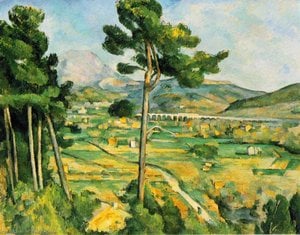
Large Pine

Paul Cézanne’s ‘Large Pine,’ a Post-Impressionist masterpiece from 1905, captures a rugged winter pine with textured brushstrokes and earthy tones. Explore this iconic landscape by Cézanne and discover its profound impact on modern art.

Erkunden Sie die revolutionäre Kunst von Paul Cézanne (1839–1906), einem Postimpressionisten, der Impressionismus und Kubismus miteinander verband. Entdecken Sie seine geometrischen Formen, seine einzigartigen Pinselstriche, Stilllebenmalereien und seinen bleibenden Einfluss auf die moderne Kunst. #Cézanne #PostImpressionismus

Giclée / Kunstdruck

Giclée- oder Leinwanddruck in Museumsqualität mit schneller Produktion und flexiblen Veredelungsoptionen.

P118B $10
P118H $10
P118W $10
P438Z $10
P508JH $12
P508YH $12
P805H $10
P805Z $10
P919BZ $10
P919G $10
P919XJ $10
P959ZH $10
P968JZ $12
W106C $8
W218G $10
W218JH $8
W218Y $10
W307PJ $10
W316G $10
W316PJ $8
W316Y $10
W398PJ $8
W4111J $10
W500HY $15
W500JH $15
W692G $12
W849H $8
W940BG $15
W953PJ $8

Standard
custom
CM
INCH

Wählen Sie aus unseren vordefinierten Größen, die den ursprünglichen Proportionen des Kunstwerks entsprechen.

Breite
Höhe

Sie können Ihre eigenen Maße eingeben, um ein bestimmtes Format oder einen speziellen Platz einzupassen. Wenn das von Ihnen gewählte Format nicht den Proportionen des Originalbildes entspricht, werden wir das Kunstwerk entweder beschneiden oder das Bild mit einem gespiegelten oder einfarbigen Rand erweitern. Ein digitaler Entwurf wird Ihnen zur Genehmigung zugesandt, bevor die Produktion beginnt.
Bitte beachten Sie, dass die Vorschau auf dem Bildschirm nicht den tatsächlichen Zuschnitt oder die Erweiterung widerspiegelt. Nur der Entwurf zeigt die endgültige Komposition präzise an.
Obwohl Sondermaße verfügbar sind, empfehlen wir die Auswahl eines Maßes aus der vordefinierten Liste, um die ursprünglichen Proportionen zu bewahren.

Weltweiter Versand () innerhalb von 2 Wochen statt der üblichen 4/5 Wochen. (2 Juli)

why_choose_icon
Kostenloser weltweiter Expressversand
why_choose_icon
Hochwertige Leinenleinwand
why_choose_icon
Umfassender Versicherungsschutz beim Versand
why_choose_icon
Zollsteuer-Rückerstattungsgarantie
why_choose_icon
Garantie für echte Farbtreue
why_choose_icon
60-Tage-Rückgaberecht (nur bei Mängeln)
why_choose_icon
100% Geld-zurück-Garantie
why_choose_icon
Mengenrabatt verfügbar

Gesamtpreis

-

reproduction

Large Pine

Giclée / Kunstdruck

Größe der Reproduktion

-

Endpreis aller Optionen

-

Eckdaten auf einen Blick

  • Notable elements or techniques: Geometric simplification; Layered brushstrokes
  • Artistic style: Analytical Cubism
  • Location: Private Collection
  • Year: 1905
  • Movement: Post-Impressionism
  • Subject or theme: Landscape
  • Title: Large Pine

Beschreibung des Sammlerstücks

A Pioneer's Embrace of Nature: Exploring Cézanne’s “Large Pine”

Paul Cézanne, a name synonymous with artistic innovation and the genesis of modern art, wasn’t merely depicting a tree; he was wrestling with fundamental questions about perception and representation. His "Large Pine," painted in 1905, stands as a testament to this intellectual fervor—a deceptively simple landscape brimming with complex considerations that continue to fascinate scholars and inspire artists today. Initially dismissed by critics who favored Impressionistic fleetingness, Cézanne stubbornly pursued his vision of solidity and form, ultimately reshaping the artistic landscape forever.
  • Subject Matter: The painting focuses on a solitary pine tree against a muted backdrop of earthy tones—primarily ochre and reddish hues—characteristic of Cézanne’s Provençal homeland. It's not an idealized depiction; rather, it presents a rugged, weathered specimen of nature, capturing its essence with remarkable accuracy.
  • Style: Cézanne firmly rejected Impressionism’s emphasis on optical illusion, opting instead for Post-Impressionism—a movement that prioritized expressive color and formal experimentation over faithful observation. This stylistic choice distinguishes “Large Pine” from its contemporaries, signaling a decisive break from artistic conventions of the time.
  • Technique: Cézanne employed a groundbreaking technique known as "alla prima," meaning "at first sight." He applied paint directly onto the canvas without underpainting or sketching beforehand, resulting in textured brushstrokes that convey palpable energy and dynamism. These strokes aren’t blended smoothly; they retain their individual marks, creating a visual richness that defies conventional painting methods.

Historical Context: Cézanne's Quest for Geometric Harmony

Cézanne’s artistic journey coincided with a period of profound intellectual upheaval—the burgeoning influence of Nietzsche and Bergson challenged traditional philosophical assumptions about time, causality, and subjectivity. Cézanne internalized these ideas, believing that art should strive to capture the underlying structure of reality—a concept radically different from Impressionism's preoccupation with capturing momentary sensations. He sought to distill nature into its fundamental geometric forms—cylinders, cones, and planes—reflecting a desire for intellectual rigor alongside artistic expression. This pursuit aligns powerfully with the broader philosophical currents shaping European thought at the turn of the century.

Symbolic Resonance: Beyond Representation – An Exploration of Form

While seemingly straightforward in its depiction, “Large Pine” carries significant symbolic weight. The pine tree itself is a venerable emblem of resilience and immortality—a symbol frequently invoked in religious iconography representing eternal life and spiritual fortitude. Cézanne’s deliberate simplification of the tree's form isn’t merely stylistic; it represents an attempt to transcend mere visual representation, delving into the underlying essence of existence. By reducing complex organic contours to geometric primitives, Cézanne invites viewers to contemplate not just what they see but also what lies beneath—a profound statement about art’s capacity to communicate deeper truths.

Emotional Impact: Capturing Stillness Amidst Movement

Despite the energetic brushstrokes that characterize the painting's surface, “Large Pine” exudes a remarkable sense of tranquility and contemplation. Cézanne skillfully conveys this stillness through careful compositional choices—the tree’s placement against the muted earth tones creates a harmonious balance that draws the eye inward. The painting speaks to our innate desire for connection with nature—a yearning for beauty and permanence amidst the uncertainties of life. It's a piece that lingers in the mind long after viewing, prompting reflection on themes of solitude, perseverance, and the enduring power of artistic vision.

Ähnliche Kunstwerke


Biografie des Künstlers

frühes Leben und Einflüsse

Paul Cézanne, ein französischer Post-Impressionist-Maler, wurde am 19. Januar 1839 in Aix-en-Provence, Frankreich, geboren. Sein frühes Leben war geprägt von einer starken Verbindung zu seiner Familie’s Bankgeschäft, das ihm finanzielle Sicherheit verschaffte. Dies ermöglichte es ihm, sich ohne finanziellen Druck auf seine künstlerischen Bestrebungen zu konzentrieren. Les Nabis, Neo-Impressionismus und Symbolismus beeinflussten Cézannes frühe Arbeit, die sich durch seinen Schwerpunkt auf geometrische Formen und eine reduzierte Farbpalette auszeichnete. Sein Interesse an den Werken von Paul Gauguin und Georges Seurat festigte seinen Post-Impressionismusstil.

Künstlerischer Stil und Techniken

Cézannes innovative Verwendung von Farbflächen und kleinen, sich wiederholenden Pinselstrichen schuf komplexe Felder, die seine intensive Beschäftigung mit den Motiven widerspiegelten. Sein oft explorativer Ansatz in der Kunst führte zur Entwicklung einer neuen bildlichen Sprache, die die zugrunde liegende Struktur von Objekten in einer Komposition betonte.

Vermächtnis und Einfluss

Cézannes bahnbrechende Arbeit im Post-Impressionismus ebnete den Weg für verschiedene Avantgarde-Bewegungen, darunter Kubismus, Fauvismus und Surrealismus. Sein Einfluss ist in den Werken von Pablo Picasso, Henri Matisse und Georges Braque zu sehen. Cézannes Vermächtnis inspiriert weiterhin Künstler und Kunstinteressierte gleichermaßen und festigt seinen Platz als eine zentrale Figur in der Geschichte der modernen Kunst.
Paul Cézanne

Paul Cézanne

1839 - 1906 , Frankreich

Kurzinfos

  • Beeinflusste Künstler:
    • Paul Gauguin
    • Georges Seurat
  • Bemerkenswerte Werke:
    • Der Teich in Jas de Bouffan
    • Porträt von Émile Zola
    • Wald
    • Mont Sainte-Victoire
  • Geburtsdatum: 19. Januar 1839
  • Geburtsort: Aix-en-Provence, Frankreich
  • Künstlerische Bewegung: Postimpressionismus
  • Nationalität: Französisch
  • Sterbedatum: 1906
  • Vollständiger Name: Paul Cézanne
  • Von Ihm Beeinflusste Künstler:
    • Pablo Picasso
    • Henri Matisse
    • Georges Braque
Entdecken Sie Kunstwerke, die nach Themen, Stilen und Merkmalen sortiert sind.